Aclara widens Project Dynamo to separate yttrium, gadolinium and samarium
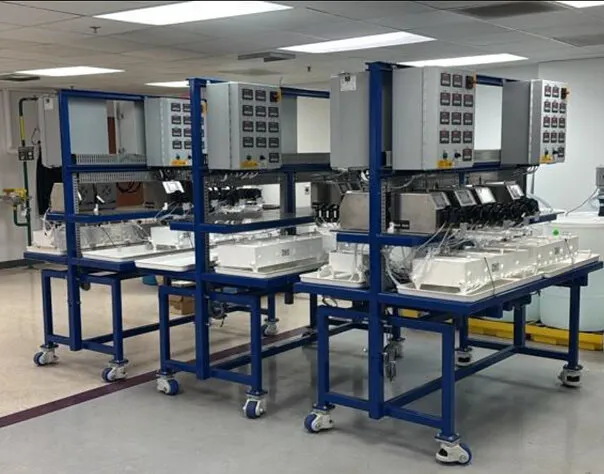
Aclara Resources (TSX: ARA) is expanding Project Dynamo, its planned rare earth separation facility in Louisiana, to also separate yttrium, gadolinium and samarium. The plant was originally designed for neodymium-praseodymium, dysprosium and terbium.
- Aclara is adding yttrium, gadolinium and samarium separation to Project Dynamo in Louisiana.
- Mixer-settlers in the solvent extraction process are expected to rise from approximately 340 to 478.
- New circuits are being installed at the Virginia Tech demonstration plant, with the yttrium equipment already on site.
- Groundbreaking is targeted for the first quarter of 2027, subject to financing.
- No definitive offtake agreement has been signed for yttrium or other products.
Demonstration plant gets new circuits
As the first stage of the expansion, Aclara has started installing additional solvent extraction circuits at its rare earth separation demonstration plant at the Virginia Tech Corporate Research Center in Blacksburg, Virginia. The work is carried out through its wholly-owned subsidiary Aclara Technologies Inc.
According to the company, the new circuits are designed to demonstrate the separation of yttrium, gadolinium and samarium using feedstock representative of the Super-Pure Rare Earth Carbonate (SPREC) expected to come from Aclara's ionic clay deposits in Chile and Brazil. Equipment for the yttrium circuit has arrived and is expected to be installed and commissioned over the coming weeks, with the gadolinium and samarium circuits to follow.
To support the larger program, Aclara has doubled the physical footprint of the demonstration plant and plans to approximately double the number of technical personnel working there.
A bigger plant in Louisiana
Aclara is modifying the basic engineering of Project Dynamo to add the new separation circuits at the industrial-scale facility. The number of mixer-settlers in the solvent extraction process is expected to rise from approximately 340 to 478, which the company describes as a significant increase in the plant's separation capacity and complexity.
The company says the expansion will create two platforms:
- Magnetic rare earths: NdPr, Dy, Tb and Sm, serving applications including e-mobility and robotics.
- Non-magnetic rare earths: Y and Gd, serving power generation, aerospace (including aircraft jet engines) and other high-performance technologies.
Project Dynamo has secured its State Air Permit from the Louisiana Department of Environmental Quality, and basic engineering is in its final stages. Aclara is targeting groundbreaking in the first quarter of 2027, subject to securing the required financing.
Why yttrium
Aclara calls yttrium a strategic growth opportunity. The company points to the rapid expansion of AI and cloud infrastructure, which is driving investment in data centers and the power generation capacity behind them. Gas turbines are expected to play a role, and yttrium is used in advanced high-temperature materials required in turbine applications.
CEO Ramon Barua said approximately 50% of the rare earth composition of the Penco Project and 30% of the Carina Project is yttrium, "giving Aclara a differentiated resource position in a market where Western supply remains highly dependent on imports." He said Penco has received its environmental approval and is positioned to advance toward construction, subject to securing the required financing.
Based on current technical reports for Carina and Penco, Aclara expects its mineral projects to have the potential to produce SPREC containing approximately 1,400 tonnes of yttrium per year at full production. The company says it is in preliminary discussions with potential customers, but no definitive offtake agreement has been entered into.
Virginia Tech and Argonne collaborations
Aclara's U.S. program combines its proprietary rare earth processing technology with Virginia Tech and Argonne National Laboratory. The Blacksburg plant generates operating data to demonstrate and optimize the separation process before commercial-scale deployment.
It also serves as a training platform. Aclara expects engineers, chemists and operators to gain up to two years of hands-on experience there before the Louisiana plant enters production, which the company says should support a faster and lower-risk ramp-up.
Under a Cooperative Research and Development Agreement, Aclara is also working with Argonne to develop an AI-enabled digital twin of the separation process, using operational data from the Virginia Tech facility and Argonne's SolventX modeling platform.
What it means
The expansion moves Aclara beyond a magnet-focused product slate toward materials used in power generation and aerospace. The plans still depend on financing, and no customer contracts are signed, so commercial outcomes remain open. The near-term milestone is the commissioning of the yttrium circuit in Virginia, followed by gadolinium and samarium.