AglaiaSense and Leopard Imaging Show Privacy-First AI Traffic Cameras in Barcelona

AglaiaSense and Leopard Imaging will demonstrate AI-VIVA, an edge-AI traffic sensing system that discards raw video on the device, at Smart City Expo World Congress in Barcelona from November 3 to 5, 2026. According to the companies, the project is a finalist in the fifth urban challenge of Barcelona Innova Lab Mobility.
- AglaiaSense and Leopard Imaging exhibit at Smart City Expo World Congress, November 3 to 5, 2026, in Barcelona.
- Their AI-VIVA proposal is a finalist in the fifth urban challenge of Barcelona Innova Lab Mobility.
- The cameras discard raw video on the device within 400 to 800 milliseconds and send only anonymous metadata.
- The companies claim bandwidth more than 95% lower than CCTV-based monitoring and detection accuracy above 95% in field tests.
- Lakewood, Colorado, found the GS500 more accurate, more energy-efficient and less costly to deploy than IP cameras and LiDAR, according to the release.
AI-VIVA reaches the finals in Barcelona
The two companies will exhibit together at Fira Barcelona Gran Vía. They proposed AI-VIVA, short for Vision Intelligence for València and Arterials, and it was selected as a finalist in the fifth urban challenge of Barcelona Innova Lab Mobility (BILM). The challenge focuses on applying artificial intelligence to traffic-light regulation.
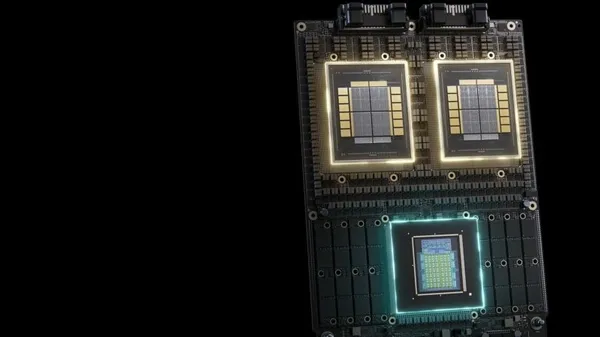
AI-VIVA combines AglaiaSense's edge-AI traffic solutions with Leopard Imaging's patented privacy architecture. At the show, the team will give a live demonstration of AglaiaSense's MS500 and GS500 cameras together with the AglaiaSense AI Box, which is powered by NVIDIA. According to the companies, the AI Box adds local processing to coordinate groups of neighboring intersections.
How the cameras work
The cameras analyze images inside the device, using the Sony IMX500 and IMX501 intelligent vision sensors. They count and classify vehicles, buses, cyclists and pedestrians in real time. Raw video is discarded on the device within 400 to 800 milliseconds, and only anonymous metadata is transmitted. Cities can feed that data into signal-control software to adapt traffic lights to real demand.
The companies list the following specifications:
- MS500: about 2 W average power, 1080p, powered from a standard NEMA or ZHAGA street-light socket.
- GS500: about 6.5 W average, dual 4K cameras, with Ethernet, LTE Cat 4 and GPS; powered by PoE, 12 to 24 V DC or a NEMA adapter.
- Both cameras: IP66-rated, operating from −20 °C to +65 °C, and mounted on existing poles, so no trenching or new masts are needed.
The companies also claim bandwidth use more than 95% lower than CCTV-based monitoring.
Field results and track record
AglaiaSense says its solutions are deployed across North America and Asia. The company won first place in the Pedestrian Safety Challenge Hackathon, run by the Edge AI Foundation (formerly the tinyML Foundation) and the City of San José. In field tests, the systems achieved detection and counting accuracy above 95%, according to the release.
The City of Lakewood, Colorado, compared the GS500 with traditional IP cameras and LiDAR on real roads. According to the release, it found the GS500 more accurate, more energy-efficient, and less costly to deploy. At a high-risk crossing where pedestrians often crossed outside the crosswalk, the system alerted approaching drivers in real time.
"Cities want safer, smoother streets without turning every crossing into a surveillance point," said Leon Luo, CEO of AglaiaSense. "Being named a finalist in Barcelona tells us the approach resonates." Bill Pu, CEO of Leopard Imaging, said: "Privacy has to be built into the camera, not added later."
What it means for cities
The pitch is aimed at cities that want adaptive traffic signals without video surveillance infrastructure. Because the cameras send only anonymous metadata and attach to existing poles, the companies argue that deployment needs less construction and less data transfer than camera-based monitoring. These claims come from the companies and the Lakewood comparison they cite.
Visitors can find the team at Pavilion 3, Level 0, Street D, Stand 71. AglaiaSense describes itself as an edge-AI company specializing in privacy-first, vision-based sensing for smart cities. Leopard Imaging describes itself as a global leader in high-definition embedded cameras and AI-based imaging solutions.