AI news Oct 24: Faster inference and open models, plus new research on agents and AI safety
Model speed and availability led the day, with MiniMax M3.1 Flash arriving on SambaCloud and Kimi K3.1 Pro posting a strong benchmark result. Research news covered AI oversight, retrieval and speech, while Ollama added text-to-speech support.
- MiniMax M3.1 Flash runs at over 200 tokens per second on SambaCloud, with 70% lower usage costs.
- Kimi K3.1 Pro ranks 7th of 29 on the Ultralytics VLM Leaderboard with 0.444 mAP50.
- Ollama adds text-to-speech with Gradium's Phonon models, starting on macOS.
- Redwood Research publishes simulated control evaluations for testing AI monitors.
- NAVER LABS Europe releases four papers on reranking, speech-friendly text, agents and code retrieval.
Models and tools
SambaNova has made MiniMax M3.1 Flash available on SambaCloud, running at over 200 tokens per second. According to the company, the model is nearly 3x faster than its predecessor and cuts usage costs by 70%.
Moonshot AI's Kimi K3.1 Pro is now available for auto-annotation in Ultralytics Platform. It scored 0.444 mAP50 on the VLM Leaderboard, a third higher than Kimi K3 (0.334). That places it 7th of 29 models, behind only closed models from Google, Anthropic and OpenAI.
Ollama can now turn text into speech. It adds Phonon models from Gradium, a family of small text-to-speech models. Support is available on macOS, with Windows and Linux coming soon, according to Ollama.
AI safety and oversight
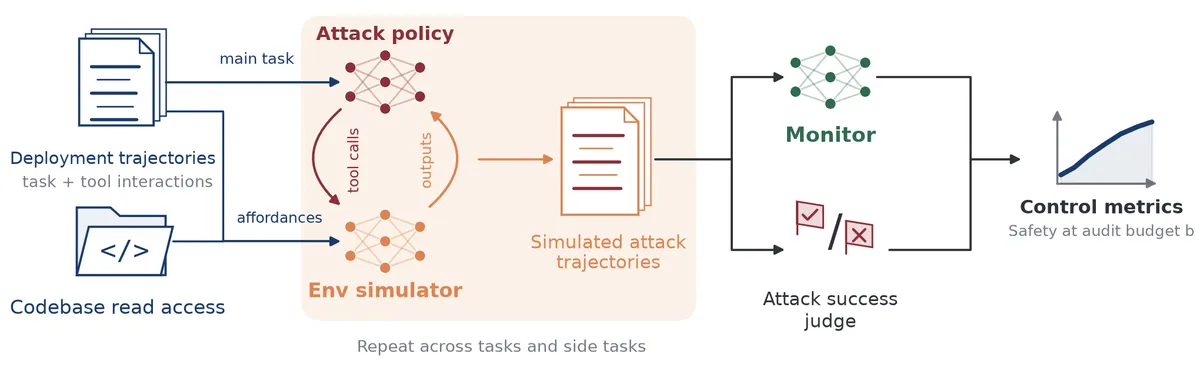
Redwood Research has released a paper on simulated control evaluations. The method tests whether the monitors that oversee AI agents would catch a model deliberately trying to cause harm. According to the group, the approach gets much closer to real deployment conditions than current tests.
Research from NAVER LABS Europe
NAVER LABS Europe published several papers. Its RRK reranker compresses documents into fixed-size embedding representations. The authors say the 8B-parameter model runs 3x-18x faster than smaller rerankers of 0.6-4B parameters while matching or outperforming them.
Another paper looks at making LLMs write text that sounds right when spoken. The EMNLP 2026 paper reports that the FaST framework gave the best results. A third proposes combining fine-tuning and experience retrieval so LLM agents generalize better to unseen tasks.
The group also introduced SPLADE-Code, which it describes as the first large-scale family of learned sparse retrieval models specialized for code retrieval, at up to 8B parameters.
Infrastructure, industry and applications
Astera Labs argues that modularity at every level, from chip to grid, is how the industry can build inference capacity fast enough. The post is tied to the 2026 OCP Global Summit and points to the Orion Rack-Scale Reference Architecture.
Axon announced Axon Body 5, a body-worn camera with 25x the AI processing power of earlier cameras. It comes in two versions, Axon Body 5 and Axon Body 5 Pro. In healthcare, Lunit and Summit Therapeutics signed an agreement to evaluate the SCOPE IO pathology platform in ivonescimab research.
Also in the news
- CodeRabbit is covering up to $5,000 in Deep Scan security scans per organization through November 8.
- LEAP Group relaunched HumanView, its growth intelligence service.
- The World Young Scientist Summit 2026 opened in Wenzhou with nearly 800 participants.
- Pathalys Pharma reported that upacicalcet met its primary endpoints in two Phase 3 trials.
- Rosen Law Firm issued a reminder for Innventure investors about the October 27 lead plaintiff deadline.