AI100 report warns the scaling era is approaching its limits

The third report from the One Hundred Year Study on Artificial Intelligence says the scale-driven approach behind recent AI progress is running into limits involving high-quality data, energy and computing power. The report also examines AI’s expanding effects on science, cybersecurity, warfare, markets and democratic institutions.
- The AI100 report says scale-driven AI development is nearing limits.
- Researchers expect more efficient models and deeper reasoning to gain importance.
- AI disruption is spreading across science, cybersecurity, creative work and mathematics.
- The report highlights risks involving energy, warfare, synthetic media and finance.
- It calls for public involvement and stronger international AI governance.
A shift beyond bigger models
The report, released on 10/11/2026, was produced by the AI100 project, an international longitudinal study led by a Standing Committee of AI experts and administered out of Stanford HAI. Its study panels meet every five years to assess AI’s progress and its implications for people, communities and society.
Professor Gina Neff, executive director of the Minderoo Centre for Technology & Democracy and a member of the expert study panel, said leading AI companies had “doubled down on scale.” She added that the report showed the industry was “running up against the limits of scale.”
For years, AI development has relied on larger datasets and greater computing power. The report says high-quality data is becoming scarce and the cost of training frontier models has become prohibitive. It expects the next phase to place more emphasis on smarter algorithms, efficient models and systems capable of deeper reasoning, rather than simply increasing model size.
AI’s impact is spreading across society
The report describes disruption in areas that were once considered less exposed to automation, including creative industries, software development and pure mathematics. It compares these changes with the disruption technology brought to journalism, music and retail over the past three decades.
AI is also changing the pace of scientific work. The researchers say it is compressing research timelines from years to months or weeks, and expect AI-powered laboratories to become common across scientific disciplines within a decade. They warn that machine-generated discoveries will require rigorous new validation methods.
Other findings cover cybersecurity, where AI can identify software vulnerabilities and support cyberattacks using teams of agents, and military applications, where lethal targeting decisions have been made without human oversight. The report calls for new international rules of engagement.
It also says synthetic images, audio and video have undermined the assumption that photographic evidence can be trusted. Cloned voices are being used in fraud schemes, while synthetic media have been deployed to influence elections.
Investment and governance remain contested
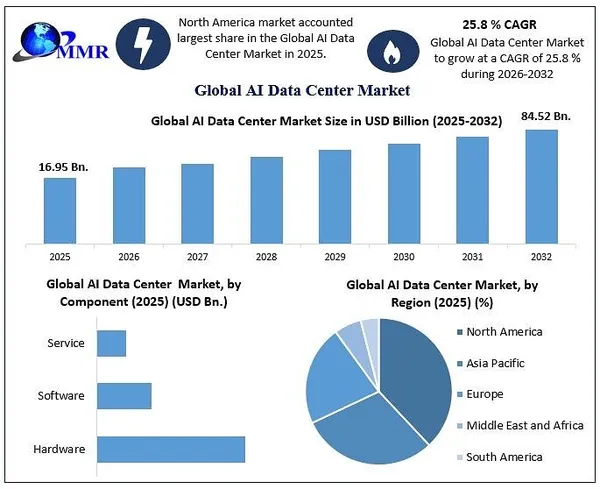
The report describes an AI infrastructure investment boom that is putting pressure on energy supplies, increasing carbon emissions and influencing national energy policy. It says NVIDIA briefly became the most valuable company in history, while AI-linked stocks represented a significant share of US market gains in 2025. At the same time, the report says AI’s economic impact is not yet visible in aggregate economic data or companies’ returns on investment, raising concerns about a possible financial bubble.
Frontier AI development remains concentrated among a small number of US and Chinese actors. The report says American companies lead in the most powerful proprietary models, while China’s capable open-weight models are narrowing the gap.
For users and governments, the report presents AI’s direction as a collective societal choice. It says billions of people are affected by AI but have had little meaningful input into its development or deployment, and calls for stronger public involvement and more effective international governance.
Minderoo Centre for Technology & Democracy: AI 100: The Scaling Era and the Rise of Generative AI