Ai2 launches Theorizer, an open-source AI agent for scientific research
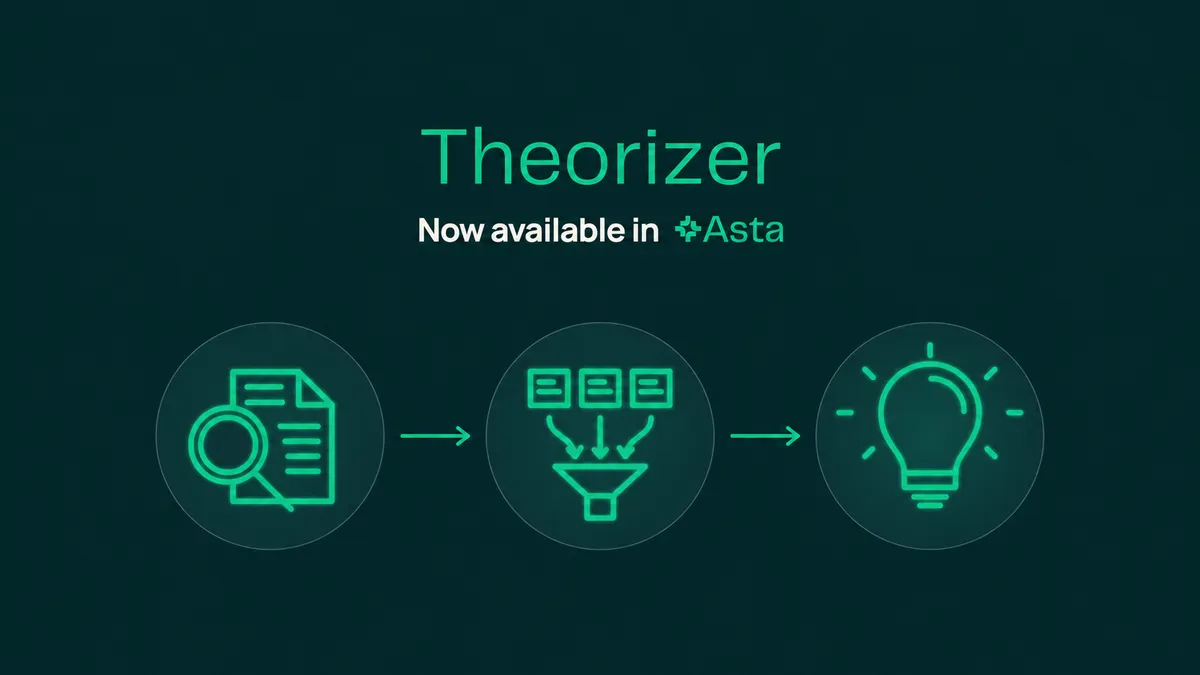
Ai2 has launched Theorizer in Asta, an AI agent that combines findings from scientific papers to propose explanations for observations in research. The company is also open-sourcing the code so researchers can examine how it generates theories and adapt the methods to their own work.
- Theorizer is now available in Ai2's Asta platform.
- Ai2 is open-sourcing the code for researchers to inspect and adapt.
- The tool links proposed explanations to evidence from published studies.
- Cancer research produced three hypotheses about driver-negative lung adenocarcinoma.
- Theorizer's findings still require expert review and experimental validation.
A literature-based tool for forming theories
Theorizer searches research literature in response to a question, creates a template for extracting relevant information from each paper, and compares the findings to generate theories. Each proposed explanation is linked to evidence from published studies, while researchers can inspect the cited work and assess whether it supports the claim under comparable conditions.
The tool can also flag claims it considers new. Ai2 cautions that searches may miss earlier work and that the model can misjudge originality, so researchers still need to check claims against the wider literature. Scientists have helped develop Theorizer for nearly a year by testing its theories in their own research.
Through Asta's web interface, Ai2 says it covers token costs up to a limit. Researchers who prefer to work on their own machines can run the open library and pay for tokens as needed.
From unexplained lung cancer growth to testable hypotheses
Dr. Sid Devarakonda, medical director of the thoracic oncology clinical and research program at Providence Swedish Cancer Institute, used Theorizer to study driver-negative lung adenocarcinoma. In roughly 20% to 30% of lung adenocarcinoma cases, comprehensive sequencing does not reveal a recognized genetic alteration that activates the RAS pathway.
After several iterations, Theorizer helped Devarakonda develop three hypotheses for how these tumors could grow. The possibilities included an undetected alteration activating RAS signaling, a different mechanism allowing cells to divide without relying on RAS, and tumors acquiring characteristics of another cell type.
Devarakonda and the Asta team then used AutoDiscovery, which writes and runs code to test hypotheses against datasets. Analysis of The Cancer Genome Atlas and laboratory-grown cancer cells suggested that disruption of the DREAM complex might help explain the tumors' growth. Follow-up work provided preliminary support for a hypothesis that some cancers with low RAS activity may depend on CDK2. Ai2 says these findings still require experimental validation.
Applications across neuroscience and climate data
Jérôme Lecoq, an associate investigator at the Allen Institute, evaluated an early version of Theorizer on VIP interneurons, brain cells that suppress the activity of other neurons. The tool returned 50 candidate theories, compared with the one or two Lecoq expected. One theory connected computational and experimental findings to suggest that VIP interneurons help adjust the brain's response to visual input depending on what an animal is attending to.
At the International Potato Center in Peru, Piero Palacios and Henry Juarez used Theorizer to investigate reconstructed dew-point values in the PISCO climate dataset. Some values exceeded 35°C and clustered in November. Theorizer proposed that humidity might rise as the Amazon shifts from dry to wet conditions, but testing that seasonal explanation against their data ruled it out.
Ai2 will host a webinar for scientists on December 10 at 10am PT covering Theorizer, a cancer research example, and the requirements for AI to contribute reliably to the scientific process. The launch gives researchers a way to inspect the system's reasoning process, adapt its code, and use its proposed explanations as starting points for further investigation, rather than as validated conclusions.
Ai2: Theorizer comes to Asta