Ai2's LitPivot helps researchers revise ideas as they read the literature
Ai2 and researchers at the University of Pennsylvania have built LitPivot, a system that helps scientists revise early research ideas while choosing which prior papers to judge them against. According to Ai2, domain experts rated ideas developed with LitPivot as better grounded in the literature than those made with a text editor and an AI chat tool.
- Ai2 and the University of Pennsylvania developed LitPivot, which organizes literature around the problem, contribution or evaluation plan being edited.
- In a study with 17 researchers, domain experts rated LitPivot-developed ideas as better grounded in the literature than those made with a text editor and an AI chat tool.
- Participants reported a stronger understanding of the literature and greater improvements in novelty and usefulness.
- Researchers can accept, edit or reject suggested revisions and choose which papers the system uses.
- LitPivot will be presented at UIST 2026 in Detroit.
What a literature-initiated pivot is
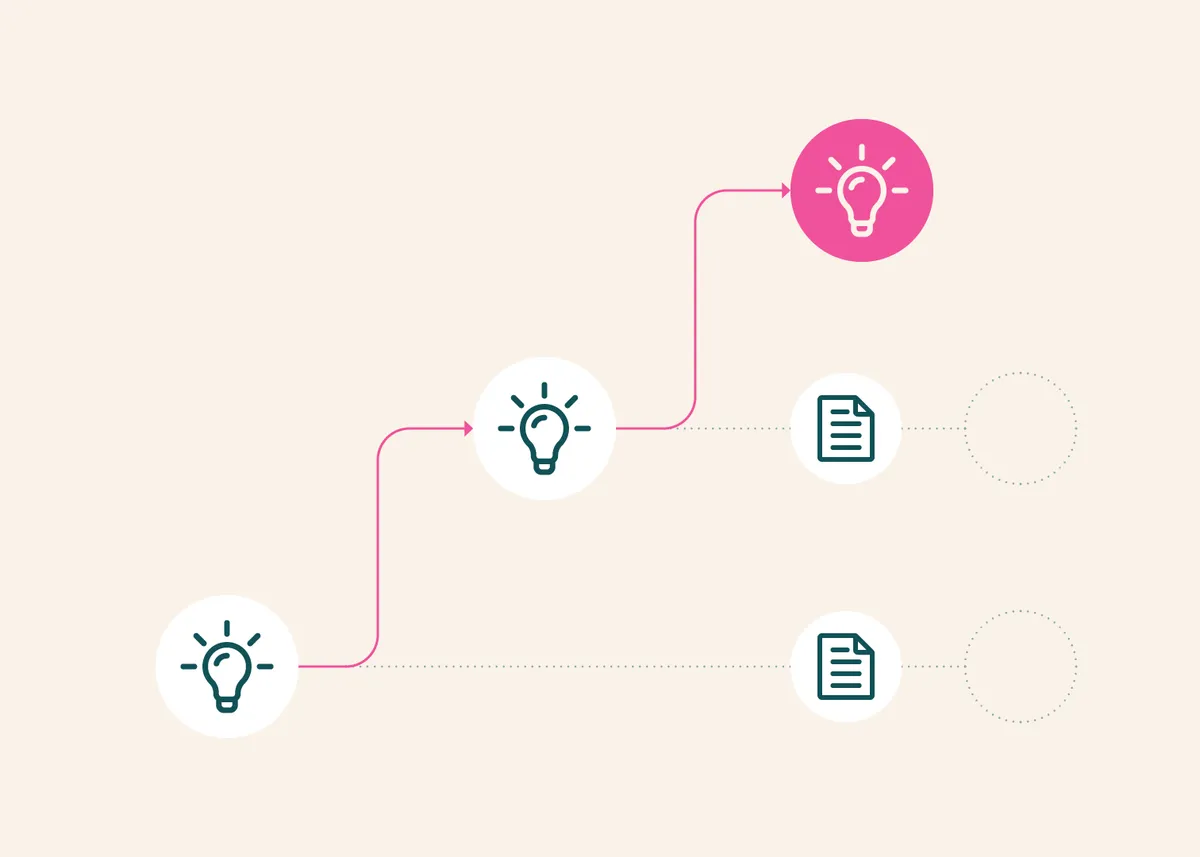
Ai2 describes a literature-initiated pivot as a change in research direction prompted by reading prior work. A researcher may find that someone has already addressed their planned contribution, or spot an unresolved problem in a paper that suggests a new direction.
To gauge how common this is, the team analyzed meeting notes from four completed computer science research projects. They identified 21 such pivots across all four projects. Ai2 says they fell into two types: differentiating an idea from existing work to establish its novelty, and aligning an idea with existing work to build on it.
These shifts are hard to manage. In a formative study, five researchers developed proposals with a text editor and standard search tools. They struggled to develop their ideas while critically evaluating them against the literature. When a paper challenged an idea's novelty, they wanted concrete revision suggestions backed by prior work. Those findings shaped the design of LitPivot.
How LitPivot works
LitPivot uses papers retrieved through Asta Paper Finder. A researcher writes a short proposal in an editor and turns on facet highlighting, which splits the idea into a problem, a proposed contribution and an evaluation plan. Each facet has its own set of related literature and its own relevance ranking.
Clicking a segment of the draft opens a panel that groups related papers around that facet. For example, when the evaluation facet is selected, papers are grouped by the evaluation methods they use. The researcher picks which papers the system should use, requests an assessment, and reviews a suggested revision next to excerpts that support the critique. The literature is then reranked for the revised facet.
- Problem: the system looks for evidence that the problem exists and reasons it matters.
- Contribution: it compares what selected papers have addressed with the limitations and future work they describe, looking for remaining gaps.
- Evaluation plan: it checks whether the proposed tests address the research question and how similar work has been evaluated.
Because changing one facet can leave another out of date, LitPivot flags passages that may need revision, such as an evaluation plan that no longer fits a revised contribution. Researchers can accept, edit or reject suggestions, and can request new papers or refresh the ranking as the proposal develops.
Study results
In a lab study, 17 researchers each developed one assigned idea with LitPivot and another with a baseline: a text editor plus an AI tool for asking questions about selected papers. Both conditions used the same collection of papers. Two domain experts, who did not know which system had been used, rated the proposals on one criterion: how well they used relevant literature to support and justify the idea. Proposals developed with LitPivot received higher ratings.
Participants also reported a stronger understanding of the surrounding literature and greater self-reported improvements in their ideas' novelty and usefulness with LitPivot than with the baseline.
One participant began with a proposal to generate consistent, factual synthetic medical notes. LitPivot identified consistency across multiple hospital visits as a potential gap in the selected literature. The participant removed papers about single-visit notes and, after another assessment, narrowed the proposal to detecting contradictions across notes from multiple visits.
In a follow-up study, five researchers used LitPivot on their own ongoing projects in 30-minute sessions. Two used it to vet new ideas against the literature, and three used it to refine the framing of more mature ideas. One researcher said that seeing parallel concepts from different domains helped them reframe their contribution.
Where it fits in Ai2's research tools
Ai2 places LitPivot alongside other work on AI for science. It names Asta's Theorizer and AutoDiscovery, HARPA, Scideator and IdeaSynth, and a recent study called Old Ideas, Novel Problems, which examines the limits of automated novelty evaluation. Ai2 says LitPivot extends this line of work by making the choice of relevant literature part of the revision process.
The team also contrasts it with scientific-writing environments such as Prism and agentic assistants such as Claude Code, saying LitPivot explores a workflow in which researchers control both the draft and the evidence used to assess it.
Ai2 says the tool is intended for early-stage research ideation, though the approach could possibly extend to longer writing tasks such as a paper's introduction. LitPivot will be presented at UIST 2026 in Detroit. The study sizes are small, but according to Ai2 the results suggest the system can support both early exploration and the refinement of an existing research direction.