Airthings Partners With American Lung Association on Radon Awareness
Airthings has become the American Lung Association’s official Indoor Air Quality and Radon Monitoring Technology Partner in a collaboration focused on healthier homes. The organizations will promote radon testing, continuous monitoring and education about indoor air pollution.
- Airthings is the American Lung Association’s official Indoor Air Quality and Radon Monitoring Technology Partner.
- The organizations will develop education on radon testing, continuous monitoring and indoor air quality.
- The EPA says nearly 1 in 15 U.S. homes has elevated radon levels.
- Airthings will support the Lung Association’s Healthy Home experience and Fight For Air Climb events.
- The partnership will build on Airthings’ radon library lending program.
Partnership will focus on radon education
The partnership brings together Airthings’ experience in radon and indoor air quality monitoring with the American Lung Association’s work to improve lung health and prevent lung disease through education, advocacy and research.
The organizations plan to develop educational resources and awareness initiatives about radon testing, continuous air quality and radon monitoring, and the connection between indoor environments and lung health. Airthings will also contribute to the American Lung Association’s recently launched Healthy Home experience.
Consumer education will include digital content, social media and other awareness initiatives. The partners also plan to support community engagement through the Lung Association’s Fight For Air Climb events in key radon-vulnerable markets.
Why radon testing matters
Radon is a naturally occurring radioactive gas that can enter homes through the ground. It is colorless and odorless, so testing is the only way to detect it.
According to the U.S. Environmental Protection Agency, radon is the leading cause of lung cancer among non-smokers in the United States and the second leading cause overall. The agency estimates that radon is responsible for 21,000 lung cancer deaths in the U.S. each year, while nearly 1 in 15 U.S. homes has elevated radon levels.
The EPA recommends action at or above 4 picocuries per liter, or pCi/L. Because radon levels can vary by day and season, the agency says long-term testing provides a more accurate picture of exposure than a single short-term test.
Monitoring technology and community access
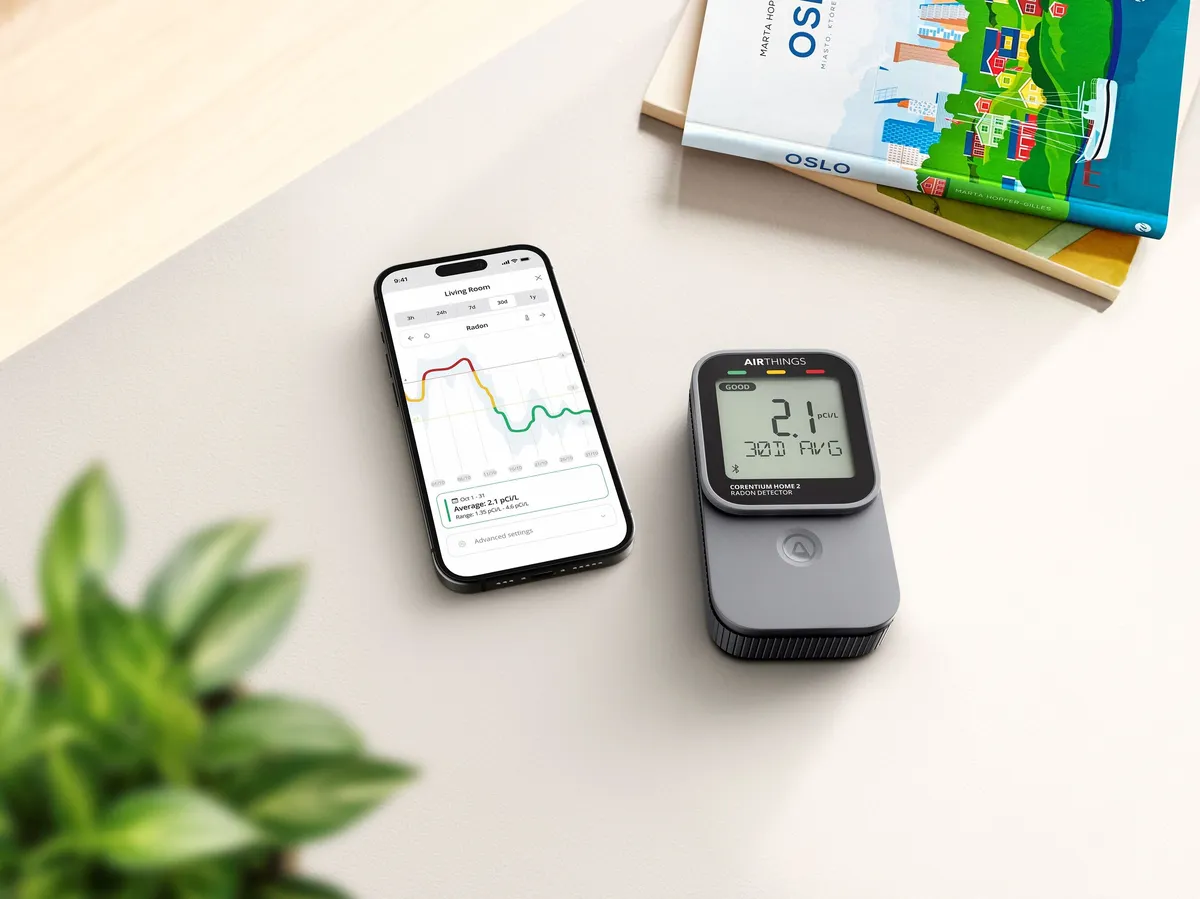
Airthings said its Corentium Home 2 monitor is trusted in more than a million American homes. The device uses third-party validated sensor technology to provide real time radon readings through Bluetooth.
Airthings has developed radon detection technology since 2008, using sensor technology originally engineered by CERN scientists. The company says its monitors are used in more than half a million homes worldwide and that it has sold more than 1.5 million devices worldwide.
The collaboration will also build on Airthings’ radon library lending program, which is active in several states across the U.S. and aims to increase local access to digital radon monitoring.
A renewed focus on healthier indoor environments
Airthings and the American Lung Association have previously worked together on educational resources, including a guide to improving indoor air quality in schools and the Lung Association’s LUNG FORCE initiative.
“Understanding the air we breathe indoors is an important step toward protecting our health, yet radon remains an overlooked risk in many homes,” Airthings CEO Ivar Kroghrud said in the announcement.
For users, the partnership means more educational material about indoor air quality, radon testing and longer-term monitoring. The groups’ stated aim is to make information more accessible and help individuals and communities take informed steps toward healthier indoor environments.