All Day AI organizers open-source the playbook behind a 12,313-person free online conference
The team behind All Day AI, a free, online, 16-hour conference with no vendor pitches, has published its full organizing playbook. According to organizer Brian Turcotte on the Kilo Code blog, the event drew 12,313 participants and 140 speakers, and attendees watched for an average of more than 6 hours.
- All Day AI was a free, online, 16-hour event with no vendor pitches, built in about two months.
- It drew 12,313 participants and 140 speakers, with an average watch time of more than 6 hours.
- Turcotte attributes 20-30% of registrations to one outreach message sent to 3,000 tech groups by his AI agent.
- The site was built in Kilo Code with GPT 5.6 for about $5, and the event ran on the Zuddl platform.
- Organizers used AI agents with human review for speaker communication, with Turcotte approving every outgoing message.
A two-month build from zero
According to Turcotte, All Day AI was put together in about two months. The first version of the website went up in August, and the event was set to go live on October 22. The organizers started with no community, no signed speakers, no website, no event platform and no social presence.
Their goals were more than 10,000 registrants, more than 120 practitioner-led sessions, four tracks (Build, Lead, Secure and Ship) and a Discord community that survived after the event. The stated audience was people under pressure to put AI to work who struggled to find advice they could trust, since recommendations changed weekly and many conversations led back to something for sale.
The core organizing team had more than 20 people, covering event co-founders, moderators, hackathon judges, ushers and marketers. Turcotte says nobody was paid and the work sat outside everyone's day job. Team members came from organizations including Anaconda, Matejczyk Group, Carnegie Mellon University's Software Engineering Institute, Techstrong Group, ACI Worldwide and Community Hackathons, produced by Crowdbyte Solutions.
The timeline in the post shows a slow start. On August 25, the event had 100 registrations and 12 speaker submissions, which Turcotte describes as not even 1% of the final counts.
Three bets: no pitches, distinct branding, community outreach
Turcotte says three early decisions did more for the numbers than any software.
- No vendor pitches, ever. The organizers banned pitches so that attendees and speakers shared one promise: you are there to learn and to teach, not to be sold to.
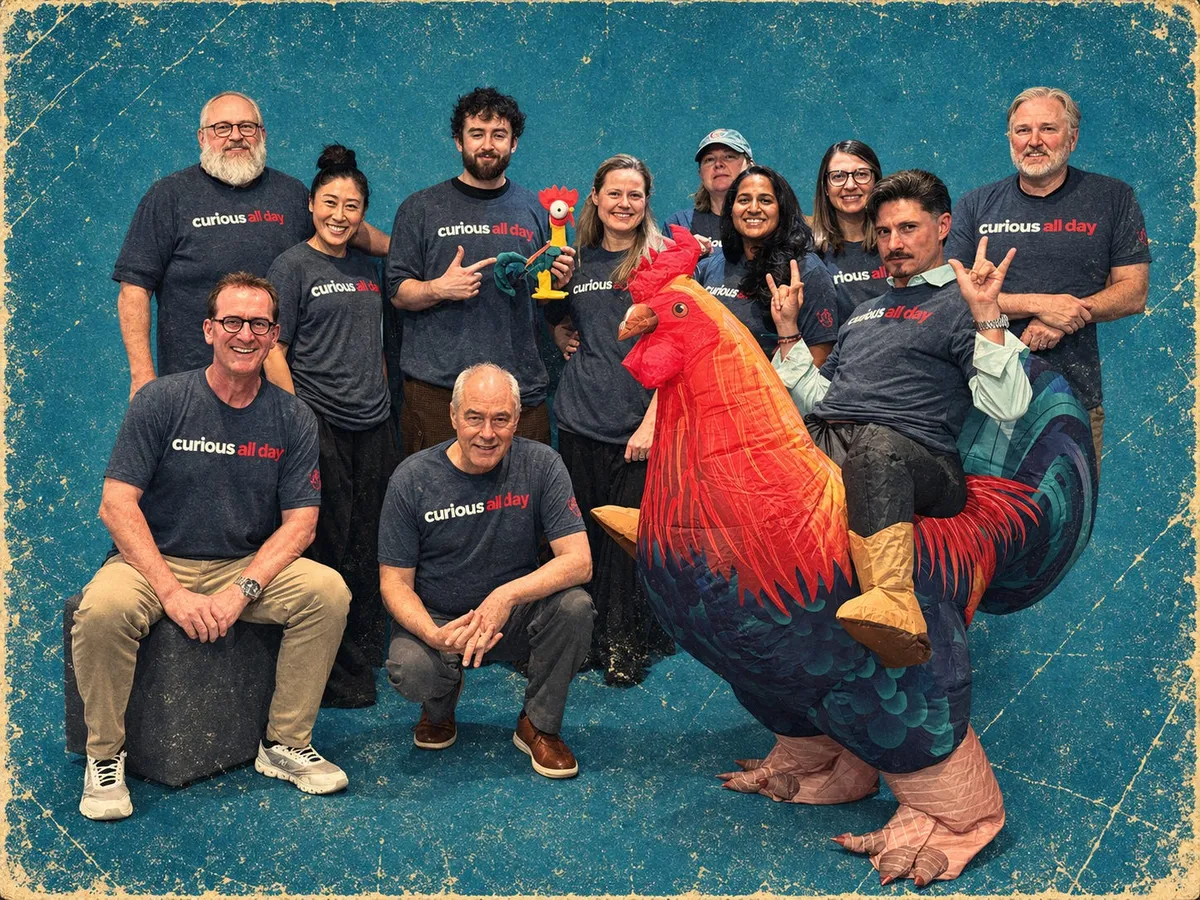
- Look like nothing else. The "Rockin' Rooster" mascot emerged from a roughly three-day back-and-forth with the team. Speaker headshots got a uniform vintage concert poster effect. Turcotte worked out the look in ChatGPT, then built a small app in Kilo Code that applied it through the OpenAI image API, so new speakers matched without manual editing.
- Trust the community to spread the word. Turcotte asked his AI agent, which he calls a Dot, to contact 3,000 tech groups, hackathons and events worldwide. The offer was free: promote the event to your community, and your logo, link and call to action go on the All Day AI website. Hundreds responded. Based on rough estimates of community sizes, Turcotte attributes 20-30% of registrations to that one message.
The stack: Zuddl, Kilo Code and AI agents
The organizers wanted to spend as little time and money as possible on infrastructure. They chose Zuddl, which could natively handle five stages, registration forms, communications and recording without stitching together separate tools.
According to Turcotte, version 1 of the website was built in Kilo Code for VS Code using GPT 5.6 and cost about $5. It was stored in GitHub, deployed to Vercel, and used Cloudflare for domain management. Because the speaker lineup and partner list changed constantly, team members opened pull requests as the event evolved, and Turcotte approved and merged them.
Speaker operations ran through Turcotte's own email address, so top speakers had a named contact with fast replies. That created a volume problem, which he handled with several AI agents and a human-in-the-loop editorial process:
- OpenAI Dots. His Dot had provisional access to Google Drive assets such as the schedule, moderation sheets and image collections, plus browser access to certain Zuddl lists and settings. It sent blasts and personalized speaker links, updated Zuddl profiles and managed moderation schedules. Turcotte reviewed every outgoing message.
- Kilo. The Dot used the Kilo CLI on his computer to update the site when speaker information changed, which he says kept it more focused than asking it to generate GitHub pull requests itself.
- Instinct. This agent, which lives in iMessage, had read-only access to his inbox and alerted him to urgent items unrelated to All Day AI.
What it means for other organizers
The post is framed as a reusable template: goals, team, tools, timeline and the parts the organizers would change. The excerpt provided ends partway through the timeline, so the full list of lessons and next-year changes is in the original article.
The figures offer a reference point for small, volunteer-run community events. According to Turcotte, a pitch-free, free-to-attend format made it easy for community organizers to share the event, and AI agents let one person track 140 speakers while keeping a human approving every message.