AMPERA and Imperial College London Team Up on Physics-Grounded NeuralTwin AI
Advanced energy company AMPERA has announced a multi-year partnership worth about $9 million / £7 million with Imperial College London to develop NeuralTwin, a physics-grounded digital twin platform for energy systems. According to the company, the platform combines first-principles physics with AI-based surrogates to speed up engineering and improve performance.
- AMPERA and Imperial College London announced a multi-year partnership worth about $9 million / £7 million.
- The goal is to develop NeuralTwin, a physics-grounded digital twin platform for energy systems.
- NeuralTwin combines first-principles physics with AI-based surrogates, according to AMPERA.
- The company says it aims to cut time, cost and technical risk from concept to deployable, licensable energy systems.
What the partnership covers
AMPERA, based in Palm Beach Gardens, Florida, said the collaboration brings together its technology platform and Imperial College London's expertise in AI, engineering, computational science and research. The two organizations plan to explore new approaches to building intelligent digital representations that can learn from data, model dynamical systems and generate real-time insights.
The program focuses on methods to design, assess, optimize and validate energy systems. According to AMPERA, the aim is to support faster and more cost-effective rapid deployment of such systems.
How NeuralTwin differs from conventional digital twins
AMPERA contrasts NeuralTwin with conventional digital twins, which it says can depend heavily on predefined models and computationally intensive simulations. NeuralTwin instead pairs first-principles physics with AI-based surrogates.
The company lists several intended benefits:
- Accelerating engineering work
- Optimizing performance
- Improving safety
- Supporting licensing
- Ultimately enabling increasingly predictive, autonomous operation
AMPERA also says the wider impact should be to reduce the time, cost and technical risk of moving from an initial concept to energy systems that are deployable, manufacturable and licensable. The collaboration is meant to serve as a platform for continued research into the convergence of AI, advanced modeling and real-time computational systems.
What the partners say
AMPERA Founder and CEO Brian Matthews said the collaboration "will supercharge every aspect of our technology development." He added that he sees NeuralTwin as "a marketplace differentiator," with potential uses from licensing to engineering analysis to autonomous operations.
Professor Christopher Pain of Imperial College London said the university is passionate about translating academic research into the commercial sector. He described the partnership as bringing together two organizations focused on neural physics. Dr. Jiansheng Xiang, Co-Investigator at Imperial College London, called NeuralTwin "an important next step in bringing together scientific machine learning, digital twins, and high-fidelity computational methods."
About the companies and what it means
AMPERA describes itself as an advanced energy technology company developing scalable power solutions for data center, defense, industrial and maritime applications. Its PowerNOW. NuclearNEXT.™ strategy combines advanced manufacturing, artificial intelligence and next-generation energy technologies to deliver factory-built power systems. Its Integrated Energy Architecture™ supports waste heat recovery, conventionally fueled power generation and advanced subcritical nuclear energy.
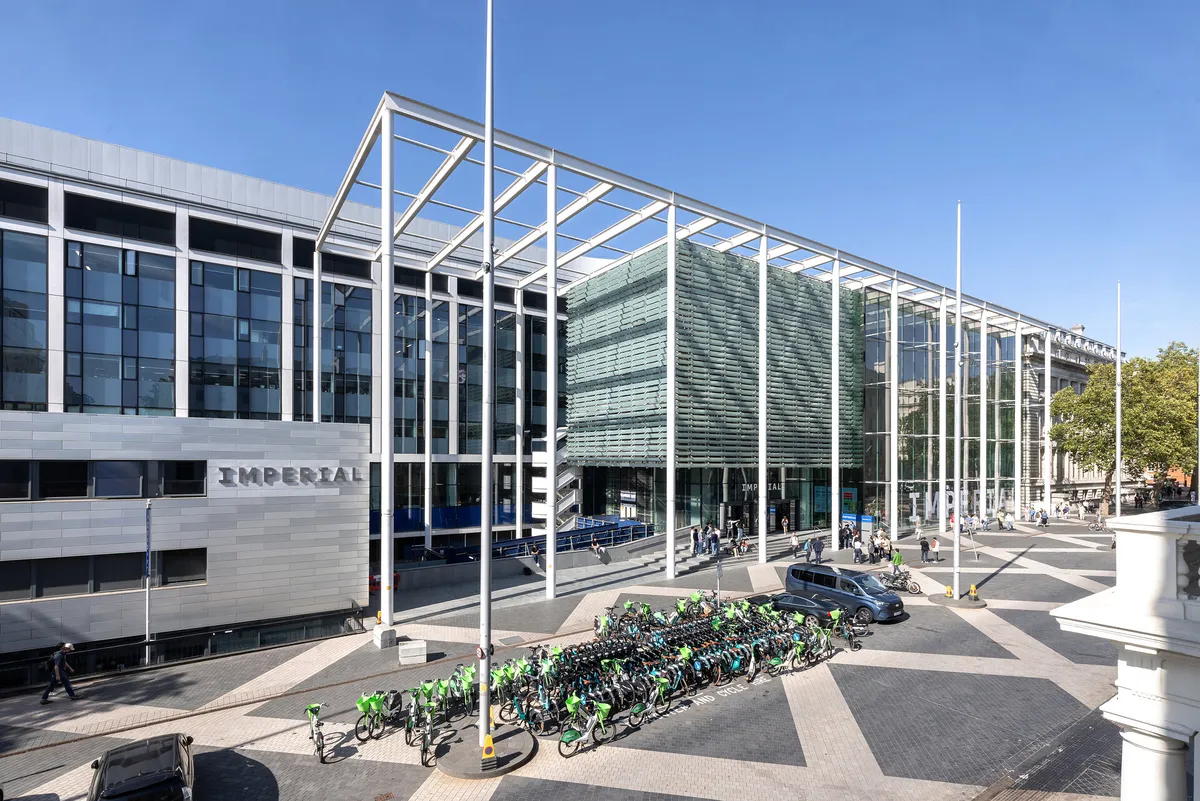
Imperial College London, founded in 1907, focuses on science, engineering, medicine and business.
For the energy sector, the announcement signals that AMPERA is putting significant funding behind AI-driven modeling as a way to shorten development and licensing timelines. The release gives no timeline for deliverables or performance results, so the practical effect of NeuralTwin remains to be demonstrated.