Astera Labs Unveils Orion, a GPU-Agnostic Rack-Scale Reference Architecture
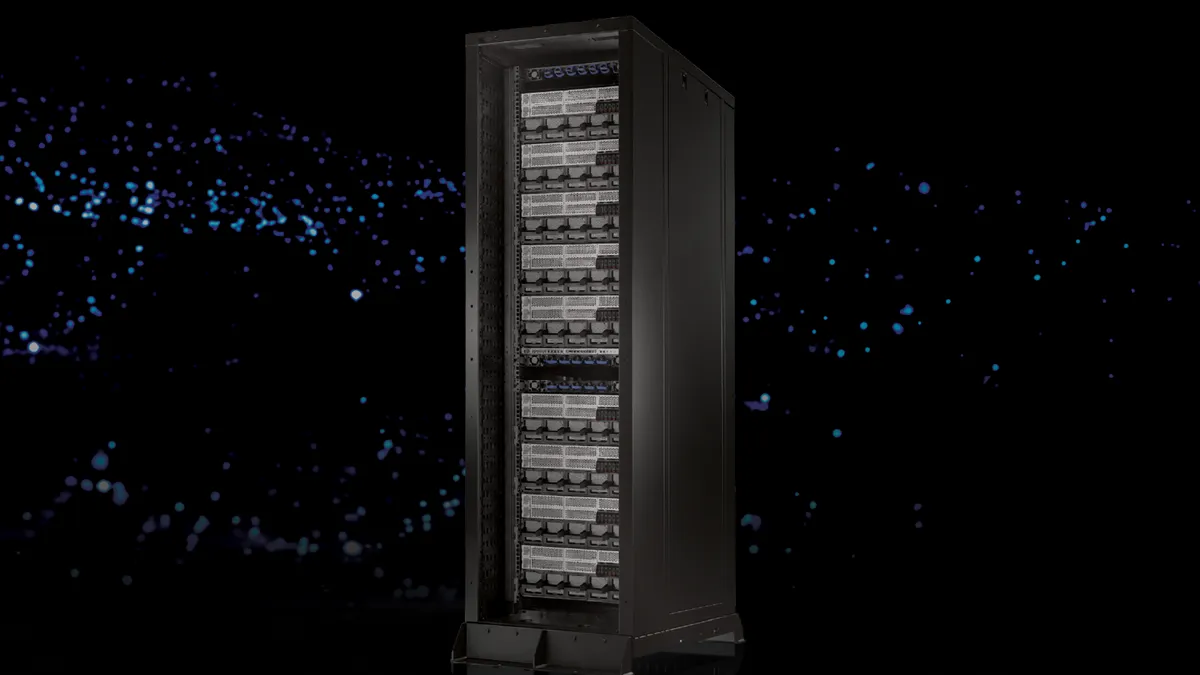
Astera Labs has introduced the Orion Rack-Scale Reference Architecture, a set of designs that separates rack construction from the choice of accelerator. According to the company, neoclouds and enterprises can bring their own XPU and bring inference capacity online faster.
- Astera Labs introduced the Orion Rack-Scale Reference Architecture, designed to be independent of any single CPU, GPU or XPU.
- Orion is available as a full Orion Rack system or as any combination of six modular designs covering compute, memory, connectivity and software.
- The company targets neoclouds and enterprises, citing JLL's 11% share of 2026 data center capacity demand for neoclouds and Gartner's 20% projection for 2030.
- Orion is brought to market with ODM and OEM partners and will be shown at Booth B34 at the 2026 OCP Global Summit.
Why Astera Labs built Orion
Pravin Patel, Vice President and General Manager of Astera Labs' Platform Solutions Group, presents Orion as a response to a market in which new players are spinning up inference compute to meet constant demand. He cites JLL, which reports that neoclouds make up 11% of data center capacity demand in 2026, and Gartner, which projects that share to rise to 20% by 2030.
Neoclouds, according to the post, are betting that low-cost, inference-driven capacity will produce profitable AI factories. They want to offer customers predictable, outcomes-based pricing built around tokens per watt. Enterprises, meanwhile, are building data centers for secure, cost-controlled, dedicated AI capacity.
Astera Labs argues that both groups are held back by compute availability. In its view, production-grade architectures are limited to a few closed rack-scale designs at price points that are unsustainable for businesses of this size. Building rack-scale systems around alternative compute typically involves lengthy and costly validation timelines.
What Orion includes
Orion is a set of reference designs spanning board level to rack scale. The guiding principle, in the company's words, is that infrastructure should adapt to compute, not the other way around. By separating the rack architecture from any single CPU, GPU or XPU, Orion creates a common foundation across compute, fabric, memory and management.
Customers can pick an accelerator based on suitability for specific workloads, or simply on availability, while keeping a consistent path to integration, qualification, deployment and operations. Orion is offered as a full, deployment-ready Orion Rack system or as any combination of six modular designs covering the compute, memory, connectivity and software layers.
Astera Labs says it describes the approach as open by design and modular. Orion is brought to market through co-development with the company's ODM and OEM partners, and each design is built around the interconnect components the company says it has deployed in millions of hyperscale units.
- Choice over lock-in: customers can select accelerators by workload, availability and economics.
- Faster deployment: production-grade reference designs reduce the need for rack-level integration and validation with every new XPU.
- Rack intelligence: an enhanced COSMOS Rack and Fabric Manager extends visibility and control from silicon and fleet diagnostics to performance monitoring and management at rack and fabric level.
- Token economics: scalable fabric, In-Network Compute, Hypercast™ and fabric-attached memory are designed to improve utilization and support more efficient inference.
What it means for neoclouds and enterprises
Astera Labs lists four expected benefits for newer cloud AI operators. A validated, repeatable architecture can shorten the path from accelerator availability to production. Organizations gain flexibility to deploy across a broader set of accelerators instead of waiting on a single platform. Better fabric efficiency and memory placement can help extract more tokens per dollar from deployed compute. Unified rack and fabric management is meant to simplify the move from individual systems to infrastructure at scale.
The company notes that compute is continuing to diversify and specialize for emerging workloads, and says operators cannot afford to start from scratch each time they bring new compute online. These are the company's own claims, and the post gives no performance figures, pricing or availability dates for Orion.
Astera Labs will show a full build of the architecture at Booth B34 at the 2026 OCP Global Summit.