ASUS Ramps Up NVIDIA Vera Rubin NVL72 Shipments in Q4
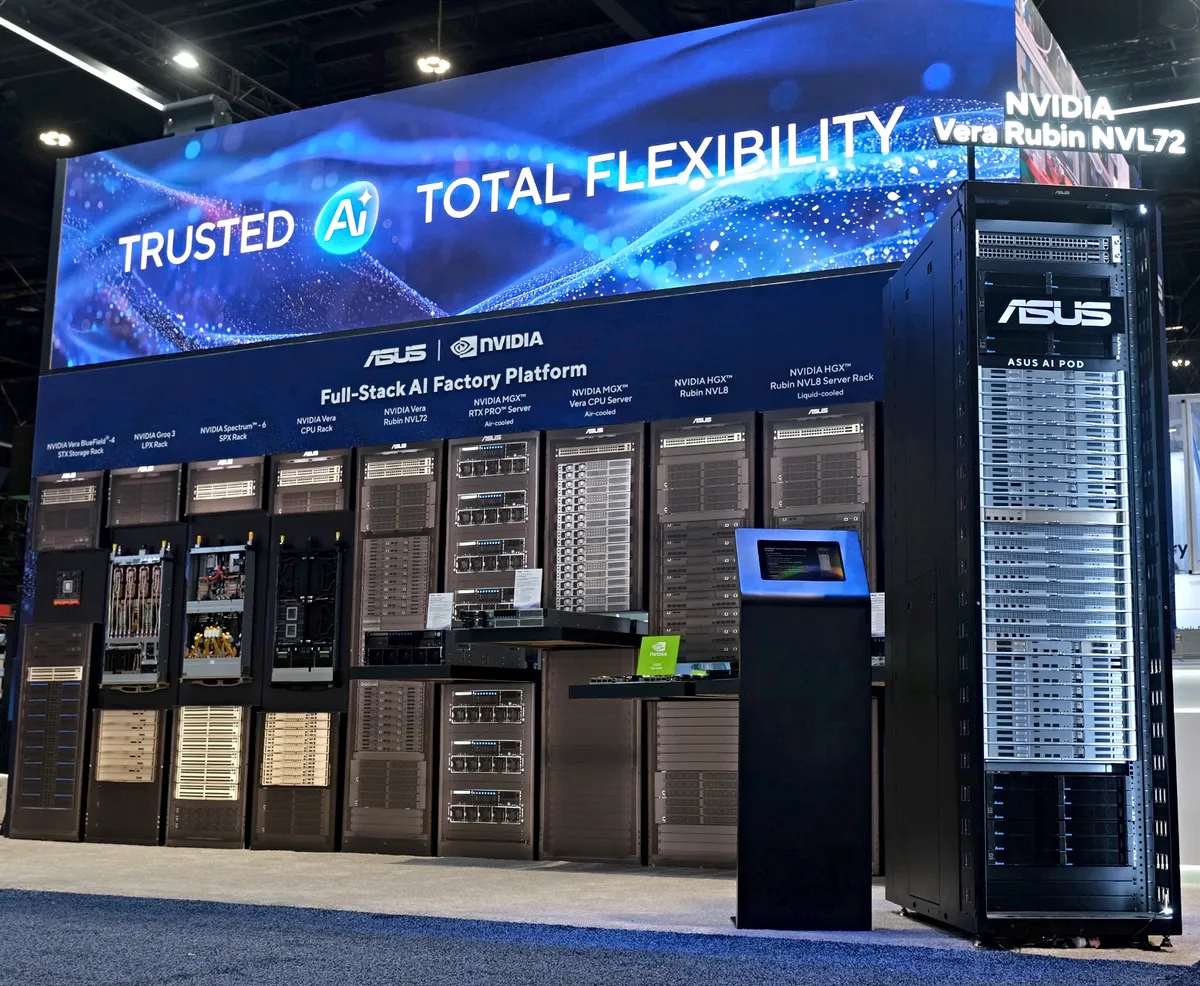
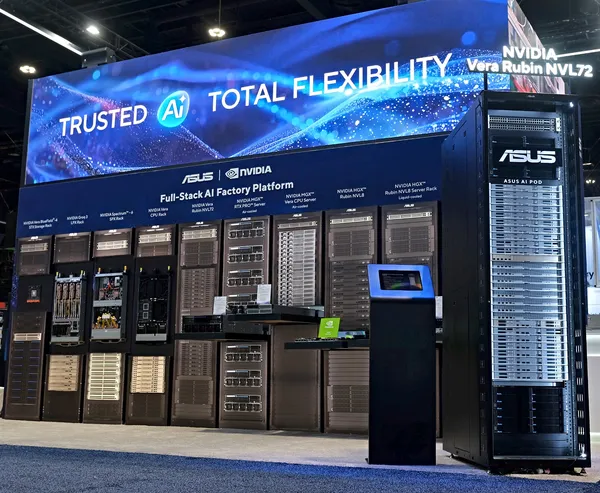
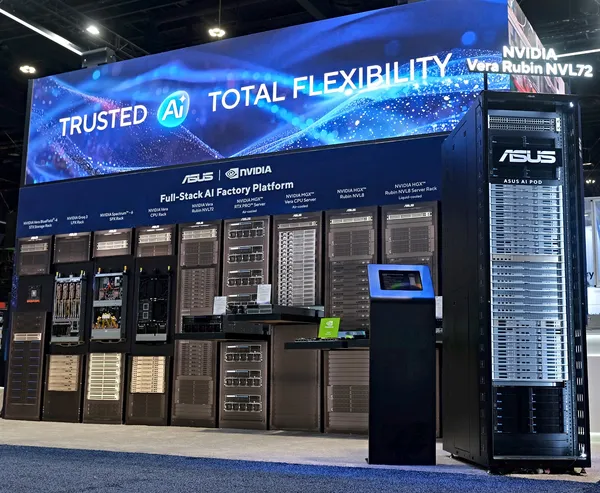
ASUS is ramping up volume shipments of NVIDIA Vera Rubin NVL72 systems in Q4, citing robust market demand. The company is also presenting an AI Factory reference architecture at SC26 in Chicago, focused on validated rack-scale systems and deployment services.
- ASUS is ramping up NVIDIA Vera Rubin NVL72 volume shipments in Q4.
- The ASUS AI POD XA VR721-E3 integrates 72 NVIDIA Rubin GPUs and 36 NVIDIA Vera CPUs.
- Automated L10 and L11 manufacturing supports rack-scale production.
- A six-layer validation framework tests systems from node level to full rack.
- ASUS is showcasing AI Factory planning, deployment, and management services at SC26.
Volume delivery backed by rack-level validation
ASUS said it is expanding production of NVIDIA Vera Rubin NVL72 systems to support customer demand. The company is combining automated L10 and L11 manufacturing, early engineering risk assessment, and six-layer rack-level validation to make delivery more consistent and predictable for organizations building large-scale AI systems.
At the center of its SC26 showcase is the ASUS AI POD XA VR721-E3. The fully liquid-cooled rack-scale system integrates 72 NVIDIA Rubin GPUs and 36 NVIDIA Vera CPUs. ASUS describes it as designed for frontier-model training, complex reasoning, and high-throughput inference.
The showcased lineup also includes NVIDIA Groq 3 LPX and Vera CPU trays, the NVIDIA Spectrum-X SN6600 Ethernet switch, and NVIDIA CMX. Together, these components demonstrate the compute, networking, and context memory elements of the company’s AI Factory approach.
Automation targets manufacturing and design risks
ASUS said its Predictive Virtual Lab helps identify potential signal-integrity risks early in the design process. The company is also applying in-house expertise in power delivery, thermal engineering, and high-speed interconnects to rack-scale systems.
At the manufacturing stage, automation covers processes including automated optical inspection, protective-cover removal, module-positioning assistance, and precision fastening. ASUS said these measures help reduce assembly variation and improve production consistency.
Its six-layer validation framework spans L10 node-level verification and L11 full-rack testing. Checks include hardware functionality, BIOS and BMC checks, power cycling, stress testing, NVIDIA diagnostics, and rack-level performance evaluation. Powered aging assessments monitor thermal behavior, power stability, and system health before final inspection and shipment.
For deployment flexibility, ASUS is also showing two NVIDIA HGX Rubin NVL8-based systems: the 3U hybrid-cooled XR R1I12B-M1BHFS and the 2U fully liquid-cooled XR R1I12B-M1BLFS.
AI Factory services span planning through operations
ASUS is presenting its AI Factory solution alongside the NVIDIA DSX reference design and NVIDIA Omniverse DSX Blueprint for AI Factory Digital Twins, part of NVIDIA DSX Sim. The company said these tools can simulate facility requirements and system configurations before physical deployment.
Working with Schneider Electric, AVEVA, and IBM, ASUS brings IT infrastructure, power, cooling, and facility models into a high-fidelity simulation environment. According to ASUS, this helps customers identify constraints, assess design trade-offs, and reduce on-site changes.
ASUS Professional Services support site-readiness assessment, power and cooling planning, system integration, and on-site installation. The ASUS Infrastructure Deployment Center automates provisioning, cluster configuration, and software installation, while ASUS Control Center Data Center Edition supports centralized monitoring, security oversight, and update management after deployment.
The company is showcasing these technologies at Booth #2234 during SC26 at McCormick Place in Chicago. For customers, the announcement positions predictable manufacturing, pre-deployment testing, and lifecycle support as part of the infrastructure package around Vera Rubin NVL72 systems.