Berkeley CDSS Gives Nine Faculty Machine Learning Research Awards
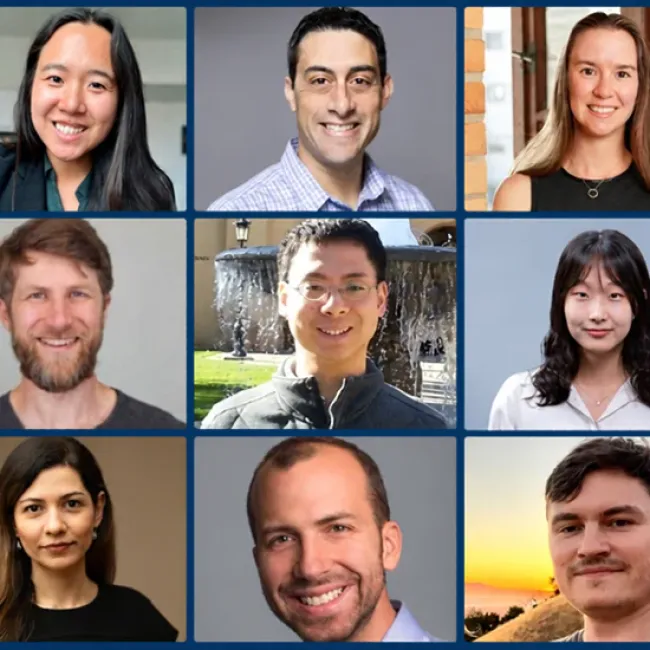
Nine faculty members at UC Berkeley's College of Computing, Data Science, and Society (CDSS) have received the first CDSS Machine Learning Research Awards, each carrying $50,000 in unrestricted funds. The awards, made possible by a gift from Citadel Securities, are meant to seed new machine learning research projects.
- UC Berkeley's CDSS announced its first Machine Learning Research Awards for nine faculty members.
- Each funded project received $50,000 in unrestricted funds for the 2026-27 academic year.
- The awards were made possible by a gift from Citadel Securities.
- Proposals were reviewed by a CDSS faculty committee.
- Projects cover language models, transformer memory, Bayesian model checking, algorithm evaluation and negotiation.
A new award funded by Citadel Securities
According to CDSS, the Machine Learning Research Award is a new opportunity for college faculty, with the goal of seeding new research projects in machine learning. The awards were made possible by a generous gift from Citadel Securities.
Proposals were reviewed by a CDSS faculty committee. The winning projects each received $50,000 in unrestricted funds, intended to help support research and graduate students during the 2026-27 academic year.
The funded projects
The awards cover seven projects, led by nine faculty members across electrical engineering and computer sciences, statistics, and public policy. The titles and recipients listed by CDSS are:
- AI-accelerated behavioral experiments for real-world decision-making: Serina Chang, assistant professor of electrical engineering and computer sciences and computational precision health, and Avi Feller, associate professor of public policy and statistics.
- Robust evaluation of predictive algorithms under confounding, measurement error, and distribution shift: Amanda Coston, assistant professor of statistics.
- Flows for Bayesian model checking: Ryan Giordano, assistant professor of statistics.
- Self-improving language model systems from rich feedback: Jason Lee, associate professor of electrical engineering and computer sciences and statistics.
- Transformer-compatible memory for decision-making over evolving information: Sewon Min, assistant professor of electrical engineering and computer sciences.
- Learning to represent: Communication policies for strategic language coordination in mixed-motive negotiation: Narges Norouzi, associate teaching professor of electrical engineering and computer sciences, and Joseph Gonzalez, associate professor of electrical engineering and computer sciences.
- Likelihood geometry for generalized linear models in changing environments: Nikita Zhivotovskiy, assistant professor of statistics.
What the mix of topics shows
The project titles span a range of machine learning questions. Some concern language models and memory for transformer systems, such as self-improving language model systems and transformer-compatible memory. Others focus on statistical methods, including evaluating predictive algorithms under confounding, measurement error, and distribution shift, as well as Bayesian model checking and generalized linear models in changing environments. One project applies AI to speed up behavioral experiments, and another examines communication policies in negotiation.
Because the funds are unrestricted and meant to support research and graduate students, the awards give the recipients flexibility in how they start their projects during the 2026-27 academic year. The source does not describe expected outcomes or whether further rounds of the award will follow.
Berkeley CDSS: Nine CDSS faculty receive Machine Learning Research Awards