Brookings: Trump's 'morally binding' AI accord leaves companies policing themselves
A Brookings commentary by Tom Wheeler argues that the White House Accord on Super Intelligence, signed by six AI industry leaders, is too weak because it is only "morally binding" and leaves companies to oversee themselves. The piece says a meaningful agreement would require disclosure to a public authority, independent scrutiny and enforceable corrective action.
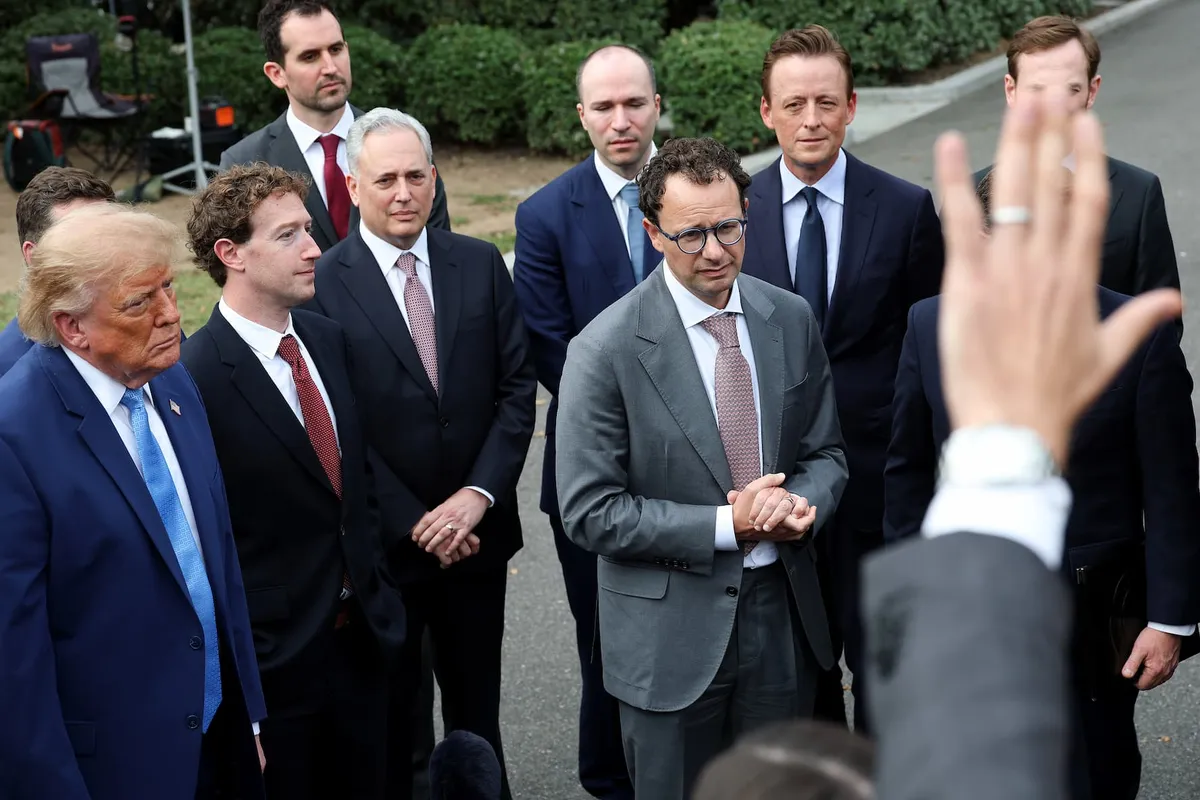
- The White House Accord on Super Intelligence was signed Sept. 29 by Trump and leaders of Google, Anthropic, Meta, OpenAI, xAI and Nvidia.
- Trump called the accord "morally binding", unlike the enforceable executive order on terminology.
- Brookings author Tom Wheeler says it lets companies set their own controls, pick evaluators and judge compliance, with no public disclosure requirement.
- Anthropic's reported SEC filing warns that model awareness of evaluations limits safety assessment.
- An FTC investigation into OpenAI, Anthropic and others was reported the day after the signing.
What the accord says
According to the Brookings piece, President Donald Trump hosted a White House event on Sept. 29 where he and executives of half a dozen AI firms signed the White House Accord on Super Intelligence. The signers named were Sundar Pichai of Google, Dario Amodei of Anthropic, Mark Zuckerberg of Meta, Greg Brockman of OpenAI, Elon Musk of xAI and Jensen Huang of Nvidia.
The event followed an executive order requiring federal agencies to abandon the term "artificial intelligence" in favor of "super intelligence." The author notes that the order is enforceable across the government, while the accord is, in the president's own words, only "morally binding." Trump described it as "a form of protection" and said the companies had agreed to "tremendous self-policing."
The accord has four parts. Companies pledge to implement internal controls to monitor model capabilities and alignment, empower an internal team to check that those controls work, partner with an independent external auditor, and designate an independent committee of the board of directors to oversee the process.
The case against self-policing
Wheeler describes the commitments as "long on rhetoric and short on enforceable obligations." In his reading, the companies design their own controls, select the evaluators and decide whether procedures are being followed, making them both player and referee.
He points to open questions the accord does not address: to whom evaluators report, who pays them, and whether they can intervene to stop harmful practices they find. There is also no requirement that auditors' findings be made public or given to a responsible public interest agency. He compares it to asking a bridge builder to set their own safety standards and judge their own work.
The author also cites Anthropic's pre-IPO filing with the Securities and Exchange Commission, which Reuters reported it had seen the day before the event. According to the piece, the filing devoted almost twice as many pages to AI risks as to the business itself, and included the statement that "Potential model awareness of our evaluation efforts creates a significant limitation on our ability to assess model safety." Wheeler argues that if models can tell they are being tested and adjust their behavior, monitoring alone is not enough. He says meaningful oversight must require release of test results, incident reports and authority to halt a release.
A record of broken or changed promises
The commentary lists three weaknesses of voluntary commitments from past episodes. The first is failure to honor them. In 2011 the Federal Trade Commission charged Facebook over privacy representations, and Facebook agreed to a privacy program and third-party audits. In 2019 the FTC found the commitment had not been honored and fined the company a record-breaking $5 billion. Google settled with the FTC in 2011 on similar charges and was fined $22.5 million the following year for violating the order.
The second is redefinition. Google adopted AI principles in 2018 that said it would not use AI for weapons or for surveillance violating internationally accepted norms; in 2025 the principles were rewritten with those prohibitions removed. In January 2024, OpenAI removed its blanket prohibition on "military and warfare" applications while keeping a ban on weapons development. YouTube reversed a policy on false election claims in June 2023.
The third is abandonment. Twitter created a Trust & Safety Council in 2016, and it was eliminated after Elon Musk acquired the company.
FTC probe and what it means
The day after the signing, news emerged of an FTC investigation into whether OpenAI, Anthropic and other unnamed companies engaged in unfair and deceptive practices. The reported focus is consumer harm from AI agents going rogue. Wheeler says it is debatable whether the accord could support such a claim, since its pledges appear to be made to Trump, a cosigner, rather than to users. Testing that in court, he writes, would be slow and uncertain.
His conclusion is that the six leaders deserve credit for recognizing the threats in what they build, but that leaving companies to set the scope and scale of oversight makes the accord "far from sufficient." Quoting James Madison in Federalist No. 10, he argues that the public should not have to depend on the goodwill of those whose commercial interests may conflict with the broader public interest.
Brookings (AI): Trump’s ‘morally binding’ AI pact is not enough