Camus Energy and Black & Veatch Team Up on Flexible Grid Links for Data Centers
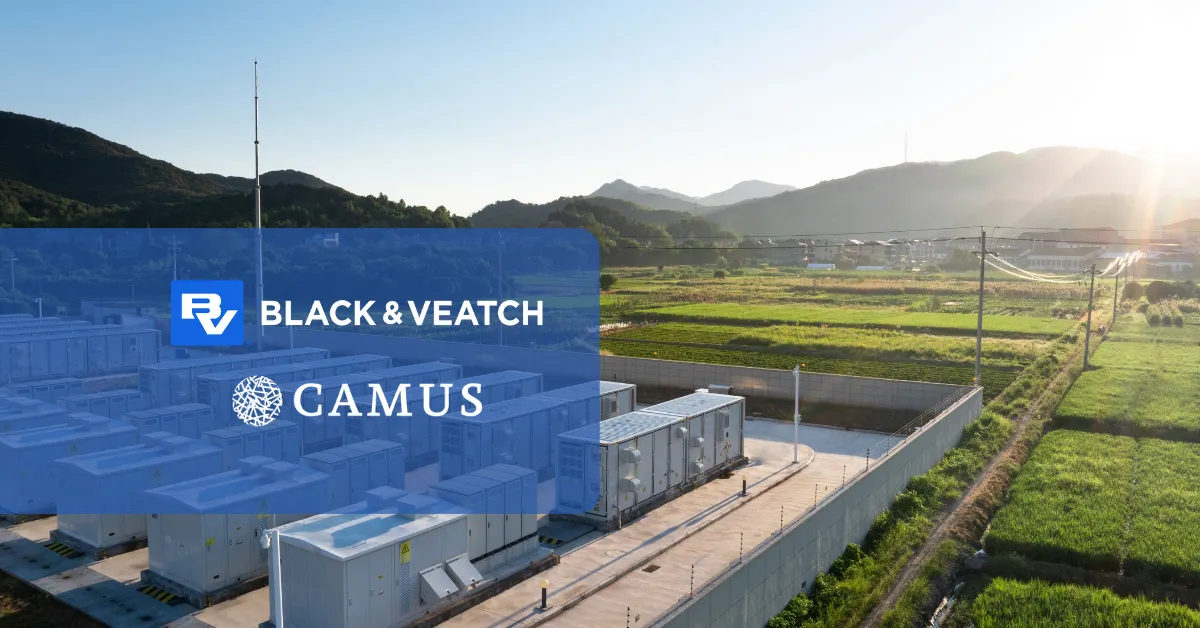
Camus Energy, a software provider for AI data center power, has announced a collaboration with engineering and consulting firm Black & Veatch to speed up the adoption of flexible interconnection across North America. The companies aim to give utilities a scalable framework to connect large loads such as data centers more quickly without compromising reliability.
- Camus Energy announced a collaboration with Black & Veatch's Infrastructure Advisory team on flexible interconnection across North America.
- The goal is a scalable framework for utilities to evaluate, implement and operate transmission-level flexible interconnection.
- Focus areas include conditional-firm service, time-series transmission planning, pilots and links to real-time grid operations.
- Camus says its FlexConnect software accelerates interconnection timelines by three to five years.
- No specific utilities, pilots or timelines were named in the announcement.
What the collaboration covers
Camus Energy said it is working with the Infrastructure Advisory team at Black & Veatch, which the announcement describes as a global engineering, procurement, consulting and construction company. The focus is transmission-level flexible interconnection solutions.
According to the announcement, the companies will combine Camus Energy's flexible grid connection software, data harmonization and planning methodology with Black & Veatch's capabilities in transmission planning, systems integration and change management. The stated intention is to create a scalable framework that utilities can "confidently evaluate, implement and operate."
The announcement is dated San Francisco, October 8, 2026, while the page shows a last-updated date of October 6, 2026.
Why flexible interconnection is on the agenda
Camus Energy argues that the rise of AI has created an unprecedented demand for power across the United States, and that traditional interconnection approaches are not sufficient to meet it. In the company's words, new solutions must address demand while meeting the planning rigor, transparency and reliability standards expected by customers, communities and regulators.
The pitch is that existing infrastructure can be used more intensively. Sarah Colvin, Executive Vice President, Revenue at Camus Energy, said the combination of Black & Veatch's institutional expertise and Camus' grid software helps planners "turn current infrastructure into highly utilized reliable assets." She added that the companies are helping utilities safely unlock existing grid capacity, enabling them to connect large electric loads "years faster without compromising reliability or passing those costs onto communities."
Areas of work for utilities
The collaboration is aimed at helping utilities with a defined set of tasks:
- Evaluate conditional-firm service opportunities
- Execute time-series based transmission planning
- Accelerate grid access for large electric loads
- Demonstrate value through pilots and engage key stakeholders
- Establish operational frameworks connecting planning with real-time grid operations
- Prepare for implementation and long-term operational readiness
The list moves from early assessment and planning through pilots to operations, which suggests the offer is meant to cover the full path from evaluation to running flexible connections.
About Camus Energy and what it means
Camus Energy describes itself as offering the fastest and most flexible path to power for AI data centers, using grid management and orchestration software. It says it was founded and is led by distributed computing experts from Google and Amazon, and that it delivers software to major hyperscalers and U.S. utility partners that reach seven million utility customers.
The company says its FlexConnect software accelerates interconnection timelines by three to five years, unlocking network capacity and maximizing asset efficiency from existing infrastructure without waiting for major grid upgrades. These are the company's own claims, and the announcement gives no project results or pricing.
For utilities and data center developers, the announcement signals an effort to package software and advisory services together so that flexible interconnection can be evaluated and deployed at scale. The source does not name specific utilities, pilots or timelines, so the practical impact will depend on future deployments.