Clockwork.io raises $31 million as LinkedIn and Together AI adopt its GPU fault-tolerance software
Clockwork.io, a maker of fault-tolerance software for AI training, reinforcement learning and inference, has raised $31 million in new funding. The company also announced production deployments at LinkedIn and Together AI, wider use at WhiteFiber, and two new TorchPass features.
- Clockwork.io raised $31 million and announced production deployments at LinkedIn and Together AI.
- LinkedIn says LinkPass prevents tens of thousands of idle GPU hours each month across its fleet.
- TorchPass gains multinode platform snapshots and fast asynchronous application checkpoints for reinforcement learning.
- Together AI is offering TorchPass as a service on its GPU clusters, and WhiteFiber is expanding its use of the software.
Why failures matter at AI scale
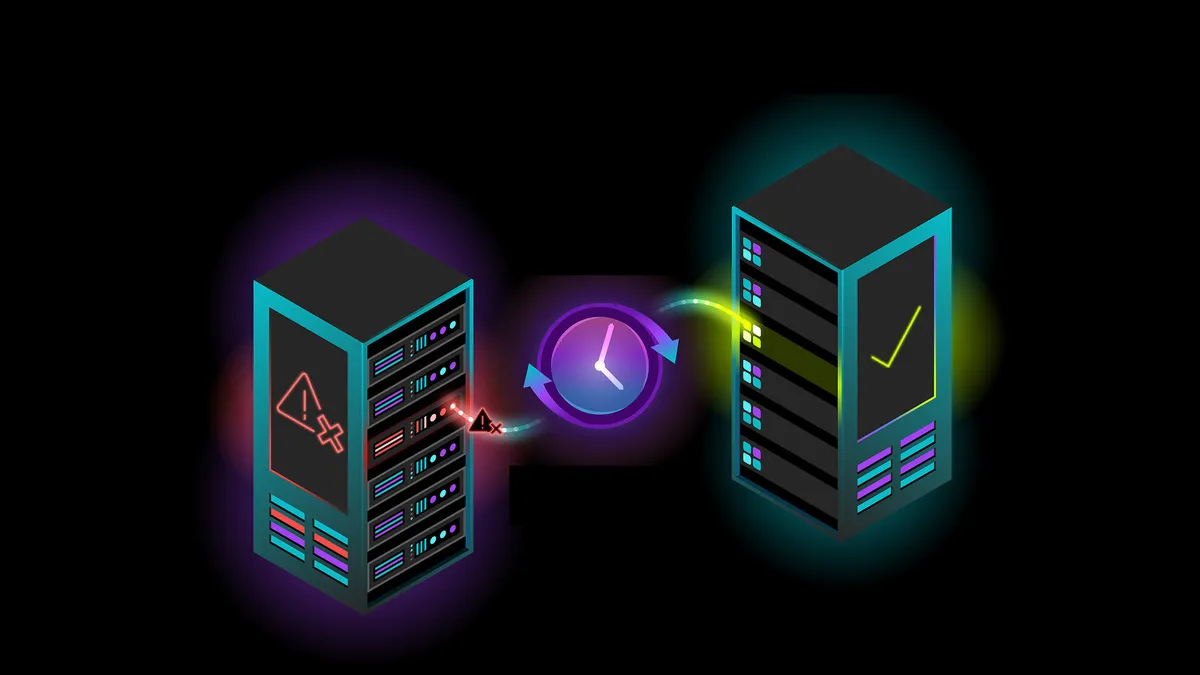
Large distributed AI jobs can span thousands of GPUs that must stay in sync. According to Clockwork.io, the failure of a single GPU, a broken link or a crashed server can stall the entire job.
The company points to Meta, which reported unexpected interruptions at an average rate of roughly one every three hours during a 54-day Llama 3 training run on 16,384 GPUs. The usual response is to reload a checkpoint, a saved copy of the job's progress. Clockwork.io says this recovery can take up to 90 minutes, leaves healthy GPUs idle and forces teams to repeat work done since the checkpoint. Customers pay for idle GPUs and redundant computation, and models take longer to finish.
What Clockwork.io sells
Clockwork.io offers a set of fault-tolerance tools that platform teams deploy as a layer between hardware and workload. According to the company, two products are already in production:
- LinkPass reroutes traffic around a failed network link, so the job never detects the fault.
- TorchPass moves a workload from a faulty GPU to a working one, letting training continue without rolling back to an earlier state.
The company has now added two TorchPass capabilities. Multinode platform snapshots, described as an industry first for training, save the full job across all nodes without changes to training code, so it can be restored later. This is meant for failures too severe to fix by migration alone. Fast, asynchronous application checkpoints run in the background while the job continues and speed up reinforcement learning. They deliver updated model weights to the inference replicas that generate rollouts, the examples the model learns from, so those replicas spend less time waiting or working with an outdated model.
CEO Suresh Vasudevan said: "Los fallos son inevitables a la escala de la IA; perder horas de trabajo útil debido a ellos no debería ocurrir."
Customers: LinkedIn, Together AI and WhiteFiber
LinkedIn has deployed LinkPass across its AI infrastructure fleet. According to the announcement, this prevents the loss of tens of thousands of GPU hours to idle time each month. Raghu Hiremagalur, LinkedIn's senior vice president and head of infrastructure technology, said that before Clockwork.io an InfiniBand NIC flap could take an eight-GPU server out of service, and a switch port flap could disable a second server, doubling the impact to 16 GPUs.
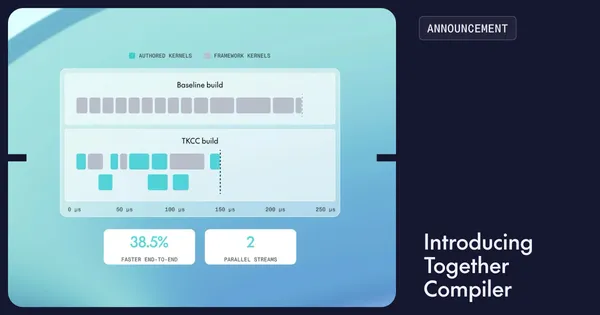
Together AI is bringing TorchPass to market as a service on its GPU clusters. At the PyTorch conference, the two companies plan a live demonstration of a multinode training job that keeps running without a restart despite deliberately introduced network and GPU faults. Pavneet Ahluwalia, Together AI's product lead, said customers judge the company on goodput, the share of GPU hours that actually advance the model.
WhiteFiber (NASDAQ: WYFI), an existing customer, is expanding its use of the software across its GPU-as-a-service infrastructure. Tom Sanfilippo, the company's chief technology officer, said Clockwork.io's automated fleet auditing validates every link and node at once and finds faults within minutes, so they can be fixed before a cluster is handed to a customer.
What it means
The announcement shows fault tolerance moving from a research concern to a product that enterprises, hyperscalers and neocloud providers buy to raise the share of GPU hours spent on useful work. As jobs grow, each restart puts more GPU time at risk, which is the cost Clockwork.io says its tools are built to reduce. The funding gives the company resources to extend that approach beyond training into reinforcement learning and inference.
PR Newswire: Clockwork.io recauda 31 millones de dólares