CMU Research Professor Alex Hauptmann Dies at 67
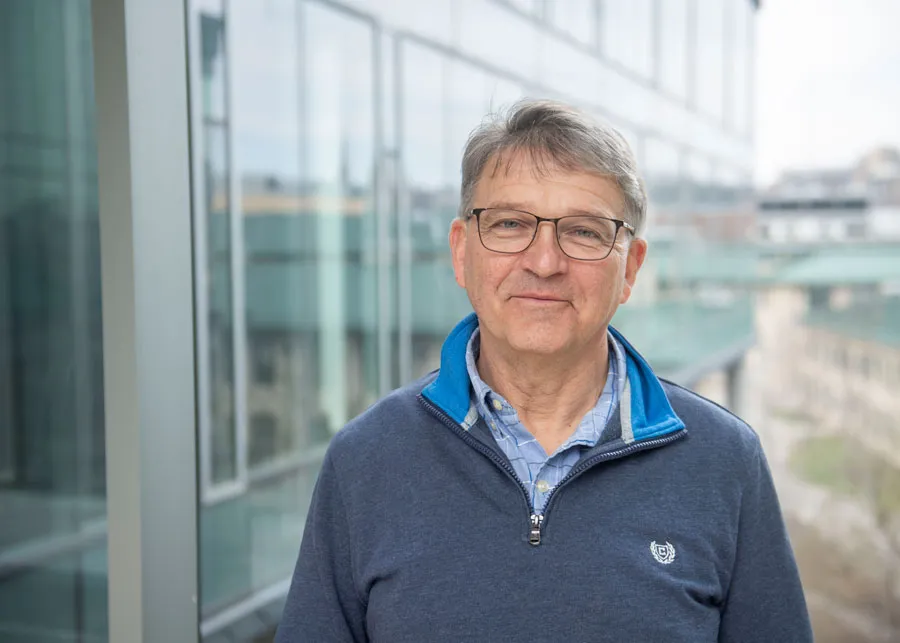
Alex Hauptmann, a Carnegie Mellon University research professor known for work in speech recognition and natural language processing, died Oct. 7 at 67. CMU’s School of Computer Science said he died following a bout with frontotemporal dementia.
- Alex Hauptmann died Oct. 7 at age 67.
- He spent about 42 years at Carnegie Mellon University.
- His research covered speech recognition and natural language processing.
- His projects included Informedia, nursing-home monitoring and VERA.
- Colleagues remembered him as a calming presence and mentor.
A 42-year career at Carnegie Mellon
Hauptmann first arrived at CMU in 1984 as a Ph.D. student interested in natural language processing. His advisers were language technologies pioneers Jaime Carbonell and Alex Rudnicky.
After completing his Ph.D. in 1991, he stayed at CMU in a research position in the Computer Science Department. He later became a principal systems scientist and joined the Language Technologies Institute faculty as a research professor in 2017.
Alex Hauptmann was born in Munich in 1959. He earned bachelor's and master's degrees in psychology from Johns Hopkins University in 1982, followed by a diplom, equivalent to a master's degree, from Technische Universität in Berlin in 1984.
Research across speech, video and language
Hauptmann built a research portfolio around using large amounts of found data to improve speech and natural language processing. His work focused on exploiting advantages across different modalities, according to CMU.
He contributed to the Informedia project and helped develop a real-time parking availability system with Pittsburgh International Airport. He also developed technology used to monitor the location and safety of patients in nursing homes.
Hauptmann worked on VERA, the Video Event Construction Analysis System. The system can identify a shooter's location based on user-generated videos that capture the sound of gunshots.
His early interests included how people would communicate with computers. Alex Rudnicky recalled that the two discussed “how exactly humans would talk with computers, because at that point it wasn't really known.”
Colleagues remember a mentor and a researcher
CMU colleagues described Hauptmann as supportive and collaborative. Rudnicky said, “He was a great person to work with,” and added that Hauptmann “didn't feel threatened by someone doing something similar,” which made him “a good mentor.”
David Mortensen, an LTI faculty member who worked with Hauptmann on several projects, remembered him as a calming and encouraging presence. Mortensen said Hauptmann took him “under my wing” when he was a fairly new faculty member and spent time mentoring him.
Hauptmann also maintained a life outside academia. He was fluent or conversant in at least five languages, German, English, French, Arabic and Russian. He became an accomplished equestrian and took part in eventing, competitions combining cross-country riding, show jumping and dressage.
He and his wife, Dona, lived on a farm in Washington County, south of Pittsburgh, where they raised and trained horses. Hauptmann is survived by Dona, his stepdaughter Kiersten, and his brother David and David's wife, Tamara. At the family's request, donations in his memory can be made to the Still Us Foundation, a nonprofit in Pinehurst, North Carolina, focused on transforming dementia care.
CMU School of Computer Science: Obituary: The LTI's Alex Hauptmann Was a Calming, Encouraging Presence