CodeROI Adds AI Costs to Software Capitalization Ahead of FASB Rule
CodeROI has launched expanded software capitalization that tracks AI development costs alongside employee pay on each project. The company says its platform converts recorded engineering activity into audit-ready figures under U.S. GAAP and IFRS.
- CodeROI now tracks AI development costs alongside employee pay.
- The platform supports U.S. GAAP and IFRS software capitalization.
- FASB's ASU 2025-06 applies to annual periods beginning after December 15, 2027.
- The capability is available now to CodeROI customers in the United States and Canada.
Tracking software costs from engineering activity
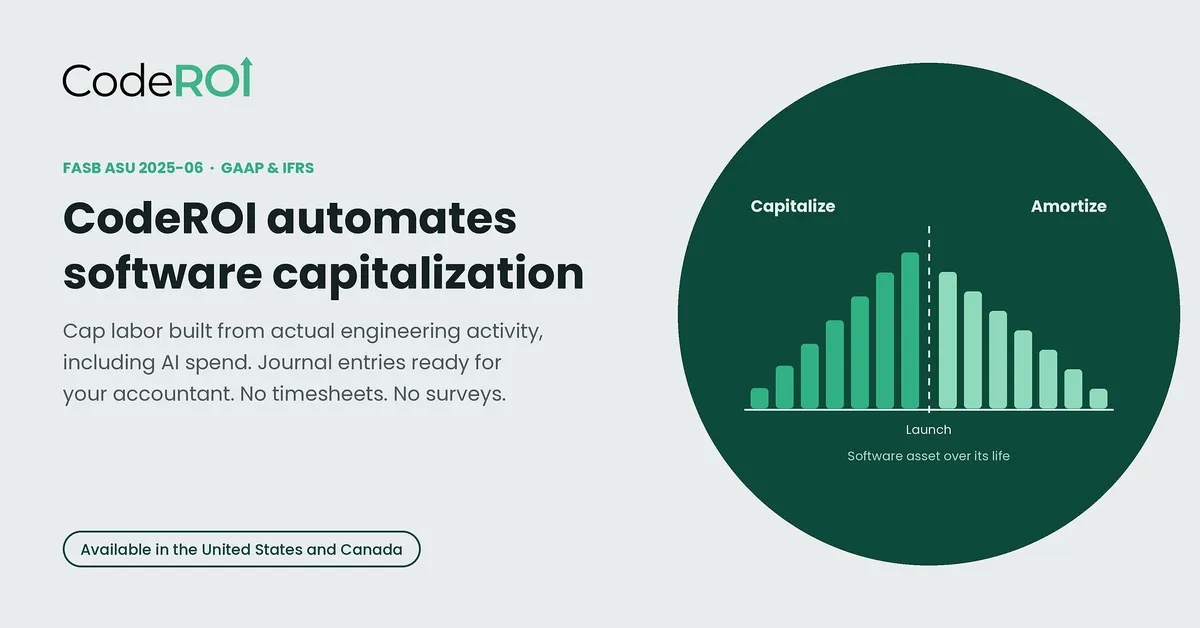
Software capitalization records the cost of building software as an asset on the balance sheet instead of an expense. CodeROI says its platform records work as it happens and produces project costs, capitalization schedules and monthly accounting entries without timesheets or surveys.
The system ties each engineer's pay and each AI tool's cost to the projects where they were used. Companies can select U.S. GAAP or IFRS treatment for each project, specify when capitalization begins and set the expected useful life of the software.
CodeROI then adds eligible costs while a project is being built and spreads them over the software's useful life after launch. It also provides optional planned launch dates to preview future costs separately from recorded figures.
AI-written code becomes part of the accounting record
According to CodeROI, spending on an AI tool can count as part of the cost of building software when the tool writes code for a qualifying project. The company says many existing processes count employee work but miss AI-related costs.
CodeROI says its calculations are deterministic, meaning the same facts produce the same answer. It does not use AI in its calculations or in sourcing data, which the company says is intended to maximize audit defensibility.
The same engineering record can also support the R&D tax credit, Section 174 and Canada's SR&ED program. CodeROI says this allows tax and accounting work to use one set of facts rather than separate spreadsheets.
FASB rule increases the importance of documented judgment
The launch comes ahead of the Financial Accounting Standards Board's ASU 2025-06, issued in September 2025. The rule changes how companies determine when to start capitalizing software built for their own use.
Instead of relying on fixed project stages, a company starts capitalization once a project is approved, funded and likely to be completed. The rule applies to annual periods beginning after December 15, 2027, and companies may adopt it early.
CodeROI says the simplified test creates more judgment calls and increases the need to show the facts supporting each decision. Taylor Meadows, CPA, CEO of CodeROI, said: “The new FASB rule asks companies to show their judgment, not just their totals. CodeROI gives them actuals: what was built, on which project, by which person or AI tool, and what it cost, recorded while it happened.”
Availability for companies in the United States and Canada
CodeROI says the expanded software capitalization capability is available now to its customers in the United States and Canada. The company records data from the day a customer connects and does not rebuild past years from memory.
For finance teams, CodeROI says the approach can provide monthly entries ready for review and recording, with each capitalized dollar traceable to recorded work. Development costs are moved from the income statement to the balance sheet and spread over the years the software is used.
The company says engineers can continue using their usual tools because CodeROI connects to where code lives. Customers can schedule a demo at CodeROI.com and estimate potential savings there.