CoreWeave Unveils Global Backbone Network Built for AI Workloads
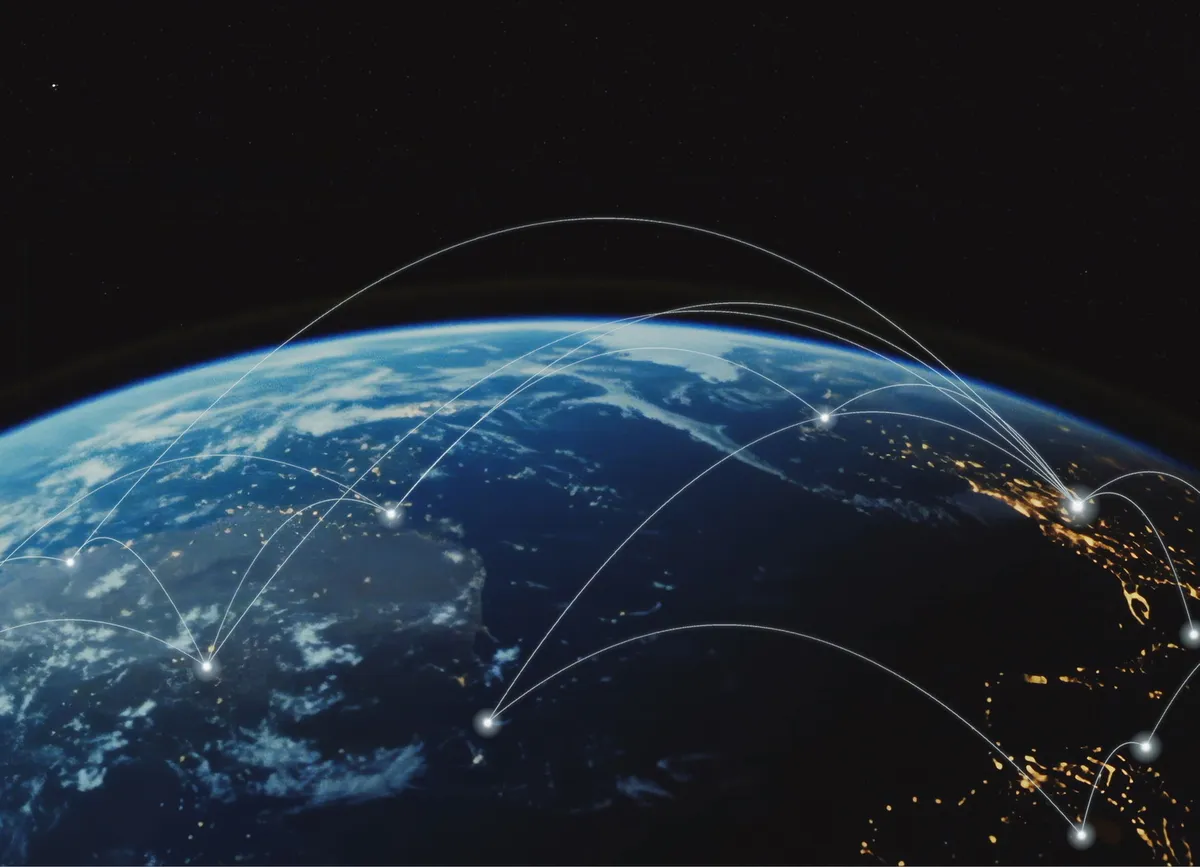
CoreWeave says it is building the first global backbone network purpose-built for AI, connecting 51 active data centers across North America and Europe and adding points of presence in the Middle East and Asia Pacific from Q4 2026. According to the company, the network operates at Petabit scale and is designed for the long-lived, high-volume data flows that training and inference create.
- CoreWeave's Global AI Network connects 51 active data centers in North America and Europe, with more than 1.5 GW of active power.
- New PoPs are due from Q4 2026 in the UAE, India, Indonesia, Singapore, Australia, South Korea and Japan.
- Every PoP has multiple 400 Gbps connections, and MACsec encryption runs in hardware at line rate, according to CoreWeave.
- CoreWeave announced a 22.5 MW renewable-powered data center in Copenhagen, Denmark.
- The India PoP will expand the platform with 240 MW of capacity in Navi Mumbai.
A network spanning four regions
CoreWeave describes its Global AI Network as an extension of The Essential Cloud for AI®. According to the company, it currently links 51 active data centers in North America and Europe, including eight added in 2026. Those sites provide more than 1.5 gigawatts of active power, backed by approximately 4.2 gigawatts of contracted power, a figure CoreWeave dates to its Q2 2026 earnings call on August 11, 2026.
CoreWeave also announced a 22.5 megawatt (MW) data center in Copenhagen, Denmark, powered by renewable energy.
Beginning in Q4 2026, new network points of presence (PoPs) are due to come online in the United Arab Emirates, India, Indonesia, Singapore, Australia, South Korea and Japan, connected over terrestrial and subsea fiber. In Indonesia, the new PoP will connect the three data center facilities announced in August. In India, the PoP will expand the AI Cloud platform with 240 MW of data center capacity in Navi Mumbai.
The company says the network across North America and Europe is operating today, while the Asia Pacific and Middle East PoPs are scheduled to start coming online in Q4 2026. It contrasts this with specialized providers that it says "remain limited to a small number of regions."
Designed around AI traffic, not web traffic
CoreWeave argues that general-purpose cloud networks were built for millions of small, predictable flows serving web applications, databases and transactional services. AI workloads look different, it says. Training and inference pipelines generate long-lived "elephant flows" that can use substantial bandwidth for hours or days while moving Petabytes of data.
The company names three design pillars:
- Performance: every PoP is deployed with multiple 400 Gbps connections over a unified optical IP network. CoreWeave notes that 10 and 100 Gbps connectivity remains common across cloud networks, and that 400 Gbps is often limited to select edge locations.
- Security: CoreWeave runs MACsec encryption (IEEE 802.1AE) in hardware, encrypting in-flight traffic at line rate on the network interface rather than in software. It covers backbone links between regions, Direct Connect traffic from a customer's own network, and traffic inside CoreWeave data centers.
- High availability: every PoP connects to at least two other PoPs across four physically diverse paths, and every region is dual-homed to two PoPs. If a link, terrestrial route or subsea cable fails, built-in path intelligence can redirect traffic without customer intervention, according to the company.
CoreWeave also states that some cloud providers support MACsec on direct connect links but not always end-to-end over the backbone, whereas it built the encryption in from day 1 everywhere.
Connecting the backbone to the data center fabric
CoreWeave says the backbone and the network fabric inside its data centers work as one AI network. Within a data center, it describes a non-blocking, multi-plane fabric where every leaf has enough uplink capacity to sustain full line rate from the nodes beneath it. This two-tier architecture connects up to 128,000 GPUs with fewer hops, which the company says reduces congestion, latency and jitter.
The company points to an earlier publication, Purpose-Built Clouds for AI at Scale, in which it said this architecture can deliver 20% higher Model FLOPs Utilization (MFU) and 96% goodput. It adds that bare-metal infrastructure removes hypervisor overhead, and that LOTA in CoreWeave AI Object Storage reduces read latency by up to 8x.
CoreWeave is candid about limits: "No network can overcome the speed of light." What it says it can remove is unnecessary delay, including congested transfers, manual data staging, network oversubscription and replication jobs that must finish before AI work can begin.
What it means for customers
For customers, the pitch is a single network for staging datasets near available GPUs, distributing model artifacts and placing inference closer to users, without managing failover themselves. The company says this lets customers reach available compute across regions without bandwidth becoming another constraint.
Existing CoreWeave customers can view their own traffic in the Internet Transit dashboard in Managed Grafana. The company also points to a separate blog post on CoreWeave AI Object Storage cross-region write acceleration for teams whose bottleneck is storage latency rather than transport. All performance and resilience claims come from CoreWeave itself, and the Asia Pacific and Middle East expansion is still scheduled rather than live.