CoreWeave to offer NVIDIA Vera CPU, packing 11,000+ agent environments per rack
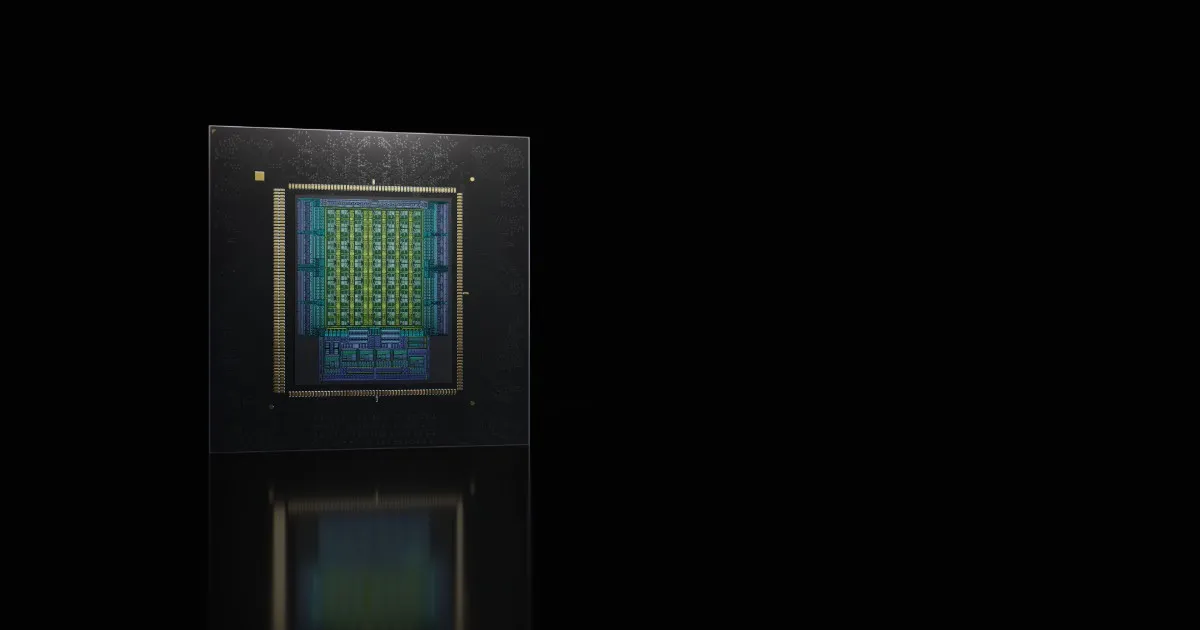
CoreWeave says the NVIDIA Vera CPU, described as the first CPU purpose-built for AI agents, is coming soon to its cloud on bare metal. According to the company, a single rack can hold more than 11,000 concurrent agent environments.
- CoreWeave says the NVIDIA Vera CPU is coming soon on bare metal, with no launch date or pricing given.
- Vera has 88 custom Olympus cores; each node pairs two CPUs with 1.5 TB RAM and a BlueField-4 DPU.
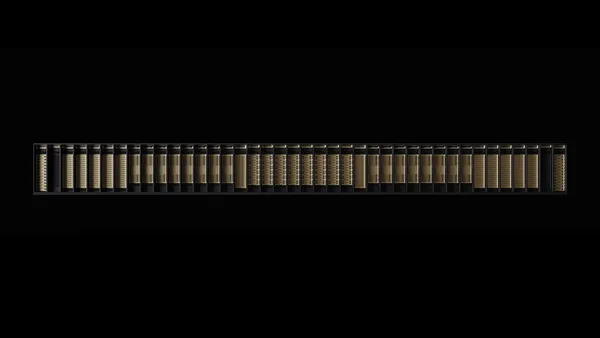
- One rack holds 128 Vera CPUs, 11,264 cores and 11,000+ concurrent environments, per CoreWeave.
- CoreWeave reports more than 3x faster agent sandbox startup versus an alternative x86 CPU in its testing.
- Spot capacity offers up to 60 percent savings with a 7-minute preemption warning.
Why CoreWeave is adding a CPU built for agents
CoreWeave argues that while GPUs generate and reason, CPUs run everything around that work: the sandboxes, tool calls and data pipelines every agent depends on. As post-training and agentic workloads grow, the company says, the CPU's share of every turn of the AI loop keeps climbing.
NVIDIA Vera is, according to CoreWeave, the first Arm-based CPU built for AI agents. It has 88 custom Olympus cores designed for the branch-heavy, memory-bound work that agents generate. CoreWeave points to reinforcement learning environments, post-training pipelines and data pre-processing, which now run at fleet scale, along with sandboxed agent execution in both training and inference.
In its own testing, CoreWeave says it achieved more than 3x faster agent sandbox startup times on NVIDIA Vera CPU compared to an alternative x86 CPU.
Node and rack specifications
Each Vera node on CoreWeave has the following configuration:
- 2x NVIDIA Vera CPUs with 88 cores each
- 1.5 TB RAM
- 15.36 TB NVMe local storage
- BlueField-4 DPU, 800Gbps
At rack scale, CoreWeave lists 128 Vera CPUs and 11,264 cores in a single rack, supporting 11,000+ concurrent environments. The company says that for teams planning in hundreds of thousands of environments, the rack becomes the planning unit rather than the node.
CoreWeave credits both silicon and infrastructure for predictable performance. Vera's Spatial Multithreading gives each thread its own dedicated share of the processor instead of making threads compete. CoreWeave adds bare metal with no hypervisor overhead, plus a DPU on every Vera node that offloads networking, storage and operational tasks so workloads keep every core.
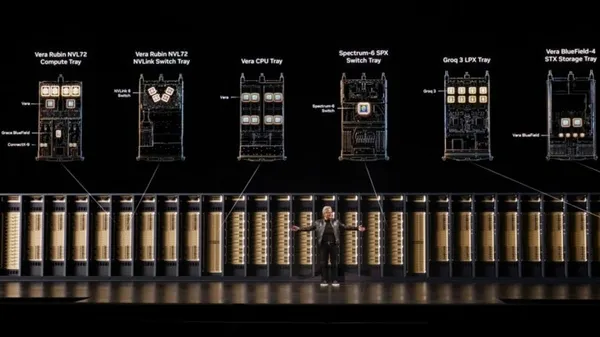
The Vera CPU also appears in GPU systems. Each Vera Rubin NVL72 compute tray pairs two Vera CPUs with four Rubin GPUs, giving 36 CPUs and 72 GPUs per rack. Standalone Vera capacity scales that CPU side independently.
Pricing models for bursty demand
CoreWeave notes that demand for data preprocessing and RL training episodes is bursty. A single step might need tens of thousands of environments for an hour and then almost nothing until the next run. The company says buying for the peak leaves capacity idle, while buying for the average makes training wait.
Its answer is a mix of consumption models:
- Committed capacity for the steady base.
- Serverless spillover for spikes.
- Spot capacity for interruptible work at up to 60 percent savings, with a 7-minute preemption warning so jobs can checkpoint and drain cleanly.
CoreWeave Sandboxes on CoreWeave Kubernetes Service (CKS) and Serverless run isolated environments for RL, agent tool use and evaluation alongside training clusters. According to the company, a committed CPU that would otherwise sit idle between runs can go to agent and evaluation work at no charge beyond the compute itself. One control plane spans the GPU and CPU fleet: CKS, CoreWeave SUNK and CoreWeave Mission Control.
What it means for customers
With Vera, NVIDIA joins AMD EPYC and Intel Xeon in CoreWeave's multi-vendor CPU portfolio, all on bare metal under one operating model. CoreWeave says customers can match each workload to the silicon it runs best on and change that choice without replatforming.
Vera instances are also architecturally consistent with the Arm hosts inside modern NVIDIA GPU systems, including the Vera CPUs inside Vera Rubin NVL72, so one toolchain can run across the fleet, according to CoreWeave.
The Vera CPU is listed as coming soon, and the source gives no pricing or launch date. CoreWeave invites teams whose sandbox fleets, RL environments or data pipelines are outgrowing general-purpose CPU capacity to contact it for capacity planning.
CoreWeave: NVIDIA Vera CPU Is Coming to CoreWeave: Pack In More Agents