Databricks introduces Genie as an autonomous AI coworker
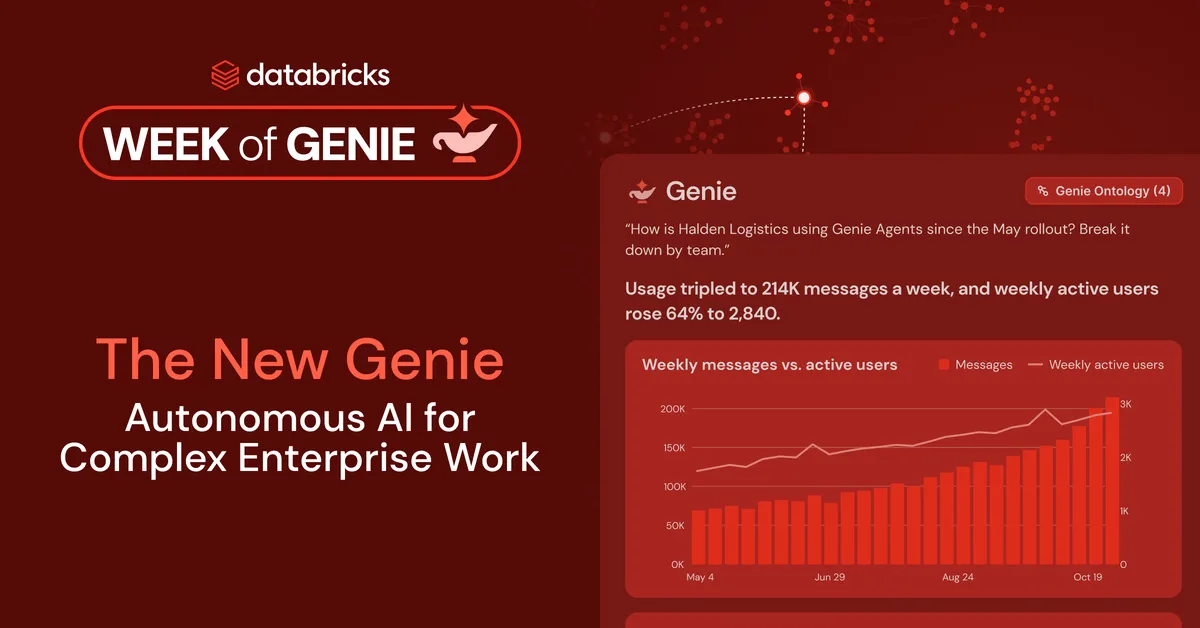
Databricks has introduced a new version of Genie that can handle long-running enterprise work, track progress, follow up on missing information and take action as new data arrives. The autonomous AI coworker operates within guardrails set by users and administrators.
- Genie can manage long-running enterprise tasks and respond to new information.
- Genie Ontology supplies governed business definitions, relationships and organizational knowledge.
- Unity Gateway controls tool access, traces actions and sets spending limits.
- Genie Search connects business applications with lakehouse data.
- Genie Agents can work across structured and unstructured data and connected tools.
Genie takes responsibility for ongoing work
Databricks says the new Genie is designed for continuous, complex and data-intensive work that still requires employees to monitor changes, decide what matters and act. Users can give Genie a job, provide access to the tools it needs, and supervise its progress through Genie One, email, Slack or Microsoft Teams.
Genie can ask for input or approval, adapt to feedback and run several jobs at once. Jobs can operate on a schedule or respond to triggers, such as a metric falling or more than 10 customers requesting the same feature. A control panel lets users supervise, steer and stop active jobs, while company guardrails determine which actions Genie can take independently and which require sign-off.
Databricks gives the example of Genie monitoring insurance claims for fraud patterns and loss-ratio drift, assembling a case file and routing it to underwriters when a segment moves outside guidelines. In marketing, it can monitor campaigns, investigate underperformance and propose weekly budget changes for approval.
Business context and controls underpin the system
Genie Ontology provides a shared map of a business, including definitions, metrics, relationships and organizational knowledge. Databricks says agents build most of the ontology from dashboards, queries and notebooks that employees already use, while teams establish authoritative definitions in Unity Catalog. The OntoRank algorithm gives those definitions precedence so agents use the same governed understanding of the business.
Genie Search brings together information from a lakehouse and connected business applications. Its sources include Google Drive, SharePoint, Jira, Confluence and Workday, alongside Databricks dashboards, tables, Databricks Apps and Genie Agents.
Unity Gateway and Unity Catalog govern Genie through existing permissions and policies. Unity Gateway also gives administrators visibility into actions, usage and cost, with controls for tool access, action tracing and spending limits.
Search, artifacts and connected applications
Users can ask Genie to create finished work such as slide decks, dashboards and interactive HTML pages directly in a conversation. They can refine the results in chat, then present, share or reuse them. Scheduled tasks can keep artifacts current as data changes, and shared skills can apply company brand guidelines.
MCP connectors allow Genie to read from and act in tools including Slack, Zoom, Microsoft 365, Jira, GitHub and calendars. Custom MCP connections can extend that reach to ServiceNow and PagerDuty. Databricks says Genie can investigate an incident using GitHub and Jira changes, update the ticket and keep the team informed until the issue is resolved.
Genie is available through a browser, desktop, iOS and Android, as well as Slack and Microsoft Teams. Plugins also bring its business context into AI tools such as ChatGPT and Claude.
Genie Agents extend expertise across teams
Genie Agents provide specialized expertise for teams in areas including marketing, sales, finance and operations. Departments can configure agents with the data, files, tools and instructions they need, then use them through Genie One, APIs, custom applications and automated workflows.
The agents can work with structured tables as well as PDFs, slides and other content. Databricks says a sales leader could combine pipeline data with win-loss reports to understand why a region is losing deals, with page-level citations for inspecting the evidence. Connectors can also let agents investigate issues, create tickets and prepare summaries for team channels.
OpenSharing for Genie Agents lets teams share governed agents with partners and customers. Genie Clean Rooms are intended for more sensitive use cases, allowing recipients to ask questions without exposing underlying data or proprietary logic, with controls including conversation and output limits.
Databricks says thousands of customers use Genie in production, including Zillow, Unilever, adidas, Atlassian and AstraZeneca. The announcement positions the new system as a way to move AI assistants from answering questions toward managing recurring enterprise responsibilities, while keeping people and administrators in control of approvals, permissions and governance.
Databricks: The new Genie: autonomous AI for complex enterprise work