Deepfake Watchlist: Voice Clone Kidnapping Scam, Meloni Trademark, Sony Takedowns
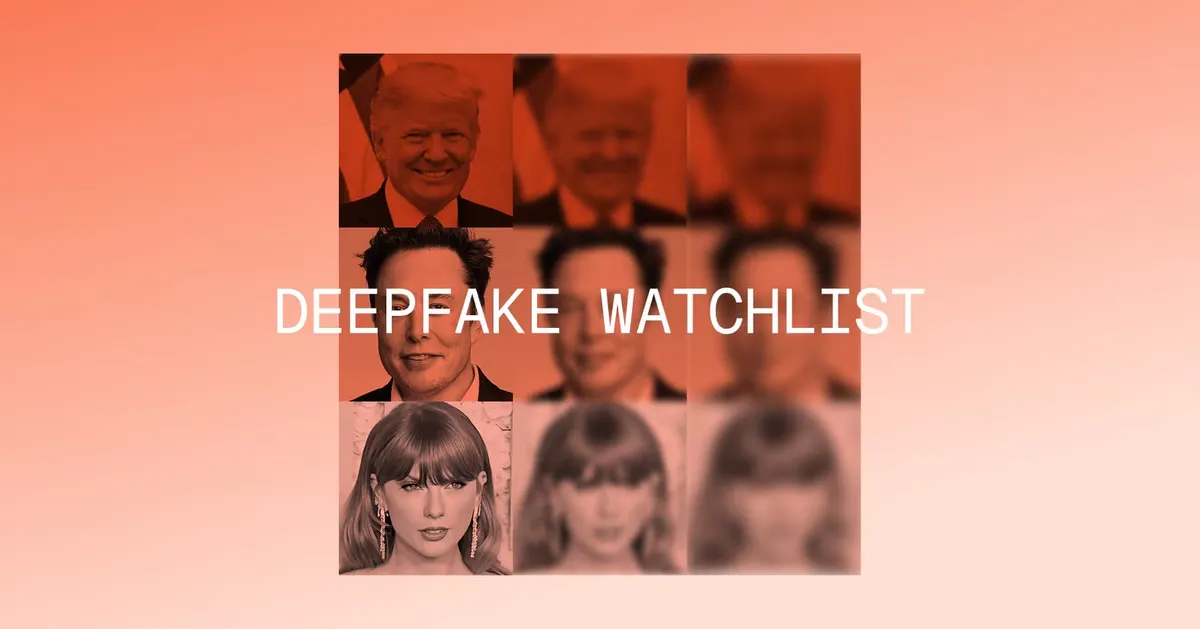
Resemble AI's Deepfake Watchlist for October 2 to 8, 2026 lists four cases: a voice-clone virtual kidnapping that cost a California mother $5,400, Giorgia Meloni's bid to trademark her voice, Sony Music's passing of 260,000 takedown requests, and an AI-generated political ad that triggered a row in Tasmania.
- A California mother lost $5,400 in an AI voice-clone virtual kidnapping scam that lasted five and a half hours.
- Giorgia Meloni filed an EU trademark application for her voice, reportedly the first by a sitting head of government.
- Sony Music has issued more than 260,000 takedown requests for AI-generated tracks, up from 135,000 at the end of March.
- No Australian federal law requires disclosure of AI-generated political ads on social media, per Resemble AI.
A cloned voice and a five-hour kidnapping hoax
According to a Fox News report published October 7 and summarized by Resemble AI, Deborah Del Mastro, a Navy veteran and California mother, lost $5,400 after fraudsters used an AI-cloned version of her daughter Sarah's voice to simulate a kidnapping. The scammers kept her on the phone for five and a half hours and coordinated payment across four MoneyGram and Western Union transactions. Sarah was at work the entire time.
Resemble AI notes that the cloned voice sounded like Sarah in a panic, a state her mother had heard just days earlier after a breakup. Del Mastro later told a US Senate committee she remained "completely traumatized" months afterward, according to the report.
On the legal side, Resemble AI says no federal statute specifically covers AI voice used to simulate kidnapping. The FBI has issued guidance on "virtual kidnapping" schemes, but existing law addresses the underlying wire fraud rather than the synthetic voice. Resemble AI argues that the real fix is provenance infrastructure that makes a fake identifiable before it reaches the listener.
Meloni files a voice trademark, Sony reports a surge in takedowns
POLITICO reported on October 5 that Italian Prime Minister Giorgia Meloni has applied to the European Union Intellectual Property Office to trademark her voice. The filing is a four-second clip of her saying "Io sono Giorgia Meloni" twice. Italian media describe it as the first such filing by a sitting head of government. Resemble AI says the application is under examination and, if approved, would create additional legal obstacles for unauthorized voice replication. It would not automatically prevent AI-generated imitations or require platforms to disclose them. The context includes Italy's 2027 general elections and sexual deepfakes that Meloni has fought through civil litigation since 2024.
Billboard and the Financial Times, reporting October 5 on figures through the end of September, say Sony Music has issued more than 260,000 takedown requests for AI-generated tracks impersonating its artists. That is almost double the 135,000 filed by the end of March, and averages more than 20,000 per month across Q2 and Q3 of 2026. The impersonations named in the summary include Harry Styles, Adele, Britney Spears, Queen and Michael Jackson. A Sony spokesperson told Billboard that every fraudulent stream takes money directly from the artists and songwriters whose work is being imitated.
Sony's campaign runs under existing DMCA notice-and-takedown frameworks, Resemble AI says, while the US NO FAKES Act, which would give individuals enforceable rights over unauthorized AI replicas, remains in the legislative process.
An AI political ad exposes a disclosure gap in Australia
ABC News Australia reported on October 6 that the One Nation party released an AI-generated video titled "It's ok to come out... as a One Nation voter." A Tasmanian café owner objected publicly and said they would donate any One Nation custom to the Greens, prompting an exchange with candidate Lee Hanson, the daughter of Pauline Hanson.
Resemble AI points out that the party acknowledged the video was AI-generated, so impersonation is not the issue. Its concern is regulatory: no Australian federal statute requires disclosure of AI-generated content in political advertising on social media. Disclosure rules cover broadcast advertising, not social platforms, according to the summary.
What the cases show
Resemble AI draws one conclusion across the four items: legal responses come after the harm. A trademark helps only once misuse is detected, and takedowns are limited by how fast a legal team can file notices. The company, which publishes the watchlist, argues for provenance signals embedded at the generation stage so synthetic audio can be identified before it reaches anyone. That is the company's own position, and the cases it cites show the gap between fast generation and slower legal remedies.
Resemble AI: The Deepfake Watchlist: Week of October 2–8, 2026