Deepfakes and AI Agents Target 2026 Midterm Voters, Resemble AI Watchlist Finds
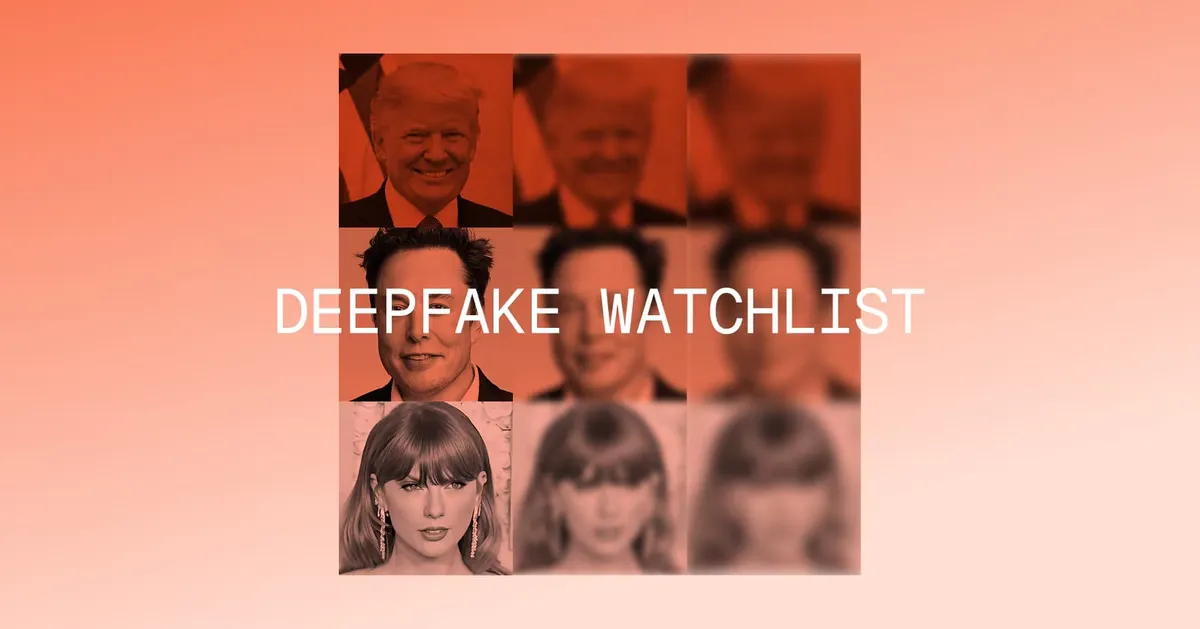
Resemble AI's special midterm edition of its Deepfake Watchlist describes foreign influence operations, a deepfake campaign ad in Spanish and AI agents that text voters in a candidate's voice. The report, dated October 15, 2026, covers the weeks before the November 3 election.
- Bloomberg reported on October 14 that Russia, Iran and China are using generative AI to amplify election disinformation ahead of November 3.
- OpenAI banned Russian and Iranian accounts using ChatGPT for influence operations on October 8.
- Steve Hilton's campaign ran an AI-generated Spanish-language ad showing Xavier Becerra making a statement he never made, with a disclosure label shown for about three seconds.
- A Center for Democracy and Technology analysis says no federal law requires campaigns to disclose when AI agents text voters.
- The FCC could rule on a Club for Growth petition on political AI-voice calls as soon as late October.
State actors industrialize disinformation
The featured item in the watchlist is a Bloomberg report from October 14. According to the report, as summarized by Resemble AI, Russia, Iran and China are all using generative AI to amplify disinformation ahead of November 3. On October 8, OpenAI banned Russian and Iranian accounts it caught using ChatGPT for coordinated influence operations, the same day Bloomberg published its investigation.
Resemble AI says Russia's Matryoshka network, also tracked as Storm-1679, has spread AI-manipulated videos since early September. These include deepfakes of American celebrities criticizing Democratic candidates and fabricated clips styled as CNN newscasts with AI voice-cloned anchors. Iran's networks used AI-generated personas posing as American activists to produce anti-Republican commentary. Daily Kos ran some of those posts before reviewing them for authenticity.
OpenAI's account, as relayed by Resemble AI, said the banned networks used ChatGPT to draft social content, translate between languages to reach different domestic audiences, and generate "authentic-sounding" biographies for synthetic personas.
Resemble AI argues the strategy is more targeted than the old model of flooding the zone. In its reading, the goal is to get one credible outlet to publish a fabrication and let normal political media dynamics do the amplification. It cites a case in which a fabricated narrative seeded in a legitimate outlet prompted a public response from a sitting MEP. On the policy side, the watchlist states that no US enforcement action has been taken against the foreign networks described and that Congress has not passed a federal standard for AI use in foreign election influence operations.
A Spanish-language deepfake ad in California
The watchlist's first numbered item concerns Steve Hilton, the Republican candidate for California governor. His campaign released an AI-generated Spanish-language ad depicting Democratic opponent Xavier Becerra saying he "fought for boys to play in girls' sports." According to LGBTQ Nation, as cited by Resemble AI, Becerra has never made that statement.
California requires disclosure of AI-generated content in campaign ads. The Hilton campaign included a label, but Resemble AI says it appears in small print for about three seconds. The watchlist adds that no California law prohibits putting fabricated statements in an opponent's mouth.
Resemble AI notes that Hilton is down more than 15 points in every published poll, and reads the ad as aimed at Spanish-speaking Latino voters who may be less likely to see English-language fact-checks. It is the second time the campaign has run AI-generated content of Becerra this cycle. In July it released an ensemble deepfake of Harris, Newsom and Becerra together.
AI agents text voters as the candidate
The second numbered item draws on a Center for Democracy and Technology analysis. It says campaigns are deploying AI agents to hold live, two-way text conversations with voters in the candidate's voice, and that federal law does not require them to disclose that the sender is not human.
Resemble AI lists several vendors. aKillion's IONCandidate product runs texts in the candidate's persona, built from their voting record, platform and approved talking points, and says it can "manage thousands of simultaneous conversations." Each exchange is logged and added to individual voter profiles. Convos trains an agent on candidate bios and policy positions, and encourages but does not require disclosure. Vector Political runs similar adaptive conversations.
The regulatory picture is unsettled, according to the watchlist. The TCPA, dating from 1991, was written for prerecorded calls and mass robotexts. The FCC ruled in 2024 that AI-generated voices count as "artificial" for robocalls requiring prior consent, but has not said whether AI-generated texts fall under the same rule. North Dakota now requires disclosure of AI-generated political texts. Whether California's BOT Act reaches SMS is described as a live legal question. The FCC could rule on a pending Club for Growth petition to exempt political AI-voice calls from prior consent as soon as late October, potentially before November 3.
What it means for voters
Taken together, the items show AI tools being used in different ways: to place fabricated content in trusted outlets, to target specific language groups with false statements, and to simulate direct contact with a candidate. Resemble AI says the foreign operations are not ramping down. It also argues that the line between a synthetic candidate persona and impersonation is thin from a voter's point of view. For voters, the watchlist's findings suggest that disclosure rules remain patchy and that labels, where they exist, can be easy to miss.
Resemble AI: The Deepfake Watchlist: Week of October 9–15, 2026