Elisa and NVIDIA, Nokia to test AI-RAN in live Finnish network in 2027
Finnish telecom operator Elisa is preparing to validate AI-RAN in a live commercial network in 2027 together with NVIDIA and Nokia, after completing what it calls Europe's first live-network AI-RAN trials. The company is also deploying distributed AI infrastructure at several locations in Finland.
- Elisa says it has completed Europe's first live-network AI-RAN trials and plans to validate AI-RAN in a commercial network in 2027.
- In Helsinki, voice, mobile data and video analytics ran simultaneously on one AI-RAN platform over Elisa's 5G Advanced network.
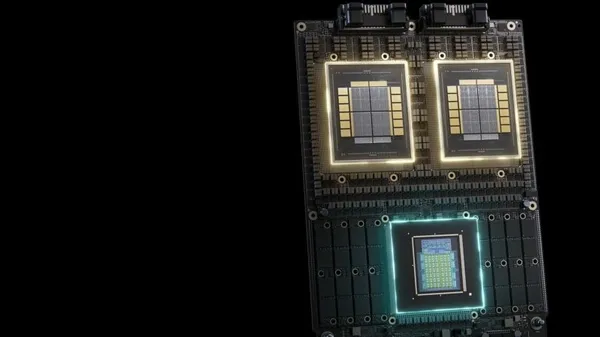
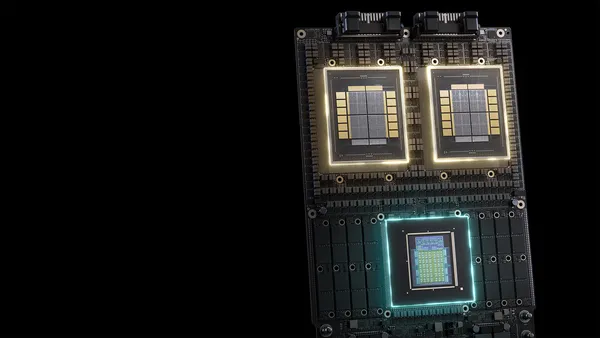
- The trial used Nokia's AI-RAN solution and NVIDIA Aerial RAN Computer with an RTX PRO 4500 Blackwell Server Edition GPU.
- Elisa is deploying Dell PowerEdge servers with NVIDIA RTX PRO 6000 BSE GPUs at multiple locations in Finland.
What the Helsinki trial showed
AI-RAN combines radio access network functions and AI workloads on the same accelerated computing platform. In practice, according to Elisa, the same computers that run the mobile network can also run AI, which turns the network into a distributed AI platform and brings computing closer to where data is generated and consumed.
In Helsinki, Elisa ran voice, mobile data and video analytics simultaneously on the same AI-RAN platform over its 5G Advanced network. The company describes this as a European first. It says the result clears the way for distributed deployment, the evaluation of customer use cases and a path toward commercial AI-RAN services in 2027.
The trial used Nokia's AI-RAN solution and the NVIDIA Aerial RAN Computer (ARC) with an NVIDIA RTX PRO 4500 Blackwell Server Edition (BSE) GPU. On top of a Voice over New Radio (VoNR) call and data connectivity, it demonstrated AI-boosted algorithms (AI-in-RAN) and edge AI applications for video analytics (AI-on-RAN).
Planned use cases and infrastructure
Elisa lists several services that the combined connectivity and AI computing could support:
- A voice assistant that answers instantly. Voice AI services such as Moontalk AIRI deliver natural, real-time conversations.
- Cameras that spot safety risks on the spot. Video is analysed at the base station site, so sensitive footage stays close to where it was captured.
- A network that fixes itself. Autonomous AI agents monitor and optimize network operations.
As part of this work, Elisa is deploying Dell PowerEdge servers featuring NVIDIA RTX PRO 6000 BSE GPUs, based on NVIDIA Aerial RAN Computer configurations, at multiple network locations in Finland. The servers create distributed AI computing capacity for current AI inference workloads and future AI-RAN deployments. Elisa is also using open AI models and NVIDIA's AI software ecosystem to speed up service development.
What the partners say
Sami Komulainen, COO and EVP, Technology and Operations at Elisa, said: "AI is becoming a critical layer of digital infrastructure." He added that AI-RAN is an important step toward combining connectivity and AI on a shared platform and "laying the foundation for AI-native 6G networks."
Ronnie Vasishta, SVP, Telecom at NVIDIA, said: "AI is moving out of the data centre and into the network." Emma Falck, President of Mobile Infrastructure at Nokia, said operators can use AI-RAN to make networks smarter, use infrastructure more efficiently and create new revenue from edge AI services. She said the partners are "moving AI-RAN from demonstration towards commercial reality."
What it means for operators and customers
For now, the work remains a trial and an infrastructure rollout, with commercial validation planned for 2027. Elisa says that by running voice, mobile data and video analytics on one platform in an outdoor 5G environment, it is among the first operators globally to move toward real-world deployment of AI-native network infrastructure.
The company positions the deployment as a building block for the 6G era, in which communications and computing infrastructure will increasingly converge. If the 2027 validation goes as planned, customers in Finland could see faster responses and local data processing for AI applications, while the operator gains a way to offer edge AI services on the same network hardware.