Everlaw AI Deep Dive Reaches General Availability for Legal Teams
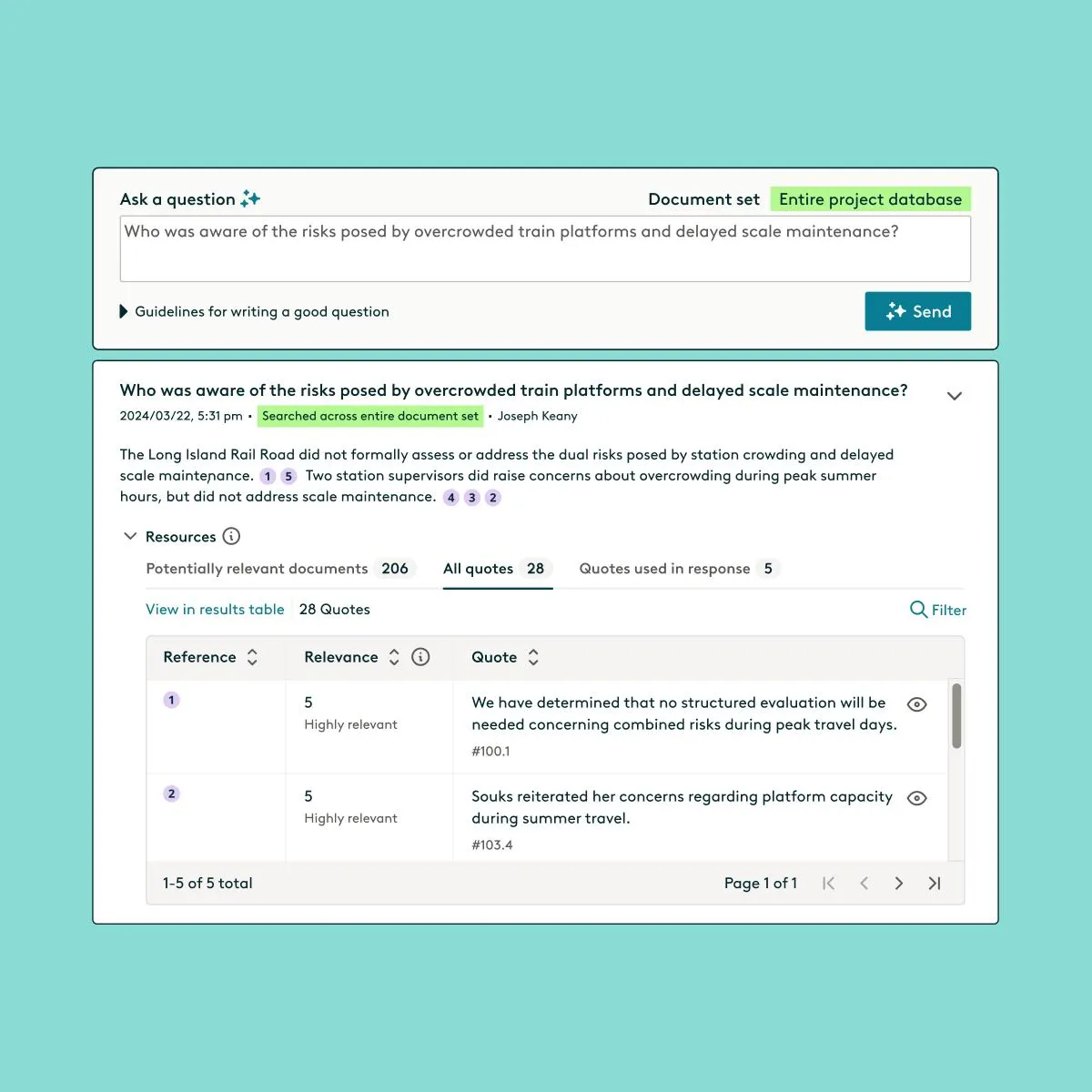
Everlaw has released Deep Dive, its generative AI tool for legal discovery, for general availability after an eight month beta. The tool lets legal teams ask plain-language questions of their entire data set and returns answers with citations to the source documents.
- Everlaw AI Deep Dive is now generally available after an eight month beta.
- The tool answers natural language questions using only a customer's own case data and cites its sources.
- If an answer is not in the documents, Deep Dive says it cannot answer.
- In the beta, the average database held 166,000 documents and the largest tested held 10 million.
- Deep Dive connects with Storybuilder and Writing Assistant inside the Everlaw platform.
What Deep Dive does
According to Everlaw, Deep Dive allows legal teams to put natural language questions to their litigation data. The company says this low barrier to entry makes the tool accessible to users without extensive prompt engineering experience.
The tool is built on a secure Retrieval Augmented Generation (RAG) framework, and Everlaw says its findings are drawn strictly from the evidence in a customer's Everlaw repository. Every result is linked to citations of the original source materials, so users can verify answers. If the answer cannot be found in the uploaded documents, Deep Dive responds that it cannot answer. Everlaw says this reduces the risk of hallucinations.
Use cases across the case life cycle
Everlaw describes Deep Dive as usable at practically any point in a case. The company lists several scenarios:
- Early matter exploration: a team could ask, "Who are the key personnel involved in the acquisition of Company A?" and receive an answer rooted in its document corpus.
- Review and investigations: instead of running broad searches and reviewing thousands of immaterial results, a team could ask which communications between a former lead engineer and external parties mention "Project X" after the termination date.
- Deposition preparation: teams can look up specific dates and statements related to a contract breach, build a case timeline, and confirm or contradict witness statements. Everlaw says the tool also supports live questioning during a deposition.
- Quality control: attorneys can ask about information they might have missed.
Julie Brown, Director of Practice Technology at Vorys, described the quality control use at Everlaw Summit '25. The case involved 2 million documents and a one-week production deadline. The team used traditional search and Predictive Coding to move through the data set, then used Deep Dive as a check. "The answers were spot on," Brown said.
Elizabeth Koenig, Senior Vice President of Consulting Services at ILS, said the tool's accessibility is leading senior partners to want to ask the AI questions themselves, rather than relying on more junior attorneys.
Integration and beta results
Deep Dive works within existing Everlaw workflows. Users can find key facts, add them to Storybuilder for collaborative case analysis, and then use Writing Assistant to create a list of key characters and organize events. Everlaw says staying within the platform keeps data organized and secure.
The general release follows an eight month beta with a select group of users, who asked Deep Dive thousands of questions about their case data. According to Everlaw, the average database in the beta contained 166,000 documents, and the largest matter successfully tested used a database of 10 million documents. The company says this shows Deep Dive can scale to large matters, and that it has already shipped enhancements based on beta feedback.
Benjamin Kennedy, Managing Director of Adio, said: "We have not had a tool like this before." Everlaw CEO AJ Shankar said the company's commitment is to ensure customers have access to the best technology and are fully trained and enabled by it.
What it means for legal teams
With general availability, Deep Dive is open to all Everlaw customers rather than only beta participants, according to the company's framing. Everlaw positions it for users from partners to litigation support staff. The source does not give pricing or details on rollout, and interested teams are directed to request a demo.
The claims about reliability and speed come from Everlaw and its customers, and the source offers no independent evaluation. Because answers are cited to source documents, lawyers can still check each response against the underlying evidence.