Harvard workshop asks what evolution can teach AI researchers about learning
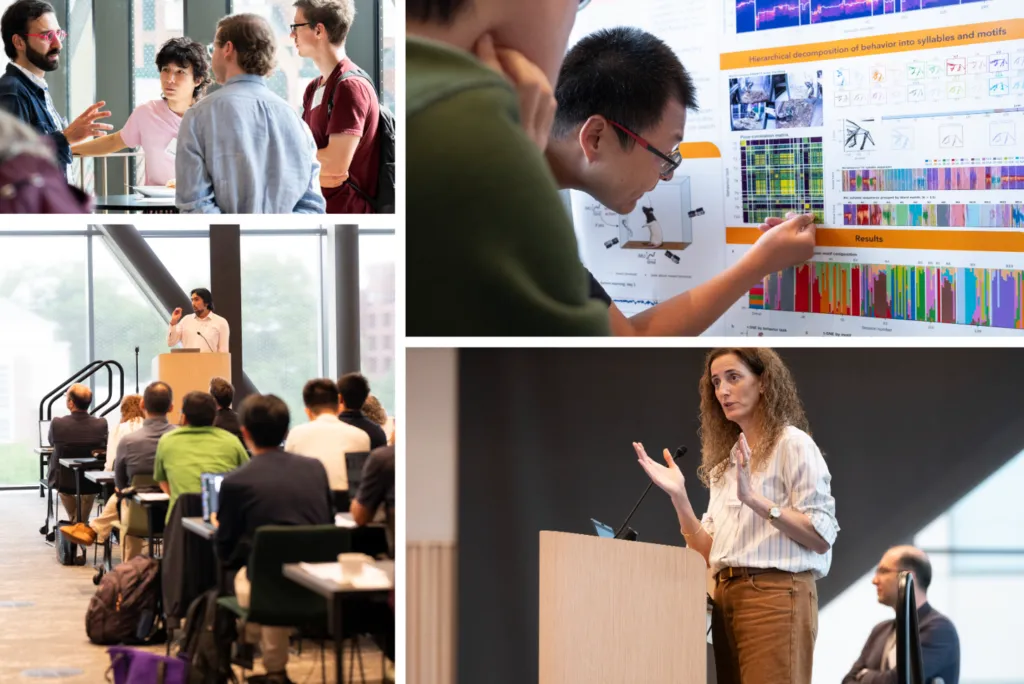
The Kempner Institute at Harvard hosted a three-day workshop on how evolution shapes learning, bringing 250 scientists, researchers and students together to compare biological and artificial intelligence. The event, titled "Learning Dynamics in Natural and Artificial Intelligence," looked at whether biology's strengths can guide the next generation of AI.
- The Kempner Institute at Harvard hosted a three-day workshop with 250 scientists, researchers and students.
- The event, "Learning Dynamics in Natural and Artificial Intelligence," compared learning in biological and artificial systems.
- Topics included motor skill learning, dog behavior evolution, memorization and AI learning through interaction.
- Organizers say evolution-inspired learning algorithms could help improve neural networks more efficiently during training.
- Video talks from the workshop are available online.
Why biology still has the edge
According to the Kempner Institute, state-of-the-art AI systems can make connections across vast amounts of data and are increasingly capable of tackling complex problems. Biological intelligence, however, retains some advantages. Shaped by evolution, biological systems can learn from limited experience, adapt easily to new situations and use very little energy. The institute describes these capabilities as ones that "remain elusive for modern AI systems."
That gap raised a set of questions for biologists, neuroscientists and AI researchers. What drives learning and adaptation in biological and artificial systems? How has evolution shaped intelligence? How can insights from AI help explain learning in biology? And how can the advantages of biological learning be used to build the next generation of AI?
What the workshop covered
The workshop was hosted by the Kempner Institute for the Study of Natural and Artificial Intelligence at Harvard and drew participants from academia and industry. It included presentations, lightning talks and a poster session, and focused on the mechanisms behind flexible, efficient learning in both natural and artificial systems.
Topics ranged widely. Researchers presented work on how humans acquire new motor skills when learning to walk, and on the evolutionary processes that gave dogs the ability to learn new behaviors, such as herding or hunting, suited to their environments. Other talks explored how AI systems might learn through interaction with the world, much like biological systems, and the role of memorization in generalizing knowledge.
Featured speakers included Venkatesh Murthy, a Kempner Associate Faculty member, who spoke on "An Inductive Bias for Generalization in Mouse Olfactory Learning." Karolina Dziugaite, a senior research scientist at Google DeepMind, gave a talk titled "The Dynamics of Memorization in Deep Learning."
The program was organized around the intersection of evolution, biological intelligence and AI. It considered how biological and artificial systems each achieve, or fail to achieve, efficiency, flexibility, robustness and generalization. Presenters also discussed language, memory and decision-making in different biological systems, and how computational models can help explain them.
Evolution-inspired learning for neural networks
Organizers tied the discussion directly to how artificial neural networks are built and trained. These are AI models inspired by the structure and function of the human brain.
"Biological evolution is an important lens here because it offers an interesting foundation for learning in AI models," said Janet Wallace, Kempner Research Projects Manager, who helped organize the workshop. She added that biological systems adapt rapidly to new situations with limited experience, and that "we are increasingly seeing this same capacity in artificial systems."
Bingbin Liu, a Kempner Research Fellow and co-organizer, pointed to a practical angle. "For creating artificial networks, there are learning algorithms we could use that are inspired by evolution," Liu said. "And this can help us develop better neural networks, and improve them more efficiently over the course of training."
What it means for AI research
The institute presents the workshop as evidence that insights from evolution and adaptation can inform how learning is understood and can offer new strategies for AI scientists. The stated aim is to help build more robust computational models that can adapt and generalize to new challenges.
Liu summed up one takeaway: "we should be open to interdisciplinary discussions and ideas, such as how biology and evolution can help us optimize neural networks." The source does not report specific new methods or results from the event. It frames the workshop as an exchange between fields.
Video presentations from the workshop are available through a playlist linked by the Kempner Institute, for readers who want to follow the talks from academia and industry.
Kempner Institute (Harvard): What Can Principles of Evolution Teach AI Scientists?