Harvey Outlines Tools to Verify AI-Generated Legal Work

Harvey is developing a set of review and verification tools designed to show lawyers how its AI produced legal work, what sources it used and what may have been missed. The company says the approach is needed as agents take on larger assignments, including reviewing tens of thousands of documents and working through entire data rooms.
- Harvey says verification is becoming a bottleneck as legal AI handles larger assignments.
- Cite Check is planned for Early Access later this year.
- The tool will check quotes and pin cites against opinions in US Case Law.
- Harvey plans to add scope notes showing what agents read and could not read.
- The company is extending review records and citations across its documents and workflows.
Cite Check will automate citation reviews
Harvey says verification is becoming a bottleneck because lawyers remain responsible for work they sign, even when the first draft was produced by Harvey. A diligence memo can look polished while still being wrong if an agent missed an amendment or never opened a side letter.
The company divides its verification strategy into three areas: checks Harvey can perform itself, visibility into the work and decisions behind an answer, and a record of who reviewed and approved the result.
One planned tool is Cite Check, which Harvey says is coming to Early Access later this year. Users will be able to upload a brief, after which the tool finds its citations and checks each quote and pin cite against the full opinion in US Case Law. Each citation will be marked “verified,” “needs review,” or “issue found.”
Findings will appear as review cards in the brief, with suggested fixes presented as tracked changes that lawyers can accept or reject. Harvey says this will remove the need to click through every verified citation manually, while leaving the strength of the legal argument to human judgment.
The company wants to show what agents did and missed
Harvey says citations alone cannot reveal whether an agent searched the right files, tried the right terms or made a significant judgment call. Its current thinking states show which files Harvey is searching, what it searched for and what it reads as it works.
The company plans to add short scope notes to answers. These will explain which documents Harvey read in full, what language it looked for and which files it could not read. Harvey gives an example of a note stating, “Read all 212 contracts in full, including amendments and side letters. Couldn’t open 3 password-protected files.”
Harvey says early design partners preferred this kind of plain account to a coverage percentage. The company also plans to mark judgment calls so reviewers can focus on them first. It is exploring a process in which Harvey pauses at a judgment call, asks the lawyer for a decision and records the answer before continuing.
For litigators, Harvey is developing a fact graph that will extract facts, link them to source pages and organize them by issue, person and event. It will also build cited chronologies and flag inconsistencies, with lawyers able to accept, edit or reject each suggested fact.
Reviews will follow the document and the matter
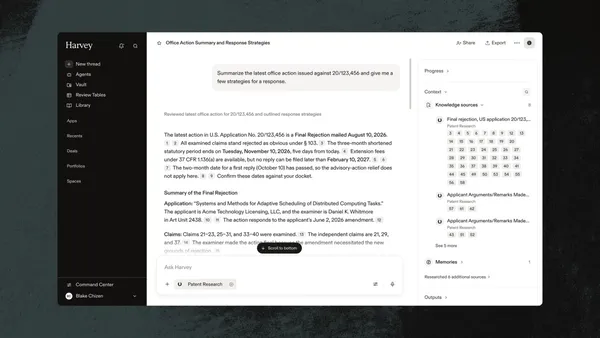
Harvey argues that legal AI needs a record similar to version control, where changes show who made them and when, and where a teammate can review work before it moves forward. Review Tables already let teams assign rows, flag cells and mark individual cells as verified, with an activity log recording actions.
In Spaces, lawyers can assign tasks to colleagues or agents and designate a reviewer who is notified when the work is ready. Command Center lets administrators approve shared agents, control who can use them and see how they are used.
The company says much of the review process still takes place outside these tools, such as in Word drafts emailed to partners or comments that are disconnected from sources. Harvey plans to bring comments into documents it creates, allowing a lawyer to tag Harvey on a clause and receive an answer and suggested edit beside the text.
Harvey also plans to extend citations to every type of file it creates. The company says citations currently remain in threads and Review Tables, Word exports can include a references section, and Excel files can cite individual cells.
For users, the proposed changes would make AI-assisted legal work easier to audit without removing the lawyer’s responsibility for decisions that cannot be checked automatically. For firms, they could provide a clearer record of what an agent reviewed, what a human verified and how a document reached its final form.