Hebbia adds Office add-ins, Copilot Cowork, mobile alerts and new data sources
Hebbia has rolled out a broad set of updates, including team-oriented dashboards, a PowerPoint add-in, availability in Microsoft Copilot Cowork and several new data sources. The company also replaced Haiku 4.5 with Claude Haiku 5.5 for all customers, according to its November 2026 product post.
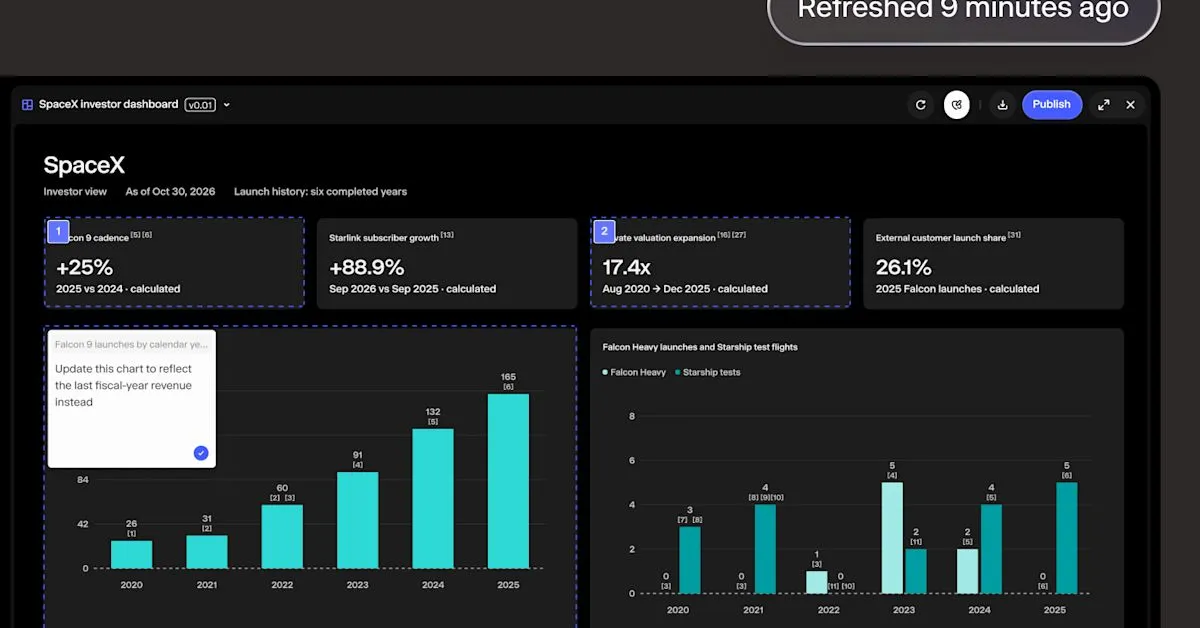
- Hebbia dashboards now save inputs, support section comments and push refreshed numbers to everyone they are shared with.
- A PowerPoint add-in is available in the Microsoft App Store alongside Word and Excel, and Hebbia is accessible in Microsoft Copilot Cowork via MCP.
- New data sources include Octus, Datasite, HKEX market data via ICE, Microsoft Teams and Google Drive.
- Claude Haiku 5.5 replaces Haiku 4.5 for all customers.
- The iOS app gains push notifications for shared chats and agents and for finished scheduled agents.
Dashboards built for teams
Hebbia says dashboards are quickly becoming a go-to way to work in its platform, so it has made them easier to use together. According to the company, anything a user fills in or checks off stays saved, and comments can be left directly on the section they apply to.
When someone refreshes the numbers, everyone the dashboard has been shared with sees the update. The changes are aimed at teams that work from the same view rather than passing around separate copies.
Hebbia inside Microsoft tools and on mobile
A new PowerPoint add-in lets users generate a deck in Hebbia and keep iterating in Microsoft PowerPoint. The same conversation used to create the deck carries over into MS Office. Users can ask about tables, chart data and speaker notes, and make deck-wide changes in a single request. Hebbia says the add-in is available now in the Microsoft App Store, alongside the Word and Excel add-ins.
Hebbia is also now available in Microsoft Copilot Cowork through its MCP, so users can bring Hebbia's analysis and data into Copilot without leaving the app.
Another addition is the ability to export PPTX and DOCX files as PDFs, with or without a password. Hebbia describes this as a way to share finished work in a ready-to-send format and to protect sensitive content.
On mobile, users can open, browse and work in their Projects from the Hebbia mobile app. On iOS, push notifications arrive when someone shares a chat or agent, or when a scheduled agent finishes running. Tapping a notification goes straight to the work, and users choose what they are notified about in Settings.
More data sources and a new model
Several sources were added to the analysis environment:
- Octus: credit research such as court filings, capital structure and covenants. Users sign in with their own Octus account, and results follow their entitlements.
- Datasite: the M&A data room platform is now connected, so deal content can be analyzed alongside other research.
- Hong Kong Stock Exchange: ICE market data in Hebbia now covers HKEX-listed tickers, intraday and historical, with questions about price performance, volume and trends handled as for other markets.
- Microsoft Teams: conversations can be queried as a data source in Max.
- Google Drive: documents can be used in analysis without a manual upload.
On the model side, Claude Haiku 5.5 is available in Hebbia and now replaces Haiku 4.5 for all customers.
Partnerships behind the integrations
The post also points to recent partnership announcements. Hebbia says it now partners with Databricks, bringing a firm's own data into the same analysis as its documents and market data. Its Datasite integration gives deal teams direct access to their data rooms in an AI-native platform, and the Octus integration gives credit teams access to credit research, deal terms and private company data.
Taken together, the updates show Hebbia extending its reach into the tools finance and deal teams already use, from Microsoft Office to shared drives and specialist data providers. The source does not give pricing or plan details for any of the new features.
Hebbia: What's New: November Disclosure 2026