HKU and Global Cybersecurity Alliance launch joint AI and cybersecurity research centre
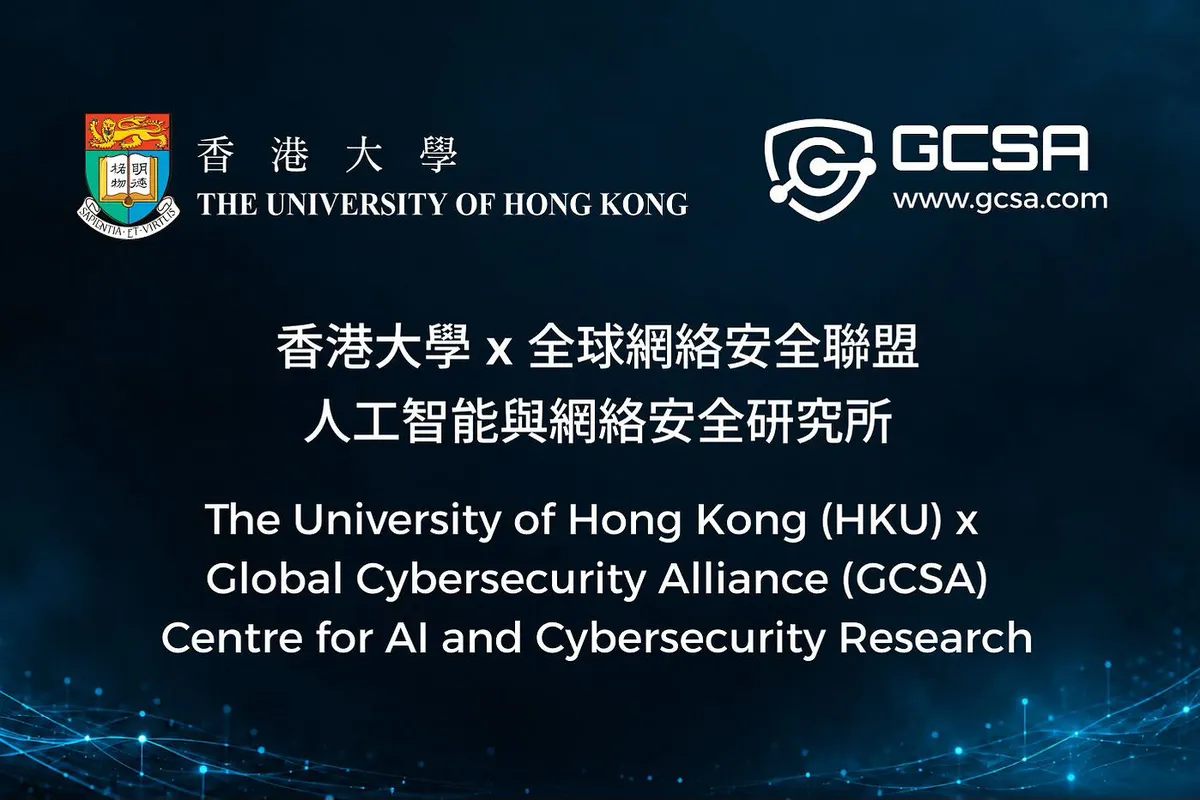
The University of Hong Kong (HKU) and the Global Cybersecurity Alliance (GCSA) have jointly established the Centre for AI and Cybersecurity Research. According to the announcement, it will combine research capabilities and professional resources from both organisations to tackle security questions raised by artificial intelligence.
- HKU and the Global Cybersecurity Alliance have jointly established the Centre for AI and Cybersecurity Research.
- Professor Ho Chen of the HKU School of Computing and Data Science will serve as Acting Director.
- Four research directions: trustworthy AI, AI-driven threat defence, security of frontier technologies, and global AI security standards and governance.
- The Centre plans to progressively release research findings, security benchmarks and open-source tools.
A joint centre built on academic and industry resources
The Centre is designed to integrate top-tier research capabilities and professional resources from HKU and GCSA. Its stated aims are to advance cutting-edge research, link research outcomes more closely to real-world security scenarios, and explore new technologies, methodologies and governance frameworks in AI and cybersecurity.
Professor Ho Chen, Chair of Cybersecurity at the HKU School of Computing and Data Science, will serve as Acting Director. The Centre will bring together researchers from HKU, GCSA and international partner institutions. It also plans to engage experts in artificial intelligence, cybersecurity and technology governance in research and advisory roles, in order to promote cross-disciplinary and inter-institutional collaboration.
The organisers describe a commitment to bridging academic research and industry practice. They plan to progressively release research findings, security benchmarks and open-source tools in AI and cybersecurity.
Four key research directions
The announcement names four main areas of work:
- Model Inherent Security and Trustworthy AI: improving the security, interpretability and robustness of large language models and generative AI.
- AI-Driven Automated Threat Defence: using AI to strengthen perception and automated defence capabilities against complex cyberattacks.
- Security Assessment of Frontier Technologies: evaluating potential security risks of next-generation technologies such as embodied AI, robotics and the Internet of Things (IoT).
- Global AI Security Standards and Governance: researching AI security assessment standards and governance mechanisms to support international dialogue and collaboration.
The list covers both sides of the AI and security relationship: protecting AI systems themselves, and using AI to defend against attacks. It also extends to physical and connected technologies, and to the policy side of standards and governance.
What the Centre says it will deliver
Professor Ho Chen said in the announcement: "The rapid evolution of AI introduces unprecedented security risks and governance challenges." He added that the Centre "will serve as a bridge connecting academic research, security testing, and industry application to accelerate the translation and deployment of AI security research through cross-disciplinary and international cooperation."
The source does not give details on funding, staffing numbers, timelines or specific first projects. What it does outline is the type of output to expect: research findings, security benchmarks and open-source tools, released progressively. For organisations that deploy large language models, generative AI or connected devices, such benchmarks and tools could become reference points if they are published as planned. The focus on assessment standards and governance mechanisms also points to a role in international discussions on how AI security should be evaluated.