Huawei summit urges telecom sites to become energy prosumers
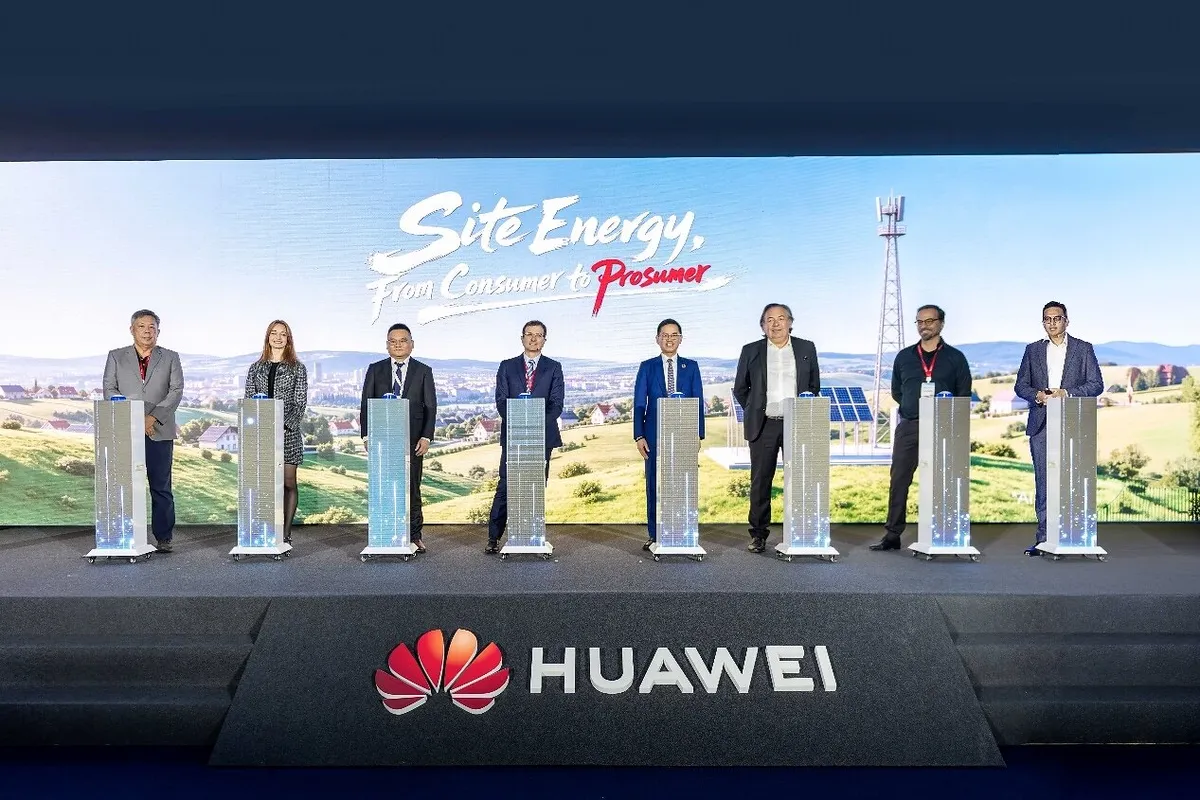
Telecom sites should evolve from passive energy consumers into active prosumers that generate, store, manage and trade electricity, according to the shared conclusion of the 10th Global ICT Energy Efficiency Summit. Huawei hosted the event in Vienna on 14-15 October.
- Huawei's 10th Global ICT Energy Efficiency Summit took place in Vienna on 14-15 October.
- Participants concluded that telecom sites should become prosumers that generate, store, manage and trade electricity.
- Huawei cites solar plus storage costs below 0.04 USD per kWh and a European VPP ROI of about three years.
- In a rural Southeast Asia deployment, 86% of sites went 24 months without a diesel refill.
- The summit launched the "Transitioning to Prosumers Global Initiative for the Communications Industry".
A shared conclusion from operators, TowerCos and aggregators
The summit brought together network operators, TowerCos, energy service providers, aggregators and analysts. According to the organiser's announcement, participants agreed that virtual power plants (VPPs) are moving from a concept to a short-term business priority for the telecom industry.
The challenge for operators is structural, the release says. Dependence on the network is growing while energy security is declining, and revenue is not rising in step with investment and data traffic.
The economics at site level
Huawei's summary points to figures that make the case at the level of individual sites:
- The cost of solar power combined with on-site energy storage has fallen below 0.04 USD per kWh.
- In Europe, site-level VPP installations deliver an average ROI of about three years and about 800 EUR in annual income per site.
- The same installations bring a 100% improvement in power availability, plus a clear path to reducing and eventually eliminating diesel dependence.
These are figures presented in the organiser's own announcement. On this basis, energy use at a site shifts from a cost item to a strategic advantage.
The proposed answer combines technology and business-model innovation: opening up on-site energy resources, pooling distributed batteries, using artificial intelligence to schedule charging and discharging around price signals, and combining storage capacity to take part in grid services.
What aggregators and operators need
For aggregators, the priority is turning scattered installed capacity into flexible, grid-ready capacity through standard interfaces, interoperable platforms and workable commercial models. That means combining many small site-level resources into a portfolio large enough to bid on grid markets, while operators keep control over site resilience and service continuity. Both sides need closer cooperation with energy and financial partners to scale up, according to the release.
Early deployments
The announcement cites three early examples:
- During the blackout in Portugal, essential services stayed online for up to 12 hours.
- In Finland, the VPP solution generated revenue.
- In Southeast Asia, 86% of sites in a rural deployment went 24 months without a diesel refill, running fully on solar power with zero carbon emissions.
According to the release, these cases show that prosumer sites can strengthen service continuity, reduce fuel dependence and support decarbonisation under different market and grid conditions.
A global initiative and what it means
The summit marked the launch of the "Transitioning to Prosumers Global Initiative for the Communications Industry". It calls on the telecom sector to open up on-site energy resources, align on standards, interfaces and business models, and build an open energy ecosystem.
Huawei said it will keep promoting the deep integration of bits and watts and will work with global partners on innovation and standards cooperation to support the industry's shift toward a high-quality energy system.
For operators and tower companies, the message is that site energy could become a source of revenue and resilience rather than only a cost. The figures come from the organiser, and the release does not say how widely such results apply beyond the cited deployments.