Krisp ranks #2 of 500 AI companies in Cybernews trustworthiness list
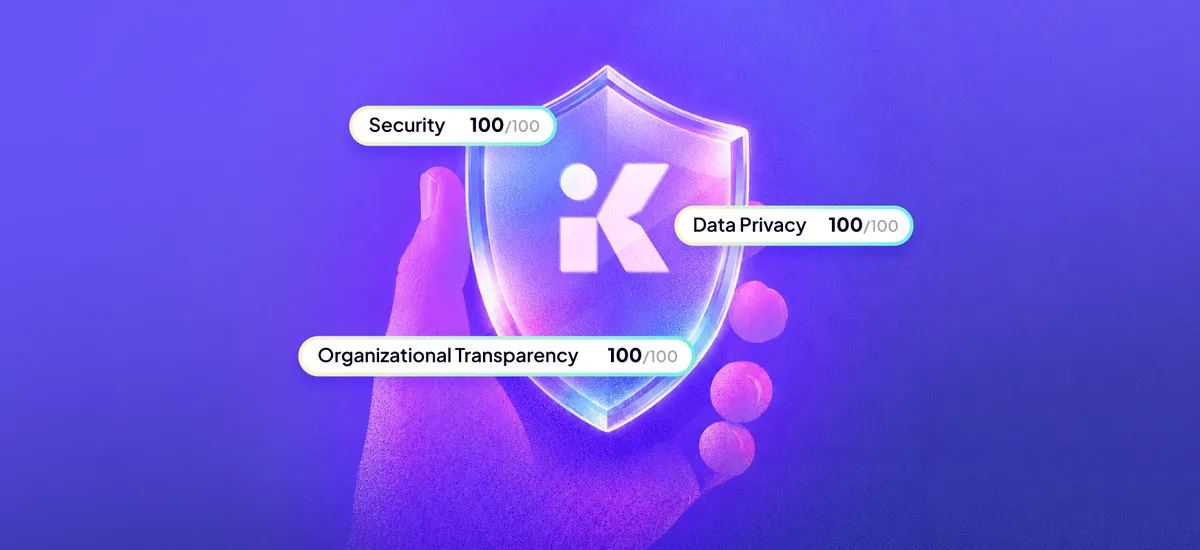
Krisp has been ranked #2 out of 500 AI companies in Cybernews' 2026 AI Trustworthiness Ranking, with an overall score of 97/100. According to Krisp, Cybernews gave it 100/100 for Security, Data Privacy and Organizational Transparency.
- Krisp ranked #2 of 500 AI companies in Cybernews' 2026 AI Trustworthiness Ranking with 97/100.
- Cybernews gave Krisp 100/100 for Security, Data Privacy and Organizational Transparency.
- The average company scored 65/100 overall and 32/100 for security, according to Krisp.
- Cybernews found 63% of companies did not clearly disclose AI training use of user data, and 65% did not clearly disclose retention periods.
- Krisp says Noise Cancellation and Accent Conversion process audio on-device.
How Krisp scored
Cybernews evaluated 500 AI companies for its 2026 ranking. Krisp, which makes Voice AI products such as noise cancellation, accent conversion and a meeting assistant, placed second with 97/100. According to the company, it received full marks in three areas: Security, Data Privacy and Organizational Transparency.
For comparison, Krisp says the average company scored 65/100 overall and just 32/100 for security. Cybernews also found that 63% of the evaluated companies did not clearly disclose whether user data was used for AI model training, and 65% did not clearly disclose how long user data was retained.
Keeping voice data on the device
Krisp argues that Voice AI faces a particularly high bar because it can operate continuously inside live conversations, where people share decisions, identities and sensitive information in real time. In its post, the company says the first security question is whether data needs to leave the endpoint at all.
- Noise Cancellation and Accent Conversion process audio on-device, so voice audio does not need to leave the user's machine.
- Accent Conversion does not require voice enrollment, does not store voice embeddings and does not save personal voice data on the device or in the cloud.
- For Agent Copilot, transcription happens on-device. The transcript goes to Krisp's cloud infrastructure only when AI summarization is required, and with PII redaction enabled, personally identifiable information is removed on-device first.
- When Voice Translation needs cloud processing, Krisp says it minimizes what is transmitted and does not store the audio.
Where data does reach Krisp infrastructure, the company says it protects it in transit with TLS 1.2+ and encrypts customer data at rest with AES-256. For Meeting Assistant, Transcript-only mode can transcribe entirely on-device or send audio to Krisp servers for transcription and immediate deletion, depending on language and settings. If Recording or Note Taker is enabled, recordings and meeting data may be stored in the cloud.
Continuous security and documented transparency
Krisp says a ranking or an audit is not enough and that security has to be continuous. It describes testing for vulnerabilities, continuous monitoring, tight control over access to production systems and customer data, and regular review of controls. Its security posture is independently assessed through programs including SOC 2 Type II and PCI DSS. In the company's words, certifications should validate the work and never become a substitute for it.
On transparency, Krisp says it documents how each product handles data, so customers can see which capabilities run on-device, which need the cloud, when data is stored, what controls protect it and which subprocessors are involved. It points to its Trust Center for details.
Arthur Soghomonyan, Senior Director of Security at Krisp, said: "Trust in AI has to be demonstrated, not claimed." He added that as synthetic voice gets harder to distinguish from human voice, identity and authenticity become part of the security model.
What it means for users
The ranking is a third-party assessment, but the details of Krisp's approach come from the company itself. For businesses weighing Voice AI tools, the post highlights the questions Cybernews' findings suggest are often left unanswered: whether data is stored, how long it is kept, whether it is used for model training and which third parties handle it. Krisp's position is that people should not have to guess the answers.