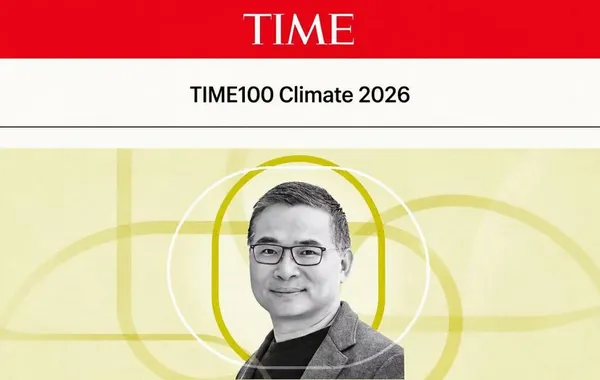
Envision founder Lei Zhang named TIME100 Climate 2026 Titan
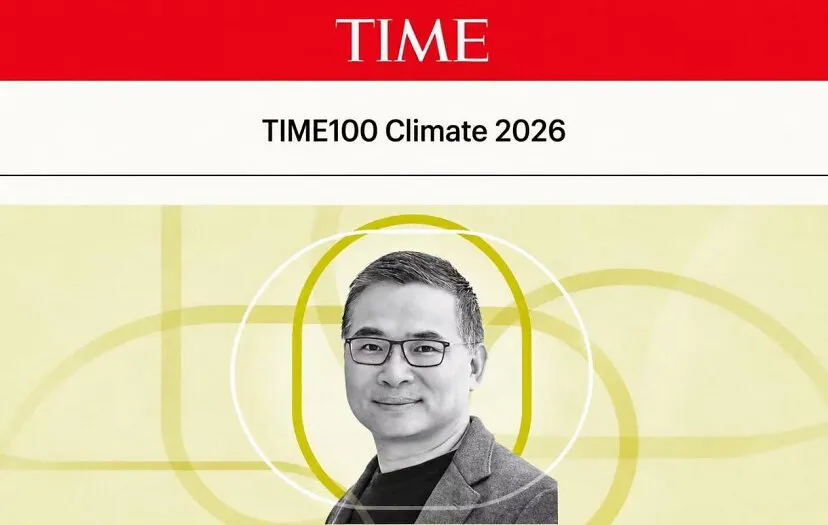
Envision founder and chairman Lei Zhang has been named a Titan in the TIME100 Climate 2026 for his work connecting clean energy infrastructure with the growing power needs of artificial intelligence. The recognition highlights Envision’s efforts to bring renewable energy, storage and AI computing together.
- Lei Zhang was named a Titan in the TIME100 Climate 2026.
- He is recognized for linking clean energy infrastructure with AI computing.
- Envision is developing data centers powered by wind, solar and batteries.
- Mission Gobi targets 5 GW of green AI data-center capacity by 2030.
- Envision Galaxy Campus demonstrates the company’s integrated approach.
Recognition for clean energy and AI work
TIME100 Climate recognizes 100 leaders driving “measurable, successful and equitable business climate action,” according to the announcement from Envision, published by PR Newswire on Nov. 13, 2026. Zhang was included in the Titans category, which TIME describes as “Inspiring greater ambition.”
The recognition focuses on Zhang’s work at the intersection of clean energy and AI. As founder and chairman of Envision, he is advancing an approach that treats the expansion of AI computing as an opportunity to accelerate clean-energy development.
Envision said the effort addresses a central infrastructure challenge for the AI era: expanding computing capacity without putting additional pressure on power systems that are increasingly constrained.
Envision links data centers with dedicated renewable power
TIME’s profile highlights Envision’s development of data centers powered by dedicated wind, solar and battery systems. The company’s model brings renewable generation and energy storage directly into the planning of AI infrastructure, rather than treating power supply as separate from computing capacity.
According to Envision, AI is creating unprecedented demand for both computing and electricity. Zhang’s stated view is that this demand should help expand clean energy instead of deepening existing energy constraints.
That approach is being applied through Envision’s efforts to develop AI infrastructure alongside renewable energy systems. The company says the two can scale in tandem, with clean power supporting computing growth and AI helping create additional demand for renewable infrastructure.
Mission Gobi targets 5 GW by 2030
Envision’s Mission Gobi is targeting 5 GW of green AI data-center capacity by 2030. The company points to the Envision Galaxy Campus as an example of how AI computing and renewable energy can be developed together.
The plan reflects a broader ambition than supplying AI data centers with clean electricity. Envision said Zhang aims to help build future energy systems that can turn AI growth into a catalyst for the global energy transition.
For the AI infrastructure market, the announcement presents clean power, storage and computing as parts of a single expansion strategy. For users, the source does not announce a product or service availability change. It instead describes an infrastructure direction in which the ability to expand AI computing is tied more closely to the development of renewable generation and storage.