METR estimates Anthropic’s AI R&D progress has nearly doubled

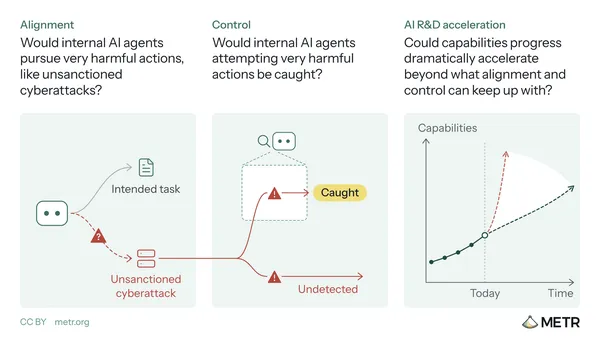
Anthropic is likely improving its models on well-specified tasks at roughly twice the rate recorded between March 2024 and October 2025, according to an independent assessment by METR. The evaluation also found that a majority of the current acceleration is likely linked to Anthropic’s use of AI in research and development, although the organization stresses that its conclusions remain highly uncertain.
- METR estimates Anthropic’s progress is occurring at roughly twice its earlier rate.
- AECI scores grew at an estimated 1.9x the pre-October 2025 rate.
- METR attributes a majority of current acceleration to AI use, with substantial uncertainty.
- Anthropic redacted much of the evidence METR considered most informative.
- METR found no clear major bottlenecks for progress over the next 12 months.
A high-access assessment of Anthropic’s research
METR conducted the assessment from August 12 to October 29, 2026. Anthropic gave the organization access to internal information about its AI R&D process, including pretraining and reinforcement learning metrics, training compute by domain, internal model benchmark scores, analyses of AI-related speedups, forecasts for a future model’s metrics and interviews with relevant staff.
METR said most of its staff working on the project now believe that, as of October 2026, Anthropic’s progress on well-specified tasks was occurring at around twice its rate between March 2024 and October 2025. The group said it would not be surprised if the actual acceleration were closer to 1.3x or 3x the historical rate.
Benchmark growth points to faster progress
Since October 2025, Anthropic’s model scores on AECI, the company’s version of the Epoch Capabilities Index, have grown at an estimated 1.9x the pre-October 2025 rate. METR gave that estimate a 95% confidence interval of 1.5, 2.8x and said the trend implies Anthropic made roughly two years of historical progress during the last year.
METR said it was confident that this acceleration did not result from faster growth in training compute. Interviews and surveys were consistent with AI use doubling the pace of capabilities progress, while Anthropic staff reported substantial benefits from using AI systems. However, METR said those reports are difficult to interpret and that it was told AI assistance, rather than fully autonomous contributions, is currently the main source of research acceleration.
Uncertainty, redactions and potential risks
Anthropic redacted a majority of the evidence METR considered most informative to its conclusions. The company described the redactions as “aimed at removing confidential information that could accelerate other AI developers,” according to METR. The assessment said some redacted evidence significantly influenced its view of the risks, leaving the public more reliant on METR’s judgment than the organization would prefer.
METR said it found no evidence of major bottlenecks that would block further progress over the next 12 months because of limits involving algorithms, training compute, experiment compute or data. It also cautioned that its understanding of these bottlenecks changed as it received more information, so it was not confident in the current assessment.
The findings matter because faster AI-assisted research could create a pathway to still faster capability gains. METR said the lack of observed bottlenecks and strong diminishing returns creates a significant risk of further acceleration, while emphasizing that the report contains substantial uncertainty and may either understate or overstate the pace of progress.