Microsoft expands Sovereign Cloud with new control, key and offline tools
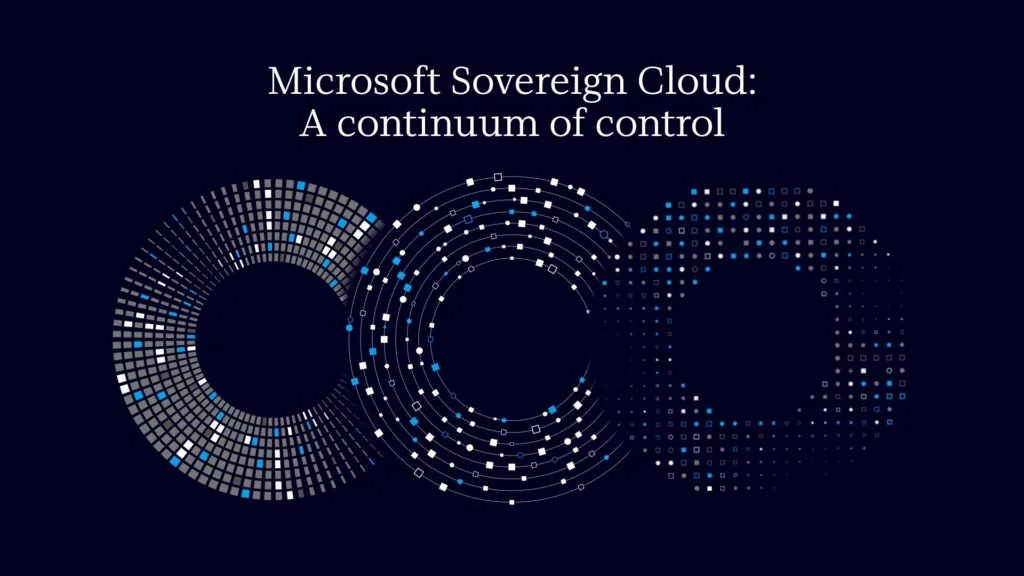
Microsoft has announced the next stage of its Microsoft Sovereign Cloud, adding tools for visibility, key control and offline operation across public, private and partner environments. According to the company, the goal is to let organizations apply the right level of control to each workload.
- Microsoft Sovereign Cloud spans Sovereign Public Cloud, Sovereign Private Cloud and the Sovereign Partner Ecosystem.
- Sovereign Control Panel enters public preview at Microsoft Ignite.
- External key management with Azure Managed HSM is now generally available.
- Foundry Local and GitHub Enterprise Local become generally available at Ignite on Azure Local.
- Moving workloads from connected to disconnected operations enters public preview.
A workload-based approach to sovereignty
Microsoft says its approach to digital sovereignty starts with the workload, since each one carries different requirements for data, operations, technology dependencies, continuity and risk. Microsoft Sovereign Cloud, introduced last year, is organized as a continuum across three parts: Sovereign Public Cloud, Sovereign Private Cloud and the Sovereign Partner Ecosystem.
Sovereign Public Cloud adds controls for workloads that need more transparency while still using the scale of Azure. Sovereign Private Cloud extends cloud capabilities into customer-operated environments, both connected and disconnected. The partner ecosystem covers independently operated environments, specialized partners and local expertise. Microsoft stresses that these are not isolated options, and customers can combine them across their digital estate.
More visible controls in the public cloud
The centerpiece for Sovereign Public Cloud is the Sovereign Control Panel, which enters public preview at Microsoft Ignite. It brings sovereignty signals into a unified Azure portal experience, helping organizations understand their posture, apply controls, identify gaps and risks, and act on them. It also supports continuity readiness by showing workload dependencies and portability across operating environments.
Other changes focus on access and encryption:
- Data Guardian is rolling out for customers in the EU and EFTA. It adds European-resident oversight by a trusted EU partner for qualifying Microsoft engineer remote access to in-scope production systems.
- Production Touch Ledger, also launching in phases in the EU and EFTA, creates tamper-evident records of that access and the actions performed.
- External key management with Azure Managed HSM is now generally available. Customers can keep the root encryption key in hardware they own and operate on-premises or through a trusted third party.
- Azure Confidential Clean Rooms is in limited preview. It applies confidential computing to approved multiparty collaboration, so participants can analyze shared sensitive data while limiting wider exposure.
Just-in-time Access and Customer Lockbox continue to give customers added control over access to their environments.
Resilience and disconnected operation
Microsoft is publishing new sovereign business continuity guidance and architecture patterns, which it says help organizations turn resilience requirements into architectures they can plan, implement and test. For workloads that need more operational independence, Sovereign Private Cloud supports connected and disconnected models. The ability to move workloads from connected to disconnected operations is entering public preview.
Local data, development and AI tools
Sovereign Private Cloud is built on Azure Local. SQL Server on Azure Local is already generally available for connected and disconnected deployments, while DocumentDB and Blob Storage on Azure Local are entering public preview.
GitHub Enterprise Local will become generally available at Ignite as a validated GitHub Enterprise Server appliance on Azure Local, keeping repositories, code and development artifacts under local control. Developers can also use GitHub Copilot with locally hosted models for inference.
Foundry Local will also become generally available at Ignite for connected and disconnected operations on Azure Local. Its model catalog is expanding to include Microsoft, partner, open-weight and open-source models. Local inference and agentic retrieval will let users query local enterprise data in natural language and receive answers grounded in it. Integration with Microsoft 365 Local is available in preview for approved customers.
What it means for customers
The announcement targets government, critical infrastructure and regulated industries, where Microsoft says leaders want to use advanced cloud and AI on important systems while keeping control. Customers now have more concrete options: a portal view of their sovereignty posture, key hardware they operate themselves, and local environments that can keep running if connectivity is lost. Several items remain in preview or limited preview, so availability varies by capability and region.
Microsoft: Advancing digital sovereignty with greater control and choice