Mila and Inria Sign Four-Year Canada-France AI Research Agreement
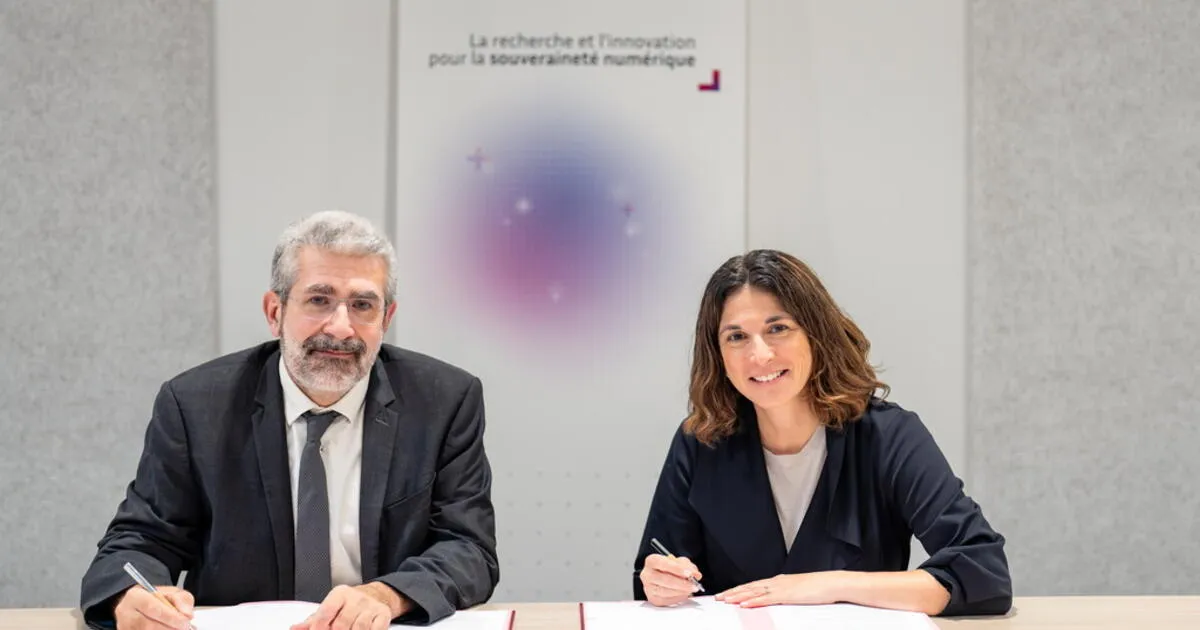
Mila, the Montreal-based AI research institute, and Inria, the French National Institute for Research in Digital Science and Technology, have agreed a four-year cooperation to strengthen AI and digital science collaboration between Canada and France. The agreement, announced on October 8, 2026, aims to bring the two research communities closer and widen opportunities for researchers and students to work together.
- Mila and Inria announced a four-year cooperation agreement on October 8, 2026.
- Focus areas include agentic AI, AI evaluation and safety, robotics, AI for science and health, and advanced computing infrastructure.
- Plans include co-supervising Master's and PhD students, researcher mobility and joint innovation projects.
- Applied work will stress quantum and AI, open source, and multilingual AI, with support for startups between Quebec and France.
- A joint Steering Committee will guide the partnership and track progress.
Shared priorities across AI research
According to the announcement, the partnership is grounded in a shared commitment to responsible and ethical AI for the common good. Mila and Inria will concentrate on a broad list of strategic areas:
- foundational machine learning and agentic AI
- AI evaluation and safety
- AI for science and health
- energy and environmental sustainability
- trustworthy and safe AI
- language and computer vision
- robotics
- advanced computing infrastructure
- the societal and economic impacts of AI
The two institutions say they plan to bring their research and innovation teams together around shared scientific goals, with joint projects and opportunities for bilateral exchange.
Students, mobility and startups
To put the priorities into practice, the agreement includes co-supervising Master's and PhD students, supporting researcher and student mobility, pursuing publicly funded initiatives, and launching joint innovation projects.
A particular focus will be placed on applied projects in quantum and AI, open source, and multilingual AI. According to Mila and Inria, these efforts can involve companies, foster scientific ventures, and support the creation and international growth of startups between Quebec and France.
The partnership is also meant to reach beyond the two organizations. Other Canadian and French organizations may be involved as new initiatives emerge. A joint Steering Committee will guide its development, track progress and identify new areas of mutual interest.
What the leaders say
Valérie Pisano, President and CEO of Mila, said that developing open AI through international cooperation is an economic imperative as well as a scientific mission. She added that the partnership "gives our researchers a broader platform to innovate together."
Bruno Sportisse, Chairman and CEO of Inria, described the aim as teaming up with world-class research organisations. He said the partnership is "focused on science-based impact" and expects it to result in "more impactful achievements, as compared to what we could do alone."
The institutions involved
Mila was founded by Professor Yoshua Bengio and describes itself as bringing together close to 2,000 researchers and professionals. It is a non-profit based in Montreal, created through a partnership between Université de Montréal and McGill University, and supported by the Government of Canada, the Government of Quebec, and more than 150 industrial partners.
Inria supports the French government in national research and innovation strategies in the digital field, acting as Digital Programs Agency. It says it leads over 300 research and innovation projects with its 3,500 scientists, engineers, and support staff.
The announcement does not give funding figures or specific projects. For now, it sets out the framework: a four-year term, a list of focus areas, and a steering committee to decide where the collaboration goes next.