Milestone XProtect gets on-site AI analysis
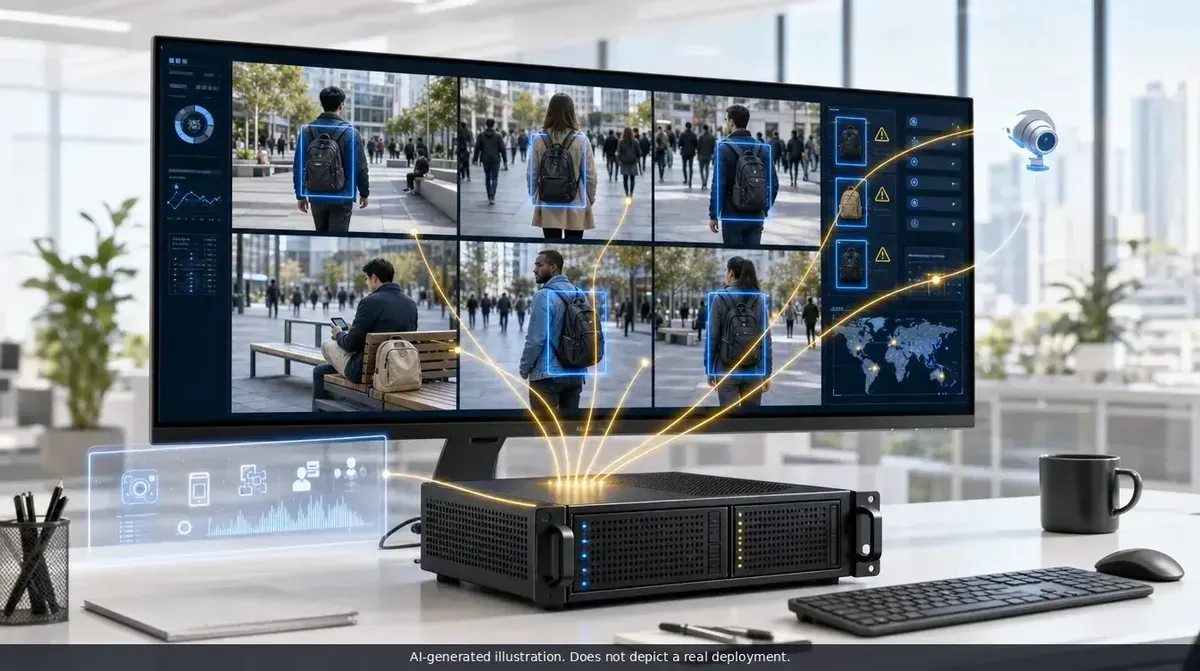
Axelera AI and BCD have unveiled on-site video analytics for the Milestone XProtect video management system. The solution processes camera footage directly at the edge of the infrastructure and forwards relevant events to operators as standard alerts.
- Axelera AI and BCD demonstrated local video analytics for Milestone XProtect.
- The Metis AIPU handles AI analytics, video and storage on a single edge device.
- Threat alerts and operator-initiated alerts appear in XProtect Smart Client.
- Detection runs on the camera's native stream, while recording can use a different resolution.
- Existing cameras, recordings and views remain usable without changes.
Video and AI can run on the same device
The demonstration took place at the Global Security Exchange conference. BCD, a video infrastructure company that supplies high-performance, reliable and scalable storage solutions for physical security environments, and its partner Axelera AI presented an integrated device that combines video recording, storage, PoE connectivity and AI-based analytics in a single edge solution.
The system was designed by BCD, while the analytics are performed by Axelera AI's Metis AIPU. The demonstration ran across three camera streams and identified people wearing backpacks. The aim was not to trigger an alert for every backpack, but to help operators quickly find people who may require further attention.
Axelera AI's video analytics operates with XProtect as a validated Milestone integration. Axelera AI has thereby joined the Milestone Technology Partner Program Verified partners.
Alerts appear in the familiar XProtect interface
When the analytics detect a relevant event, the integration opens a standard alert in Milestone XProtect. Operators can handle these alerts in Smart Client in the same way as other system alerts.
Each alert identifies the affected camera, allowing the operator to open the associated recorded video directly. The system also specifies the person's location within the frame, storing the bounding-box position as a proportion of the image. This helps locate the person regardless of the recording resolution. The alert also includes the model's detection confidence score and the tracking ID, which remains the same while the person is within the camera's field of view.
The alert opens when the event is triggered and closes automatically when the person leaves the frame. There are two main types. A threat alert starts automatically if the tracked person is carrying an object that the site has classified as a threat. An alert associated with a person of interest, by contrast, is initiated by the operator when they mark someone on the video wall. The two alert types are also separated in the alarm list.
Higher-resolution evidence while keeping the existing system
The alerts also include an image cropped from the camera's full-resolution stream. The image contains no overlay drawn on the video, making it suitable for use as evidence. The system updates the image up to three times while the person remains in the field of view, evaluating head angle, image size, sharpness and lighting when selecting the best capture.
Detection takes place on the camera's native stream, while XProtect records at the resolution selected by the site. This means, according to the source, that a site can store video in 1080p while receiving a full-resolution image of the people who triggered the alert.
The cameras send the stream simultaneously to the Axelera analytics system and to XProtect, so no additional load is placed on the recording server. Existing cameras, recordings and views remain usable without changes. The integration communicates with XProtect's API Gateway through a single outbound HTTPS connection and uses a separate account with only the four required permissions and no administrator role.
On a separate machine or alongside the video
Axelera AI's analytics can also run on a dedicated host, but in the solution demonstrated on the BCD GSX, they operated on the same device as the video. This architecture places local processing directly alongside the video infrastructure, while operators continue to use the familiar alert workflow in Milestone XProtect.
According to Axelera AI, the company is working with BCD on the next steps for the solution. For security teams, the announcement means that video analytics and alert management can be integrated into a single existing workflow without changing the recording resolution or adding further load to the recording server.