MIT's Christina Delimitrou Uses AI to Make Data Centers Less Power-Hungry
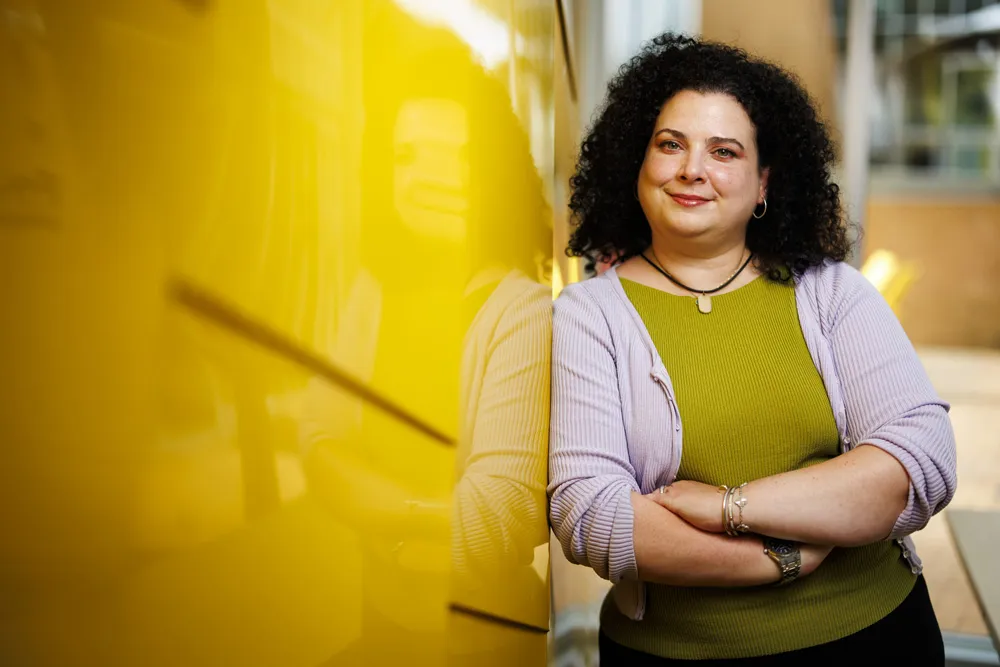
Christina Delimitrou, a newly tenured associate professor at MIT, is using machine learning to make data centers more efficient, secure and reliable, with the aim of reducing the energy they burn as demand for cloud computing grows. According to MIT News, her group redesigns software and manages shared hardware so operators can get more computational power from equipment they already have.
- MIT associate professor Christina Delimitrou applies machine learning to make data centers more efficient, secure and reliable.
- Her group redesigns cloud software and manages shared hardware so operators get more computing power from existing equipment.
- She says her early research found most large computing systems running at only about 15 percent capacity.
- Her Seer tool uses deep learning to anticipate and prevent problems in web applications before they happen.
- Current work focuses on adding explainability to AI tools so people can get useful feedback from them.
A building boom that strains the grid
MIT News describes a global building boom of power-hungry data centers that is straining electrical grids and increasing reliance on energy from polluting fossil fuels. Delimitrou, the KDD Career Development Associate Professor in Communications and Technology in the Department of Electrical Engineering and Computer Science (EECS) and a member of the Computer Science and Artificial Intelligence Laboratory (CSAIL), is tackling the problem from inside the facilities.
She and her group redesign outdated cloud computing systems, develop methods to manage shared hardware resources, and create streamlined server architectures. According to MIT News, these advances let data center operators coax more computational power out of existing hardware.
Delimitrou argues that waste is the core issue. "If data centers are not utilized to the best of their capabilities, then they will burn much more power than they need to meet growing user demand," she says. She points to software as a particular source of inefficiency: "There is a lot of bloating, especially on the software side of these systems. If we can remove that bloating in a way that doesn't compromise performance, then we won't need to build as many new data centers."
Machine learning for cloud resource management
Delimitrou's interest in the topic dates to her graduate work at Stanford University, where she and her research mentor, Christos Kozyrakis, found that many large computing systems were underutilized. "You would expect, with all the demand for these systems, that they should be running close to 100 percent capacity. But we found that most were running at only about 15 percent capacity," she says.
To push utilization higher, she turned to machine learning, which can automate resource management in the cloud and identify solutions developers might miss. She describes the approach as risky at the time, because people had not yet shown that such techniques would work. Her reasoning for using it: the scale of these systems is so large that it is difficult for users to manage them by hand.
As an assistant professor at Cornell University, her group developed Seer, a tool that uses deep learning to anticipate and prevent problems in web applications before they happen. MIT News says this averts widespread slowdowns that may occur if a developer tries to fix a problem manually.
She later noticed that developers were splitting applications into smaller pieces spread across multiple servers, which increases the speed of deployment. Because servers were not built for that style, she adapted her earlier work to build machine-learning systems for this new class of applications.
Debugging, security and explainability
Delimitrou also uses AI to help programmers find and fix problems in cloud-based applications such as music-streaming services or video conferencing systems. According to MIT News, this reduces application downtime that hampers performance and drains computational resources. She extended earlier debugging work to cover not only errors in code but also security issues that can leave user data vulnerable to hackers.
One obstacle is that AI models are hard to interpret. "One of the challenges when it comes to applying AI to these systems is that the AI is not interpretable," she says. "A lot of the work we are doing now involves adding explainability into these AI tools so people can get useful feedback from the system."
She adds that better resource management has a direct benefit for users: "By managing resources more effectively in the cloud, the end user gets more predictable performance from the application running on their smartphone."
From Athens to MIT
Delimitrou grew up in a midsized town in northern Greece and studied computer engineering at the National Technical University of Athens. Her diploma thesis examined resource management when multiple applications run on one computer at once. She joined MIT as an assistant professor in EECS in 2022, drawn by the chance to collaborate with leading researchers in hardware and software engineering.
She also teaches 6.191 (Computation Structure), an undergraduate class with about 350 students each semester. "I want the students to learn how to think and learn on their own," she says, adding that this involves moving away from formulaic assignments toward more open-ended classes.
What it means
Delimitrou's argument is that efficiency gains in software and resource management can ease the pressure to build new facilities. If systems that now run well below capacity can be used more fully without hurting performance, operators could meet growing demand with the hardware they already have. The source frames this as her research goal rather than a measured outcome, and it gives no figures on energy savings from her tools.