MIT's Eric So Warns of 'Cognitive Atrophy' From Heavy AI Use in New Book
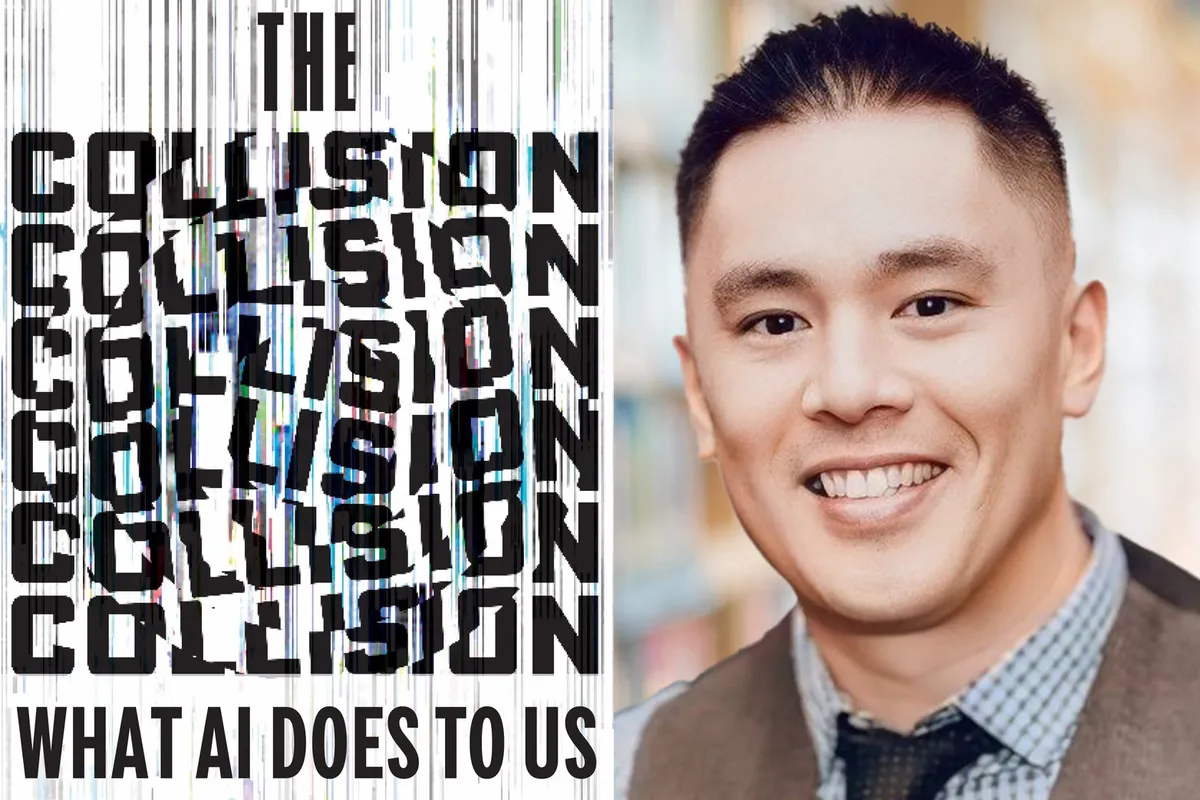
MIT Professor Eric So argues that heavy reliance on AI can lead to a kind of cognitive atrophy, in which people fail to develop and retain essential thinking skills. He makes the case in his new book, "The Collision: What AI Does to Us," published by W.W. Norton, and discussed in an MIT News interview.
- MIT Professor Eric So's book "The Collision: What AI Does to Us" was published by W.W. Norton.
- So argues heavy AI use can cause cognitive atrophy, as people skip the struggle that builds thinking skills.
- He cites an Anthropic study showing about half of college student queries were low-effort requests for simple answers.
- He coins "AI gravity" for the constant pull to use AI, driven by mental-energy instincts, social pressure and workplace evaluation.
- His four principles: embrace struggle, value who you are without AI, reinvest cognitive surplus, use AI as a tutor.
A book born from a personal moment
So is the Sloan Distinguished Professor of Global Economics and Behavioral Science at the MIT Sloan School of Management. According to MIT News, his book offers one of the most complete syntheses yet of how AI affects the people who use it. He acknowledges that AI can help people finish work faster and has in some cases become a useful domain-specific tool, but he focuses on the costs of relying on it too broadly.
The book opens with a story from his own life. A colleague had asked him for help, and he wrote half a sentence before telling ChatGPT to help him finish it professionally. He made a few light edits and sent it. Afterward, he says, he felt "incredibly concerned" about how he had removed his own thinking from the process. He also says he has found students outsourcing their thinking to AI, using it to answer homework that would normally help them build mastery.
So draws on recent research by himself and others, in academia and industry. That includes analysis from AI firms, such as an Anthropic study showing that about half of queries from college students were low-effort queries for simple answers. The general evidence, he says, is that our ability to learn improves dramatically when we wrestle with material, work through initial failures and keep iterating.
Why AI pulls so hard
So describes what he calls "AI gravity," a constant pull to use AI. He points to several converging factors: a biological instinct to conserve mental energy, social pressure when others use AI to race ahead, and the practical difficulty of detecting AI use. In his view, it is not simply a matter of telling people to think for themselves.
He also stresses systemic pressure. Many organizations, he says, are not merely suggesting AI use but making it the basis of evaluation, so anyone who wants a bonus or promotion must use the tools. A similar logic is taking hold in academia, where people reason that future employers will want AI skills and so they should start now. The problem, So says, is that this means losing touch with the practices and capabilities people are trying to build, which increases future dependence and becomes "a self-fulfilling prophecy."
On the effects on the mind, he says AI removes much of the friction needed to build foundational mastery and can reduce people's capacity to push through problems. Using it as an access point for information also affects memory. He adds that the models are both sycophantic and persuasive, and that getting used to a frictionless environment where models always agree with us weakens our ability to connect with other people.
Four principles for the age of AI
So argues for "productive struggle," saying that struggle "doesn't mean you're suffering." He compares the shift to the period after industrialization, when people no longer needed to be physically active to be economically productive and began to treat exercise as something done on purpose. A similar reframing of cognitive struggle, he says, is needed now.
At the personal level, he lists four principles:
- Embrace the struggle. Treat effort as formative rather than a problem to be solved.
- Value who you are without AI. He describes polished presentations made with Claude where the presenter clearly had not understood the material. Making the slides, he says, is part of an "inseparable task bundle" that enables substantive discussion.
- Reinvest your cognitive surplus. AI can save time on rote tasks, but the savings matter only if used well, for example to build expertise, spend time with family or learn a language.
- Use AI as your cognitive trainer. It is bad for thinking as an answer machine but can be great for learning as a tutor, though that requires seeking out friction and having the motivation to do so.
What it means for users
So's message is aimed at individuals, students and organizations alike. He calls this "a very challenging moment" and says the problem is one that needs to be taken seriously. His argument is that the benefit of AI depends on how it is used: as a shortcut that replaces thinking, or as a tool that stretches human capability and builds expertise.
MIT News: Q&A: The “collision” between AI, your brain, and society