New book examines how global AI governance can be reshaped
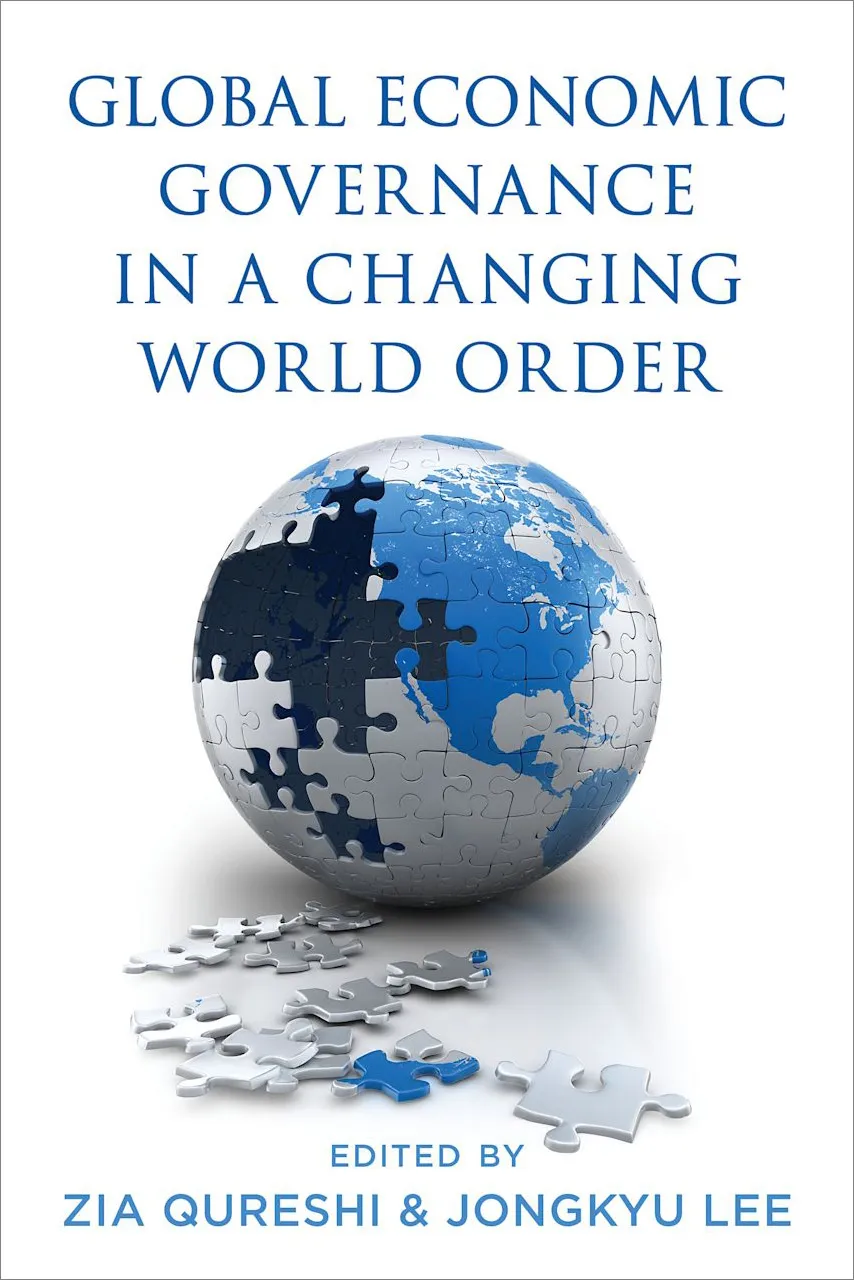
A new Brookings volume examines how global economic governance can be reshaped, with a dedicated chapter on regulating artificial intelligence. Global Economic Governance in a Changing World Order will be published on November 12.
- The book will be published on November 12.
- The volume was edited by Zia Qureshi and Jongkyu Lee.
- A separate chapter examines AI governance amid geopolitical competition.
- The book also covers international cooperation on trade, finance and climate change.
Rules must adapt to a changing world order
The volume, edited by Zia Qureshi and Jongkyu Lee, starts from the premise that the world's economies are more closely interconnected than ever, while many of the most important challenges are global in nature. The rules underpinning international trade and finance, the governance of emerging technologies and the response to climate change all require cooperation between countries.
The authors argue that global economic governance is increasingly struggling to keep pace with changes in the dynamic world economy. The book examines how international institutions and forms of cooperation can adapt to a changing geopolitical and technological environment.
Alongside systemic reforms, the publication presents practical options for countries seeking joint solutions in trade, finance, artificial intelligence and climate change. At the same time, intense strategic competition is unfolding between established and emerging major powers.
A separate chapter focuses on AI governance
The second part of the volume reviews new challenges to international cooperation. It includes Elham Tabassi's chapter, Competitive Cooperation: AI Governance amid Challenging Geopolitics, which examines the governance of artificial intelligence in a tense geopolitical environment.
In a review of the volume, Richard Baldwin, a professor at the Lausanne-based International Institute for Management Development, described the chapter's "competitive cooperation" approach as particularly original and noteworthy. According to Baldwin, this framework is one of the key strengths of the section on AI governance.
According to the book's table of contents, AI governance is presented alongside issues of trade and financial stability, as well as cooperation on climate. The editors thus link areas that all require international rules and coordinated action by multiple countries.
The book is aimed at policymakers and a wider audience
The authors of Global Economic Governance in a Changing World Order include George Papaconstantinou, Jean Pisani-Ferry, Peter A. Petri, Wonhyuk Lim, Kyunghoon Kim, Simon J. Evenett, Jun Il Kim, Jongsoo Hong, Changseok Ma, Juyoung Yang and Ki Young Park. The foreword was written by Cecilia Elena Rouse and Se-Jik Kim, while the overview chapter was written by the two editors, Zia Qureshi and Jongkyu Lee.
According to Brookings, the book is primarily intended to help policymakers and practitioners interpret the changing global environment, but it also offers useful analysis for a broader readership interested in international affairs.
The publication date of November 12 puts the question of how cooperation can be maintained at the center of attention, at a time when multilateral institutions face both geopolitical competition and the rapid development of cross-border technologies such as AI.
Brookings (AI): Global Economic Governance in a Changing World Order