NUS linguist warns AI may reshape language, resilience and human connection
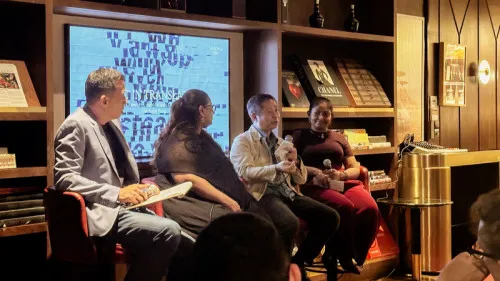
AI could disadvantage speakers of different varieties of English while changing how people interpret language, handle setbacks and form relationships, according to NUS Faculty of Arts and Social Sciences Dean Professor Lionel Wee. He raised these concerns at a panel discussion in Singapore focused on AI’s influence on communication and human interaction.
- NUS Dean Lionel Wee warned that AI may disadvantage speakers of different English varieties.
- AI language models rely heavily on data based on American English, according to Wee.
- Indirect meanings and social context remain challenges for AI interpretation.
- Wee raised concerns about chatbots, resilience and human relationships.
- He urged a healthy scepticism towards AI and preserving independent thinking.
AI may favour American English
Wee, a linguist specialising in sociolinguistics and pragmatics, said much of the data used to train AI language models is based on American English. That can create difficulties for people who use other recognised varieties of the same language.
Users in India have reported cases in which AI corrected commonly used expressions in Indian English, treating them as grammatical errors rather than legitimate language variations. Wee said this shows that access to AI does not by itself guarantee an equally useful experience for everyone.
“Access on its own is not really meaningful if you don’t take into account the kinds of friction that people encounter,” Wee said, according to NUS News.
The challenge of understanding what people mean
The discussion also considered whether AI can reliably interpret the social context behind everyday speech. Wee argued that communication depends on more than recognising the literal meaning of words. People often understand indirect meanings because they share social expectations and context.
For example, when a waiter says, “Table number five wants their check”, listeners understand that the customer, rather than the table, is asking for the bill. Similarly, someone who says, “I've got to wash my hair” in response to a dinner invitation may be making a polite refusal.
These meanings can be difficult to identify without an understanding of how language is used in particular situations. Wee questioned whether AI will consistently follow such subtleties as languages continue to evolve.
Chatbots, resilience and skills worth preserving
The panel examined how chatbots could affect relationships as more people use them for companionship and emotional support. Wee described a colleague’s niece who turned to a chatbot after a difficult breakup, as well as a student who continued using a religious chatbot app for reassurance after exams had ended.
He asked, “Are we creating generations that are less resilient, less able to deal with setbacks and difficulties because all we get are cooing noises from some technology?” The question reflects his concern that frequent reliance on supportive technology could influence how people respond to disagreement and difficulties in everyday life.
Wee described himself as an “AI agnostic” and called for “a healthy dose of scepticism towards AI”. His comments suggest that users and institutions should consider what independent thinking, the ability to cope with challenges and meaningful human connections require as AI takes on more cognitive tasks.
The discussion, titled “Lost in Translation”, was organised by The Mandala Club on 20 October 2026. Wee was joined by Rahat Kapur, Co-founder and Editorial Director of Beyond The Boardroom, and public policy practitioner Chathuni Uduwela.