NVIDIA Opens Vera Rubin Rack Designs to OCP to Help Scale AI Factories
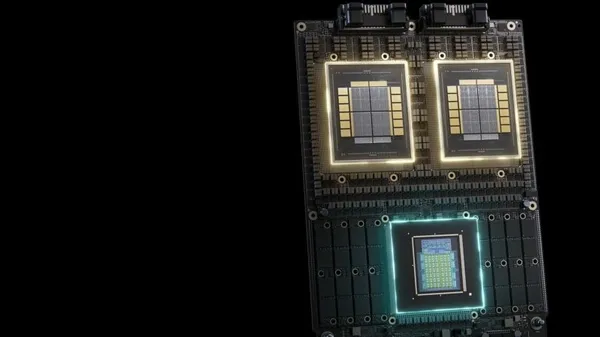
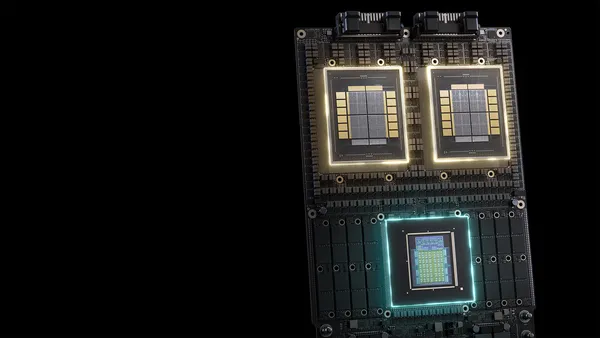
NVIDIA has contributed key Vera Rubin rack and compute tray designs to the Open Compute Project (OCP) through its open MGX architecture. The announcement came at the OCP Global Summit in San Jose, where the company also unveiled open source software and joined other hyperscalers in publishing new standards for AI factories.
- NVIDIA contributed Vera Rubin rack and compute tray designs to OCP through the open MGX architecture.
- MGX 1.2 adds blind-mate liquid cooling and a liquid-cooled 5,000A busbar, and supports rack deployments up to 250kW.
- New open source DSX OS components cover network configuration, cluster validation, rack management and bare-metal provisioning.
- NVIDIA, AMD, Google and Meta published Open Data Center Specification v0.7, and the OCP Grid Resilience Specification targets restoring near-full load within less than two seconds.
- Visionbay unveiled K-1, an 800 VDC AI factory platform designed with future Vera Rubin deployments in mind.
MGX 1.2 and the Vera CPU rack
According to NVIDIA, the contribution gives system builders a common foundation for developing next-generation AI factory infrastructure. NVIDIA joined industry leaders in contributing to the third-generation MGX AI data center reference design through OCP's Open DC Initiative. Combined with open liquid-cooling technologies such as MQD and MQDB, the effort aims to turn proven AI factory designs into industry standards that others can adopt, manufacture and scale.
For Vera Rubin AI factories, the updated MGX 1.2 specification adds rack-scale blind-mate liquid cooling, interoperable rack-scale interconnect infrastructure and a liquid-cooled 5,000A busbar designed for higher-power AI systems. It also adds native 19-inch equipment support and higher-density rack designs. NVIDIA says MGX 1.2 expands modularity with configurable I/O bays, fanless liquid-cooled compute trays and standardized power and cooling interfaces. The architecture supports rack deployments up to 250kW, and the company says it improves assembly, test and service times.
A separate Vera CPU rack design specification extends MGX beyond accelerated computing. NVIDIA describes it as a platform for agentic AI. While Vera Rubin NVL72 serves as the foundation for large-scale training and inference, the Vera CPU rack is designed to support tool calling, orchestration and sandboxed execution, helping AI agents interact with applications, data and services in real time.
Open source components for DSX AI Factory
NVIDIA also expanded DSX OS, the open operating layer of its DSX AI factory platform, with open source components for configuring networks, validating clusters, managing racks and provisioning bare metal:
- NVIDIA Config Manager automates switch configurations at scale, with minimal to zero manual intervention.
- NVIDIA Cluster Readiness Engine stress-tests GPU clusters with real workload simulations to check hardware health before training begins.
- NVIDIA Rack Management Service offers rack hardware abstraction and treats racks as first-class units for firmware management.
- Cluster API Provider for NVIDIA Infrastructure Controller accelerates bare-metal deployment and tenant onboarding, which NVIDIA says turns raw hardware into production-ready clusters in hours instead of days.
The components were developed from NVIDIA's experience running NVIDIA DGX Cloud. According to the company, they let cloud providers and software partners integrate AI factory capabilities into multi-tenant platforms. Developers can explore and contribute on the DSX AI Factory GitHub page.
New open standards and partner announcements
NVIDIA joined AMD, Google and Meta to publish the Open Data Center Specification v0.7, a blueprint for AI factory facility design covering power architecture, cooling infrastructure and physical layout. Google, Meta, Microsoft and NVIDIA also published the OCP Grid Resilience Specification. It sets out how large-scale AI infrastructure should behave during utility grid disturbances: staying connected, responding automatically and restoring to near-full load within less than two seconds.
NVIDIA says the open specifications give equipment makers, colocation providers and data center operators a common target, without waiting for proprietary specifications from individual customers. The company adds that its DSX reference design is compatible with both specs.
Other announcements at the event included:
- Meta and NVIDIA advanced open AI networking with NVIDIA Spectrum-X Ethernet SuperNIC and Spectrum-6 innovations.
- NVIDIA and Cisco announced the Ultra-Dense Small Form Factor Pluggable (USFP) standard, which they call the industry's first module for 400Gb/s-based networking fabrics.
- NVIDIA and Google announced Falcon Transport support on future NVIDIA ConnectX-10 SuperNICs and BlueField DPUs.
- Visionbay unveiled plans for K-1, an AI factory platform built around an 800 VDC architecture with power and thermal technologies from Vertiv, designed with future Vera Rubin deployments in mind.
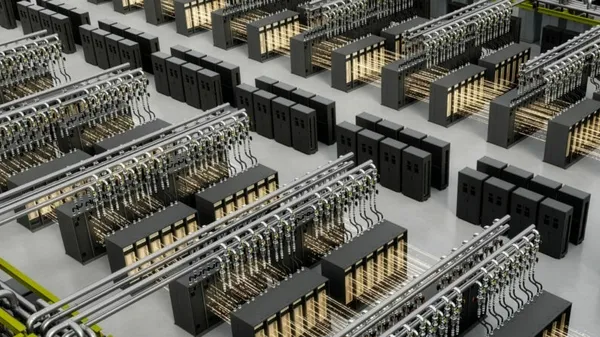
Visionbay's design is meant to phase in 800 VDC distribution where it helps most, rather than requiring a complete transition on day one. It uses cluster-level power centers that centralize AC-to-DC conversion and distribute 800 VDC closer to compute.
What it means for the industry
NVIDIA frames the announcements as a response to AI factories growing from megawatts to gigawatts, which it says takes more than advanced computing. Ian Buck, NVIDIA's vice president of hyperscale and high-performance computing, spoke at the summit about open infrastructure as a critical ingredient for scaling AI factories worldwide.
For operators building Vera Rubin AI factories, NVIDIA says there is now a straight line from open community standard to a running system. For manufacturers and data center operators, the published designs and specifications offer a shared set of targets to build against, according to the company.