AI for Good workshop links open-source AI with stronger safeguards
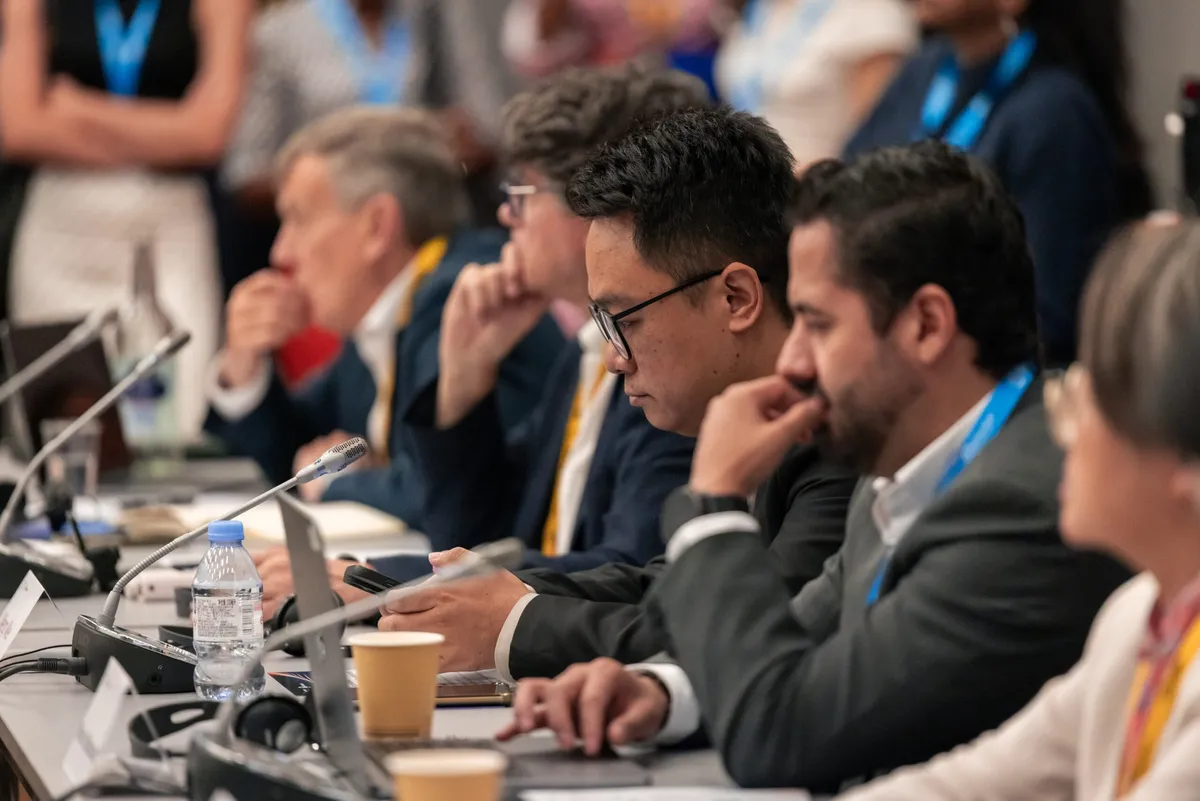
Open-source AI can widen participation in development, but it also shifts more responsibility to the organizations that adopt and deploy it, speakers said at an AI for Good Global Summit 2026 workshop. The discussion focused on standards, safety testing and cooperation across borders.
- An AI for Good workshop examined open-source AI and collaborative governance.
- Speakers said openness can widen participation but increases technical responsibility.
- The workshop highlighted safety testing, audits and common standards.
- Certain models resisted simple adversarial attacks in approximately 40% of tested scenarios.
- Cross-border cooperation and human oversight were presented as essential for deployment.
Open source and governance move together
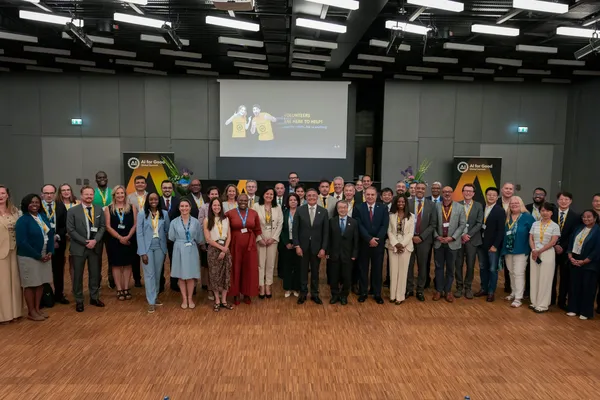
The workshop, titled Advancing responsible AI: Open source for inclusive development and collaborative governance, was organized by AI for Good in partnership with the World Internet Conference (WIC). Liang Hao, WIC’s Executive Deputy Secretary-General, moderated the session, which examined how open-source ecosystems could broaden participation in AI development and how countries and institutions could coordinate governance as systems cross borders.
In opening remarks, Francis Gurry, WIC Vice Chairman and former Director-General of the World Intellectual Property Organization, compared approximately USD 212 billion in foreign aid from major donors in 2024 with an estimated USD 252 billion in global corporate investment in AI. He presented open-source ecosystems as one way to share AI’s benefits more widely, while arguing that governance can provide a framework for effective use rather than functioning only as a restriction.
Seizo Onoe, Director of the ITU Telecommunication Standardization Bureau, said standards and open source both rely on contribution-driven and consensus-based development. He added that open-source toolkits, platforms and simulation environments are helping rapid prototyping and feeding real-world deployment experience into standardization.
Openness brings technical and legal responsibilities
John Higgins, Co-Lead of the WIC Specialized Committee on AI’s Standards Promotion Program, argued that the industry should not reduce its choices to open versus proprietary AI. According to Higgins, openness does not eliminate costs or responsibility. Organizations may need more technical expertise, stronger validation and a clear understanding of the provenance and licensing of components. Common standards could also help reduce regulatory friction across markets.
Wei Kai, Vice Chair of the WIC AI Specialized Committee and director of the AI Institute at the China Academy of Information and Communications Technology, described the growth of China’s open-source AI ecosystem. He said releasing model weights with technical reports allows ideas to circulate between developers and supports faster iteration. His presentation also covered voluntary industry commitments, disclosure and verification of company practices, safety benchmarks and common standards.
The speakers emphasized that openness produces inclusive value only when users can trust the systems being shared. Greater access therefore requires the ability to understand how models and components were developed, licensed and tested.
Testing and oversight remain unresolved
Dame Wendy Hall, Co-Chair of the WIC AI Specialized Committee and Regius Professor of Computer Science at the University of Southampton, said AI should not be treated as purely technical once deployed. She described AI measurement, evaluation and assurance as an emerging field requiring auditing, independent assessment and internationally aligned standards. Hall also noted that women represent half of the world’s population but remain underrepresented in AI decision-making.
Yi Zeng, Wu Yuzhang Chair Professor at Renmin University and a researcher at the Beijing Institute of AI Safety, referred to the UN Secretary-General’s call for child-specific safety testing and independent oversight before AI systems accessible to children are deployed. Based on his team’s evaluations, he said current models do not yet meet that threshold. In tests of models used in embodied and agentic systems, simple adversarial attacks succeeded against certain models approximately 40% of the time in some scenarios, with performance declining further as attacks became more complex.
Maxime Stauffer of the Simon Institute for Long Term Governance distinguished between governing AI development and governing deployment. While development is primarily a domestic and bilateral issue involving the United States and China, he said deployment is a universal concern because every country needs the ability to evaluate systems and set safeguards for their use.
Why this matters for deployment
The workshop ended with a shared concern that AI development is advancing faster than governance. Moises Maldonado of UNHCR applied the Swiss cheese model from safety engineering to humanitarian AI, proposing layers that include design principles, collaborative governance, sociotechnical evaluation, community feedback and human review.
The message for users and institutions is that wider access to open-source models and tools does not remove the need for accountability. Safety testing, common standards, field evaluation, human oversight and cross-border cooperation will be needed to assess how systems behave in different contexts and to respond when safeguards fail. Open-weight models may expand access to advanced capabilities, but speakers also warned that safeguards can be easier to remove.
ITU AI for Good: Standards, safeguards and cooperation for open-source AI