OpenAI sets community rules for its future US compute campuses
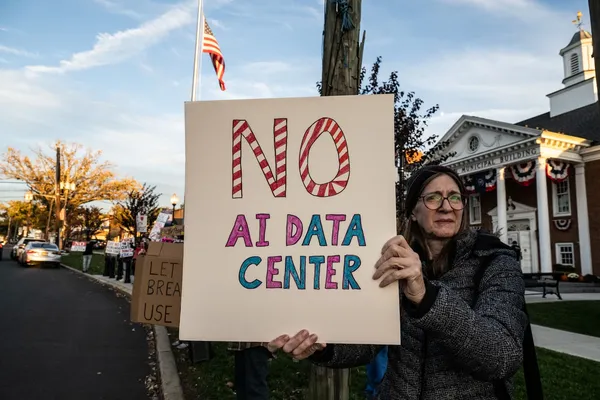
OpenAI has published a National Community Compact and a Compute Campus Policy Blueprint for the development of AI infrastructure in the United States. The documents outline commitments on energy costs, local resources, public reporting, jobs and community investment.
- OpenAI published a National Community Compact and a Compute Campus Policy Blueprint.
- Future OpenAI-owned campuses will have local compacts and annual public reporting.
- The commitments cover energy costs, water use, noise, hiring and local investment.
- OpenAI cited a $4.8 million school meals grant in Georgia and a joint $6 million childcare commitment in Ohio.
- The blueprint calls for rules on grid costs, public reporting, tax incentives and local hiring.
Local compacts for every OpenAI campus
Every future compute campus that OpenAI owns and operates will have its own local compact. According to OpenAI, residents will be engaged early enough to shape project plans, receive a local point of contact throughout the campus's life and get an annual public report on progress.
The commitments include paying the full cost of electricity and infrastructure used by the campus. Before major spending begins, OpenAI says it will provide financial assurances to protect other customers if a project is delayed, reduced or canceled.
OpenAI also says it will create a water plan for each campus, prioritize closed-loop or low-water cooling and publish site-level water and electricity use. Construction plans and independent noise studies will be published before operations begin and annually afterward. The company says it will not use non-disclosure agreements with public officials, except for narrow protections involving legitimate security information, trade secrets, or proprietary or competitively sensitive information.
Jobs, local business and community priorities
The compact includes commitments to publish expected jobs, work with unions and training providers, and report annually on hiring and apprenticeships. OpenAI also says it will make sustained investments in priorities selected with residents, with those priorities varying by location.
In Effingham County, Georgia, residents helped shape a $4.8 million grant providing free school meals for all 14,000 students in the county. In Pike County, Ohio, families identified childcare as a priority, leading to a joint $6 million commitment from OpenAI and SB Energy.
The announcement builds on work that began in January with OpenAI's Stargate Community commitments to pay its own way on energy and develop plans shaped by local priorities. OpenAI later announced specific commitments in Georgia and Ohio involving energy costs, water use, local investment and accountability.
OpenAI calls for rules beyond voluntary promises
The policy blueprint asks federal, state and local policymakers to establish common requirements for compute campus development. OpenAI says state utility commissions should require large electricity customers to cover the costs they add to the grid and protect other customers if a project fails. Utilities should also make it easier for campuses to connect when they can safely reduce demand during periods of limited power.
At the planned Effingham County campus, OpenAI says its agreement with Georgia Power allows the utility to reduce the electricity delivered to the campus by up to 1,000 megawatts during periods of high demand. The blueprint also calls for public reporting on water, energy, noise and hiring, public terms for tax incentives, measurable commitments and a way to recover benefits if developers fall short.
For users and communities, the proposals would link the expansion of AI computing capacity with clearer local oversight and economic participation. OpenAI's commitments apply to campuses it owns and operates, while the blueprint asks policymakers to make similar protections available wherever AI infrastructure is built across the country.
OpenAI: Setting a new standard for responsible AI infrastructure