Penn Engineer Co-Authors Roadmap for a More Secure U.S. Robotics Supply Chain
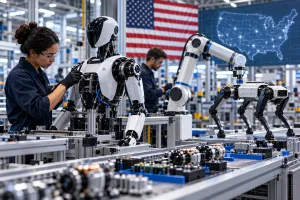
George J. Pappas of Penn Engineering and colleagues from four other universities have published a white paper arguing that securing American robotics will require sustained federal investment, not only import controls. The paper, released by the Computing Community Consortium (CCC), responds to a Federal Communications Commission decision that restricted foreign-made robots.
- The FCC earlier this year restricted new equipment authorizations for foreign-made advanced mobile robots, citing surveillance and cyberattack concerns.
- Pappas and colleagues from four other universities published a white paper through the Computing Community Consortium.
- The paper names four priorities: trustworthy robots, research hardware and facilities, domestic production without cutting off research, and workforce development.
- The authors argue that sustained federal investment is needed, not just import controls.
A security decision with a research side effect
Earlier this year, the Federal Communications Commission restricted new equipment authorizations for foreign-made advanced mobile robots, including humanoids and four-legged machines. The move was meant to address concerns about surveillance, cyberattacks and other security risks.
According to Penn Engineering, the decision also exposed a paradox. American researchers rely heavily on affordable foreign-made robots to develop the technologies that could eventually make an entirely domestic robotics supply chain possible.
George J. Pappas, UPS Foundation Professor in Electrical and Systems Engineering, put it this way: "The security concerns are real, but restricting access to foreign-made robots without investing in domestic alternatives could undermine the research we need to become more self-reliant."
The white paper and its four priorities
Pappas co-authored the paper, titled Securing the Robotics Supply Chain: Technical Needs and Investment Opportunities for the Domestic Robotics Research Ecosystem, with colleagues from the University of Alabama, University of California San Diego, University of Michigan and University of Massachusetts Amherst. It is published by the Computing Community Consortium.
The researchers identify four key priorities:
- Make robots trustworthy, even when parts come from uncertain sources.
- Invest in the hardware and facilities researchers need.
- Build domestic production without cutting off research.
- Develop a skilled robotics workforce.
The paper argues that strengthening American robotics will take sustained federal investment, not just import controls.
Imported parts and scarce research platforms
Pappas points to gaps in the current supply chain. "Even robots assembled domestically often contain imported motors, sensors and other critical parts, while affordable U.S.-made research platforms remain scarce," he notes. His lab has uncovered critical vulnerabilities in leading commercial robotics platforms.
Penn Engineering also highlights the historical context. American military-funded research helped advance quadruped robots, while foreign manufacturers have emerged as leading suppliers of affordable research platforms.
What it means for U.S. robotics
The paper frames security and research access as goals that need to be pursued together. Restricting foreign robots addresses risk, but the authors say it does not by itself create domestic alternatives for the labs that depend on affordable machines.
"We cannot afford to be a country that invents the next generation of robots but depends on others to build them," says Pappas. "This roadmap shows how targeted investments in research, manufacturing and education can help restore American competitiveness."
Penn Engineering: Penn Engineering’s George Pappas Helps Chart More Secure Future for U.S. Robotics