Penn Students Use AI to Modernize Green Bank Telescope Receiver Code
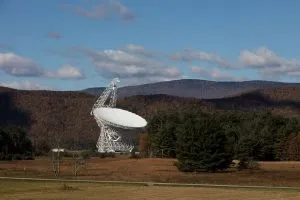
Two University of Pennsylvania undergraduates spent summer 2026 using AI to rewrite the software behind the Green Bank Telescope's MUSTANG-2 receiver, moving it from the outdated IDL language to Python. The work was part of the Penn Undergraduate Research Mentoring Program (PURM).
- Penn undergraduates Naomi Blau and Moaz Elgeziry used AI to update software for the Green Bank Telescope's MUSTANG-2 receiver.
- The code was translated from IDL, described as costly and outdated, to Python, an industry standard in astronomy research.
- The Green Bank Telescope is the largest steerable telescope on Earth and is used by institutions such as NASA and the U.S. Navy.
- The work was part of PURM, a 10-week summer program that gives students $5,000.
From IDL to Python
Naomi Blau and Moaz Elgeziry, both second-year students at Penn, took on a project to update the code that powers the MUSTANG-2 receiver, a widely used instrument on the Green Bank Telescope in West Virginia. According to Penn Today, the receiver's software package processes data for the astronomical community and is considered antiquated.
The pair used AI to translate the programming from IDL, described in the source as a costly and outdated coding language, into Python, which the article calls an industry standard in astronomy research. Their stated aim was to bring the software up to current standards of efficiency while also learning best practices for academic research in astronomy and similar fields.
Why the Green Bank Telescope matters
The Green Bank Telescope is the largest steerable telescope on Earth. Researchers worldwide use it because it can survey a vast range of cosmic structures, from local objects in the solar system to distant galactic clusters billions of light-years away. The goal is to better understand how the universe functions and evolves.
The source also points to practical uses. Elgeziry notes that government institutions such as NASA and the U.S. Navy use the telescope to measure changes in radio signal frequencies, which helps scientists track spacecraft speeds and locations. According to the article, the project therefore has implications for the tracking and maintenance of spacecraft involved with global navigation and digital communication.
The students and the PURM program
Both students came to Penn with an interest in astronomy, physics and the cosmos. Blau often visited planetariums and space exhibits as a child, while Elgeziry took part in his high school astronomy club. Blau, a computer engineering major in the School of Engineering and Applied Science from New York City, said the project "seemed like a great way to apply what I've been learning in computer engineering to real-world work that I find interesting."
PURM is offered by the Center for Undergraduate Research & Fellowships. It places students who are completing their first or second year at Penn in a 10-week summer research experience under the guidance of a standing faculty member. Participants receive $5,000 to support their involvement in the program.
What it means
The project shows AI being applied to a concrete maintenance problem in scientific software: moving a receiver's data-processing code off a costly legacy language and onto one that astronomers already use widely. If the updated package reaches the wider community, researchers working with MUSTANG-2 data would work in a more standard environment. The source does not say when or whether the new code will be released.
Penn Engineering: Updating a Radio Astronomy Instrument at the Green Bank Telescope