Robot Dog Walkers, AI Libraries and Cancer-Sniffing Sensors: This Week in Data
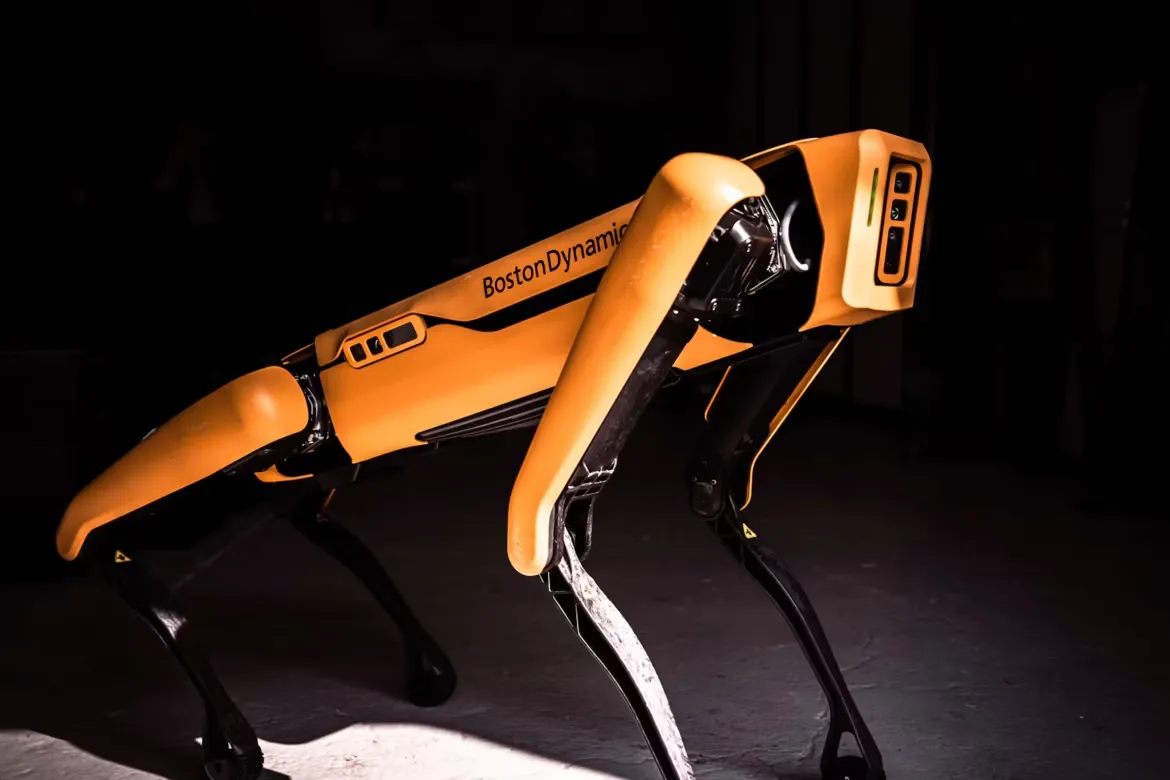
A San Francisco robotics data company is paying people to walk robot dogs, while Microsoft is working with public libraries to teach AI literacy. Both items appear in the Center for Data Innovation's weekly roundup of data news for October 24 to October 30, 2026.
- Dimensional pays people to walk robot dogs to collect navigation data for autonomous robots.
- Microsoft and the Public Library Association will offer free AI literacy training through libraries.
- Sentara's Regard tool summarizes patient records to support monitoring and discharge planning.
- Italy's Swoads system compares images against a database of more than one million stolen cultural objects.
- Medical Detection Dogs is developing an AI-assisted electronic nose to detect prostate cancer in urine samples.
Robots learn from people and simulations
San Francisco-based Dimensional has launched a program that pays people to walk robot dogs in order to improve autonomous navigation. According to the roundup, the company collects camera and sensor data as people guide the robots through real-world environments. Researchers can then compare manually controlled movement with AI-driven navigation. The data could help robots move more independently in settings such as warehouses and construction sites.
UK-based startup Machenta takes a different route. It has developed an AI system designed to teach robots new tasks from a single human demonstration. The company trains its models in simulated environments, so robots can learn a task before trying it in the real world. This approach could help robots adapt to new jobs in manufacturing and assembly without extensive retraining for each task.
Health care gets new AI and data tools
Several items focus on medicine. Seattle Children's Hospital has launched its Institute for Pediatric Innovation to develop technologies that improve healthcare for children. The initiative will support projects involving AI-powered care tools, biomedical data analysis, genetic testing, and medical devices for young patients. The institute aims to improve diagnoses, tailor treatments to individual needs, and expand access to advanced medical services.
Virginia-based nonprofit health system Sentara has introduced an AI tool called Regard to help clinicians monitor patients and plan hospital discharges. The software reviews electronic health records, summarizes changes in patients' conditions, and flags issues that could affect recovery or follow-up care. By organizing clinical information and reducing administrative work, it could help staff identify concerns sooner and spend more time caring for patients.
UK-based Medical Detection Dogs is developing an electronic nose designed to detect cancer by mimicking dogs' ability to recognize scents. The device uses biological receptors that respond to odor molecules in urine samples, and an AI system analyzes the resulting patterns for signs of prostate cancer. Researchers hope the sensor could eventually support noninvasive screening and help detect cancer earlier.
Seattle-based Kivo Health has built an AI-supported care platform for people with chronic obstructive pulmonary disease, a lung condition that makes breathing difficult. It combines virtual rehabilitation sessions led by therapists with AI tools that manage administrative tasks and communicate with patients. The platform aims to expand access to at-home medical care and help clinicians better manage patients' needs.
Culture, litter and climate preparedness
Italy's cultural heritage police have developed an AI system called Swoads to help identify stolen artworks. It compares images from auctions, art fairs, and online marketplaces with a database of more than one million stolen cultural objects. The system can identify visual similarities even when artworks have been altered or partially obscured, which could help investigators locate missing paintings, sculptures, and historical artifacts.
Software developer Robin Bennett has created an AI-powered app that detects and maps roadside litter across the UK. Mounted on a vehicle dashboard, it captures images every 10 seconds, identifies visible rubbish, and classifies it using a national standard. The data could help local authorities locate litter hotspots and prioritize cleanups.
Philadelphia has launched the Community Climate Resilience Toolkit, an online resource that helps residents prepare for extreme weather and other climate risks. It includes educational materials, meeting guides, and planning activities for threats such as flooding, extreme heat, and storms, and it connects residents with city and emergency services.
Libraries become AI classrooms
Microsoft has partnered with the nonprofit Public Library Association to help libraries teach communities about artificial intelligence. The initiative provides free training materials, webinars, and educational resources that explain how AI works and how to use it responsibly. By equipping library staff to guide local learning, the program aims to expand public access to AI knowledge and help people build skills for an increasingly AI-driven workplace.
Taken together, the items show data and AI being applied in physical settings, from warehouses and hospitals to roadsides and art markets. Most of the benefits described are stated as aims or potential outcomes rather than measured results.
Center for Data Innovation: 10 Bits: The Data News Hotlist