Runpod adds Global Volumes beta for Serverless, shares AI compute usage data

Runpod has put Global Volumes in beta for its Serverless endpoints, letting workers start in any data center that offers the GPU types a user needs. The company also published an OpenJev deployment guide and findings on what developers actually run on its platform.
- Runpod Global Volumes are now in beta for Serverless endpoints.
- Workers can start in any data center with the user's GPU types, with weights stored once.
- A new guide covers deploying OpenJev, a 27B decision model, on a Serverless load balancer endpoint.
- According to Runpod's State of AI Compute, agents are 8% of users but drive 24% of revenue.
- The same data says new model versions can take over a family's workloads in about a month.
Global Volumes: store weights once, read anywhere
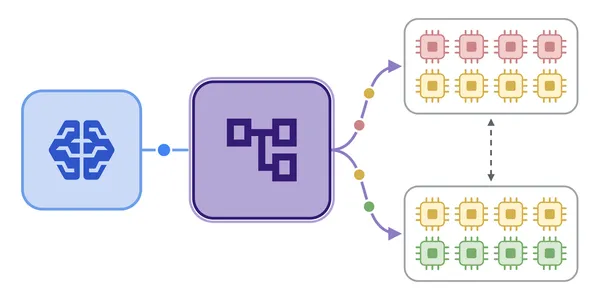
Global Volumes are now in beta for Runpod Serverless endpoints. According to Runpod, a user attaches a Global Volume to a Serverless endpoint and the workers start in any data center with the user's GPU types.
The company summarizes the idea as "Store model weights once, read anywhere." In practice, this addresses a common friction in serverless GPU work: model files tied to one location can limit where workers can launch. With a volume that is readable across data centers, an endpoint is not restricted to the site where the weights were stored. The source gives no details on pricing, capacity limits or the length of the beta, so those remain unknown for now.
A walkthrough for deploying OpenJev
Runpod also published a tutorial on deploying OpenJev on Runpod Serverless. The source describes OpenJev as a 27B decision model that returns structured answers and confidence scores.
The guide uses a Runpod Serverless load balancer endpoint. It then walks through sending a first request with cURL and Python. A model that outputs structured answers with confidence scores suits workflows where downstream code needs to read the result and judge how far to trust it, though the source does not describe specific use cases.
What Runpod says developers deploy
A third post, titled "What 1.2 million developers taught me about AI this year," draws on The State of AI Compute. According to the source, the data shows what teams actually deploy. Three findings stand out:
- Agents make up 8% of users but drive 24% of revenue.
- A new model version can take over its family's workloads in about a month.
- Lower precision is becoming a production strategy for large models.
The second point suggests that teams move quickly from older to newer versions of a model family. The third points to growing use of reduced numerical precision when running large models in production. The source gives no further breakdown of the figures or the method behind them.
What it means for users
For teams running inference on Runpod Serverless, Global Volumes in beta could make it easier to keep one copy of model weights while letting workers start wherever suitable GPUs are available. Since the feature is in beta, users should expect it to change. The OpenJev guide gives a concrete starting point for anyone who wants to test a structured decision model on a load balancer endpoint. The usage figures offer a view of where Runpod sees demand heading, with agents and lower precision as two themes.
RunPod: Runpod RoundUp 2: 32k Token Context LLMs, StabilityAI