Global executives urge Shanghai to use AI to link services, manufacturing and consumption
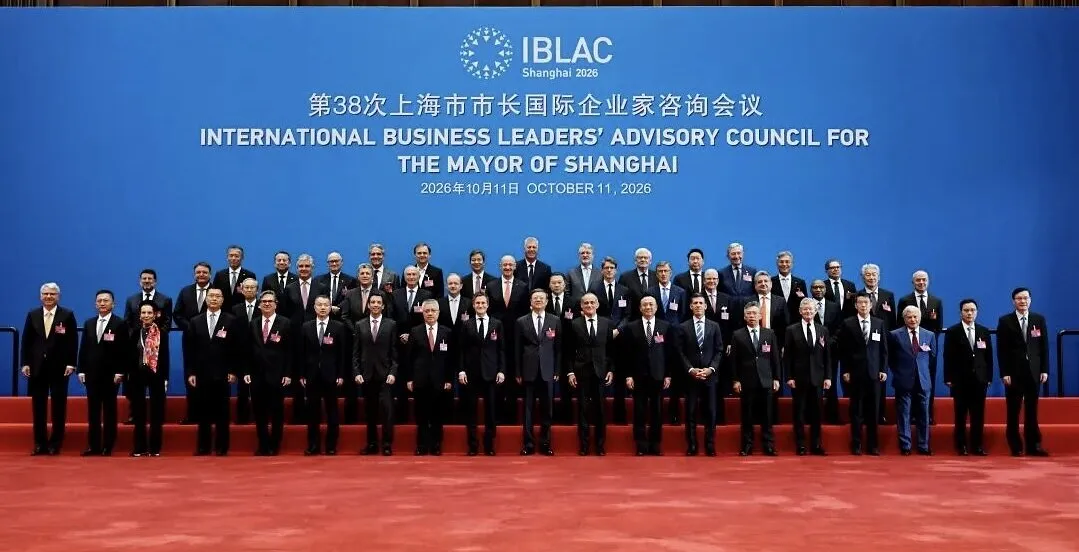
Experts and executives from leading multinational companies say Shanghai should make better use of artificial intelligence to integrate services with manufacturing and consumption and to nurture more growth engines. The comments came at the 38th meeting of the International Business Leaders' Advisory Council for the Mayor of Shanghai, held on Oct 11.
- The 38th IBLAC meeting was held on Oct 11 in Shanghai under the theme of innovation-driven development of the service sector.
- 42 multinational executives from 14 countries attended; IBLAC was initiated in 1989.
- Speakers from PwC, S4 Capital and Hillhouse urged more real AI deployment, open application scenarios and alignment with international rules.
- Intuitive Surgical's Gary S. Guthart proposed a "Shanghai model" for responsible use of medical data.
- L'Oreal's Jean-Paul Agon said AI can deliver tailor-made products by linking online and offline shopping.
A long-running advisory forum focused on services
The meeting took place under the theme of promoting innovation-driven development of the service sector. According to the report published by english.shanghai.gov.cn, the International Business Leaders' Advisory Council (IBLAC) was initiated in 1989 and has grown into a think tank for Shanghai mayors. This year's edition drew 42 multinational executives from 14 countries.
Several participants argued that the city already has the foundations to apply AI at scale, and that the next step is turning those strengths into real deployment across industries.
Calls to connect technology, capital and international rules
Mohamed Kande, global chairman of PwC, said Shanghai has a unique advantage in using technology because of its strong industrial base, its close ties with the rest of the Yangtze River Delta region and a mature service industry. He suggested the city connect technologies, research and capital with international service providers to address real-economy challenges.
Sir Martin Sorrell, founder and executive chairman of S4 Capital and former chairman of IBLAC, described Shanghai as becoming a testing ground for global AI governance and the intelligent transformation of the services sector. He said that for the global service sector, AI has moved from being an efficiency tool to a "value-chain restructurer". To become a global innovation hub for AI-empowered services, he suggested, Shanghai should:
- align further with international rules
- facilitate data flow
- open up more application scenarios
- build a more talent-friendly ecosystem
- seek international coordination
Zhang Lei, founder and chairman of Hillhouse Investment, pointed to the city's manufacturing base and its pool of AI companies, professional service providers, multinational companies and long-term capital. He said Shanghai should attach greater importance to the real deployment of AI and open up more key scenarios that affect companies' operations. He also called for a group of forward-deployed engineers and professional service enterprises that understand both AI and industries, so that AI applications and service capabilities tested in the Chinese market can go global from Shanghai.
Healthcare and consumer examples
Gary S. Guthart, executive chair of the board of directors at Intuitive Surgical, said that combining high-quality medical data with AI and robotics can create new frontiers in medical care. He named several ways Shanghai could help: piloting the development of high-quality datasets for robot-assisted surgeries, experimenting with new approaches to secure medical data sharing, and building a "Shanghai model" for the responsible use of medical data that can be replicated nationwide.
Jean-Paul Agon, chairman of L'Oreal Group, said AI can offer consumers tailor-made products by connecting online and offline shopping experiences. He added that Shanghai should improve its business ecosystem to become a hub connecting global innovation rules.
What it means
The remarks are advice from business leaders to the city's government rather than announced policy, and the source does not describe any specific measures or timelines. They do show where multinational companies see priorities: access to data and real-world application scenarios, alignment with international rules, and people who can bridge AI and industry knowledge. For companies operating in Shanghai, the discussion signals the areas, from professional services to healthcare and retail, where they are encouraging closer cooperation on AI.
PR Newswire: Global business leaders share ideas on AI-driven growth in Shanghai