Shaw Prize 2026 honors seven scientists and highlights AI research
The 2026 Shaw Prize honored seven scientists for advances in astronomy, life science and medicine, and mathematical sciences at a ceremony in Hong Kong. The event also highlighted international collaboration, leukemia treatment and the growing role of artificial intelligence in mathematics and scientific research.
- The 2026 Shaw Prize ceremony took place in Hong Kong on November 10.
- Seven laureates were recognized across three scientific fields.
- Laureates highlighted international cooperation in astronomy and leukemia research.
- Mathematicians discussed AI as a tool for safer research and human creativity.
- From 2027, computer science will join three existing Shaw Prize categories.
Seven scientists recognized at Hong Kong ceremony
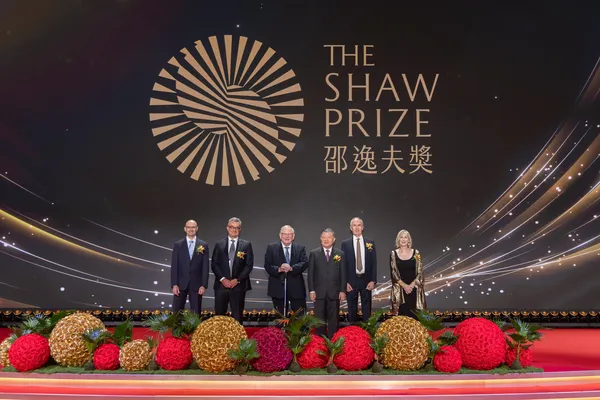
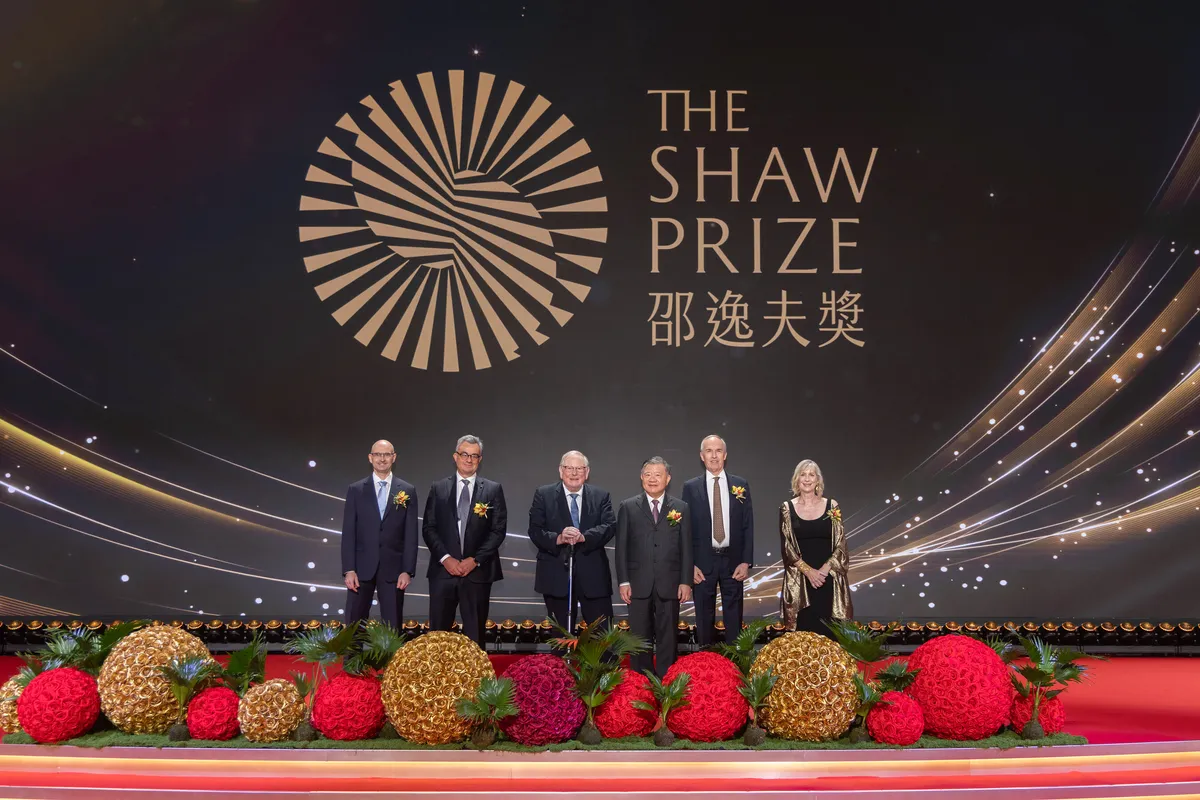
The award presentation took place on November 10 at the Hong Kong Convention and Exhibition Centre, marking the 23rd year of the Shaw Prize. Five laureates attended in person and received gold medals and certificates from Professor Reinhard Genzel, chair of the prize jury.
The astronomy laureates, Professors Ken'ichi Nomoto and Stanford Woosley, sent pre-recorded messages. Nomoto discussed his research on supernovae and the importance of international cooperation. Woosley described how the two scientists developed approximate, qualitative theories into precise predictive models, while also thanking his mentors and collaborators.
International partnerships behind leukemia research
Collaboration was also central to the laureates' reflections on progress in treating acute promyelocytic leukemia. Professor Anne Dejean emphasized the continuing exchange between fundamental research and clinical practice, supported by decades of scientific interaction between France and China.
Professor Hugues de Thé described more than 30 years of cooperation with Professor Zhu Chen, based on mutual respect, trust and continuity. Chen characterized their work as a meeting between East and West and said the medical advances reflected collective wisdom. He also committed to strengthening international partnerships in the fight against other blood cancers.
Mathematicians discuss AI's role in science
The mathematical sciences laureates focused on the changing role and influence of AI. Professor Emmanuel Candès discussed questions beyond mathematics that have shaped his research, including current work to make AI more powerful and safer.
Professor Camillo De Lellis encouraged young mathematicians to view AI as a tool that can free human creativity rather than replace it. The Shaw Prize said this forward-looking perspective is reflected in its new computer science category, announced in January, which recognizes the field's intellectual depth and its contributions to scientific discovery and society.
Professor Kenneth Young, chair of the Shaw Prize Council, said the new category reaffirmed the prize's commitment to recognizing exceptional advances as science continues to develop.
Computer science prize will join the 2027 awards
Applications for the four 2027 prizes remain open until November 30. The 2027 laureates, including the recipient or recipients of the first computer science prize, will be announced in May or June 2027.
From 2027, the Shaw Prize will include four annual awards: astronomy, computer science, life science and medicine, and mathematical sciences. Each award will carry a monetary endowment of 1.2 million US dollars.
Created under the auspices of Run Run Shaw in 2002, the prize was first awarded in 2004 to honor people whose work has had a positive and profound impact on humanity. The addition of computer science expands the awards' coverage of research areas linked to scientific discovery and society, according to the announcement.