RMIT PhD student Shuoqi Sun wins Best Paper at European IR summer school
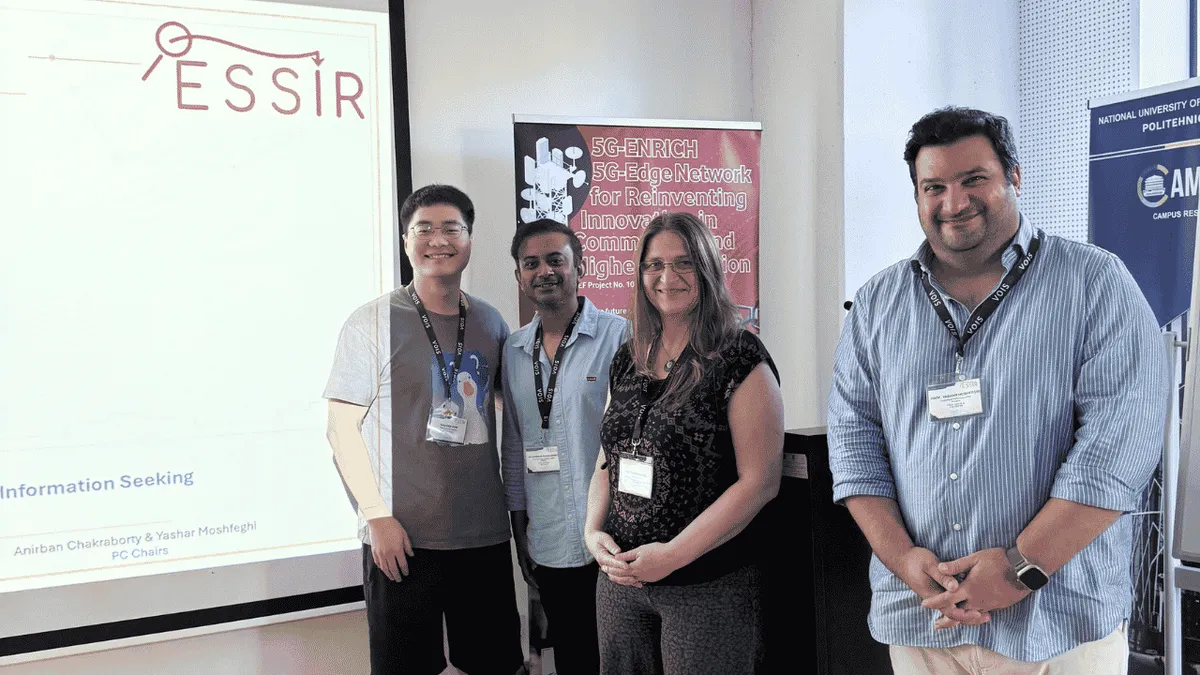
Shuoqi Sun, a second-year PhD candidate at RMIT University, has won the Best Paper Award at The 14th PhD Symposium on Future Directions in Information Access (FDIA), held during the European Summer School on Information Retrieval (ESSIR). His winning paper outlines research on how people seek information today.
- Shuoqi Sun, a second-year RMIT PhD candidate at ADM+S, won the Best Paper Award at the 14th FDIA symposium.
- The winning paper is titled Characterizing the Evolving Landscape of Modern Information Seeking.
- The research uses surveys, IS frameworks and experiments with neurophysiological signals such as EEG and eye-tracking.
- FDIA took place during the European Summer School on Information Retrieval (ESSIR).
Award for a PhD research outline
Sun is part of the ARC Centre of Excellence for Automated Decision-Making and Society (ADM+S). According to the centre, he attended ESSIR and the 14th FDIA, where he received the Best Paper Award for his work on modern information seeking.
At FDIA he presented his PhD research outline, titled Characterizing the Evolving Landscape of Modern Information Seeking. The paper is the one that won the award, and the centre has published a link to it on its news page.
What the research examines
Sun's research looks at how people search for information. According to ADM+S, the study combines several methods:
- surveys
- information seeking (IS) frameworks
- experiments exploring neurophysiological signals, such as EEG and eye-tracking
The aim is to offer insights into the current landscape of information seeking.
About ESSIR and FDIA
The European Summer School on Information Retrieval gives PhD students the chance to interact with renowned scholars through hands-on sessions and workshops. According to the source, it aims to nurture discussion on approaches to information access and encourages the adoption of the latest software, datasets and more.
The FDIA symposium takes place during ESSIR. It gave Sun the opportunity to share early stage research and form connections with other information retrieval (IR) scholars.
Practising research communication
Sun said he was grateful to attend both events because they let him practise presentation and communication skills. He described the FDIA audience as people who are not very familiar with a presenter's specific research but are experts in other IR topics.
"Research needs to be heard, and the skills of presenting should be practiced," Sun said, adding that FDIA is "the perfect place to test your research communication, make mistakes, and form your presentation style."
He also said: "Learning from each other and engaging with the community are key to staying tuned and creative."
For early career researchers in information retrieval, the award shows that a PhD outline presented at an early stage can be recognised at a European community event. The source does not give further details on the judging or on other entries.
ARC Centre of Excellence for ADM+S: ADM+S PhD student Shuoqi Sun wins Best Paper Award at European Summer School for Information Retrieval