Tampa General Named Among World's Best Smart Hospitals for 2027 by Newsweek
Tampa General Hospital (TGH) has again been named among the "World's Best Smart Hospitals for 2027" by Newsweek and Statista, one of only eight hospitals in Florida on the list. The Florida health system points to AI and predictive analytics tools in sepsis care, documentation, patient access and surgery as the basis for the recognition.
- Tampa General is among the World's Best Smart Hospitals for 2027 by Newsweek and Statista, one of eight in Florida.
- The 2027 ranking covers 410 hospitals across 33 countries.
- TGH says its Sepsis Hub has helped save more than 1,000 lives since 2022 and cut 48-hour sepsis mortality by nearly 68%.
- Ambient listening cut documentation time by 24%, according to the hospital.
- The AI call center Aimee has answered more than 2.4 million calls since September 2025.
What the ranking covers
According to Tampa General, it is the No. 1 academic health system in Tampa Bay on the ranking. Newsweek and Statista evaluate hospitals around the world each year for how they implement and use advanced digital healthcare technologies. The 2027 edition recognizes 410 hospitals across 33 countries.
The ranking draws on recommendations from healthcare professionals collected through an international survey, the Statista Smart Hospitals Digital Maturity Survey. It also takes into account national and international accreditations related to digital healthcare. The evaluation looks at areas including artificial intelligence, robotics, automation and patient-support technologies.
Sepsis Hub and the Care Coordination Center
The hospital highlights its Care Coordination Center (C3), developed in partnership with Palantir Technologies. According to TGH, the center combines electronic health record data, predictive analytics and real-time clinical information so care teams can anticipate patient needs, spot potential complications and coordinate earlier interventions.
One of its main applications is the Sepsis Hub, which uses predictive analytics to help identify patients at risk of deterioration from sepsis. The hospital describes sepsis as a life-threatening response to infection and the leading cause of death in U.S. hospitals. TGH reports that since 2022 the initiative has:
- helped save more than 1,000 lives;
- reduced 48-hour sepsis mortality by nearly 68%;
- decreased length of stay for sepsis patients by approximately 30%.
AI for documentation, calls and operating rooms
TGH has deployed ambient listening technology for physicians and nurses. The hospital says this has produced a 24% reduction in documentation time, saving physicians approximately one hour per day. It also reports that 70% of physicians using the technology felt less burnout, and that 85% of patients report a more favorable experience with their physician.
On patient access, TGH uses Aimee, an AI-powered call center solution developed with Hyro. Since September 2025, according to the hospital, Aimee has answered more than 2.4 million calls, contributing to a 21% increase in scheduled appointments. TGH adds that 93% of patients report satisfaction with their interactions.
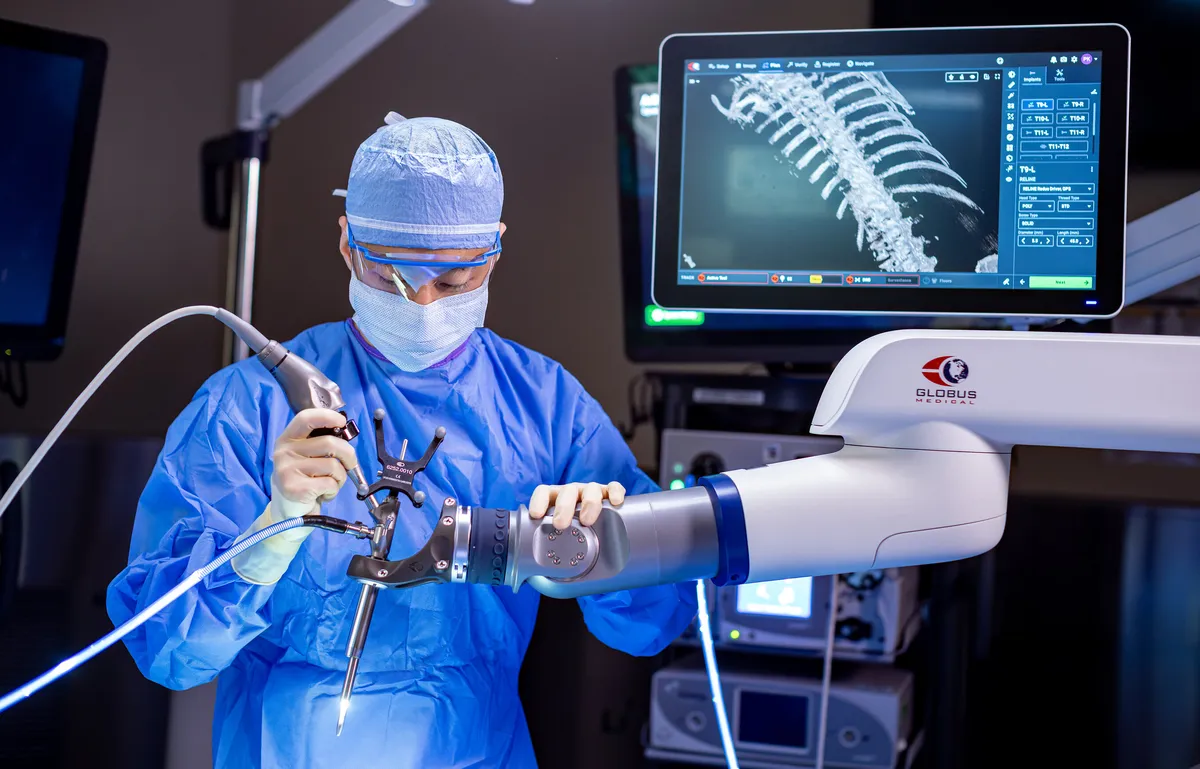
In surgery, the hospital uses Apella's AI-powered technology to support operating room safety and efficiency. TGH says it has contributed to a five-minute reduction in turnover time between surgical cases, creating potential capacity for an additional 144 surgical cases per week.
What leaders say and what it means
"Innovation is most powerful when it strengthens the human side of healthcare," said John Couris, president and CEO of Florida Health Sciences Center | Tampa General. Scott Arnold, executive vice president and chief digital and innovation officer, said the system is "moving beyond individual technology deployments and putting these capabilities to work across the health system in ways that produce measurable results."
All performance figures come from Tampa General itself, and the release does not describe how they were independently verified. The ranking is based on survey responses and accreditations rather than on those outcome numbers. For patients in the region, the release points to earlier detection of deterioration, shorter waits to reach the hospital by phone and more physician time for direct care. Arnold said the next step is to "build on what's working and continue expanding these capabilities across our organization."